What is an offshore well intervention?
Key highlights:
-
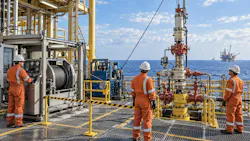
Offshore well intervention helps maintain, repair and optimize producing wells without drilling a new well, improving recovery while reducing costs.
-
Intervention activities range from light wireline operations to complex rig-based workovers, depending on the scope of the problem and the equipment required.
-
Demand for intervention services is being driven by aging offshore assets, brownfield optimization and technologies that make well maintenance safer and more efficient.
Editor’s note: Welcome to Offshore’s new educational “What Is…?” series. If you’re interested in contributing your insights and sharing industry knowledge with the next generation of offshore professionals, contact Chief Editor Ariana Hurtado at [email protected] for more information.
By Kapil Garg, MarketsandMarkets
Offshore oil and gas wells can produce for decades, but they rarely do so without help. Pressure falls, equipment wears out, sand clogs the flow path, and water creeps in.
An offshore well intervention is any operation performed on a producing or completed subsea or platform well to maintain, diagnose, repair or improve it, without drilling a new well.
In practice, it is a way to keep an expensive asset working at a fraction of the cost of replacing it.
Why wells need intervention
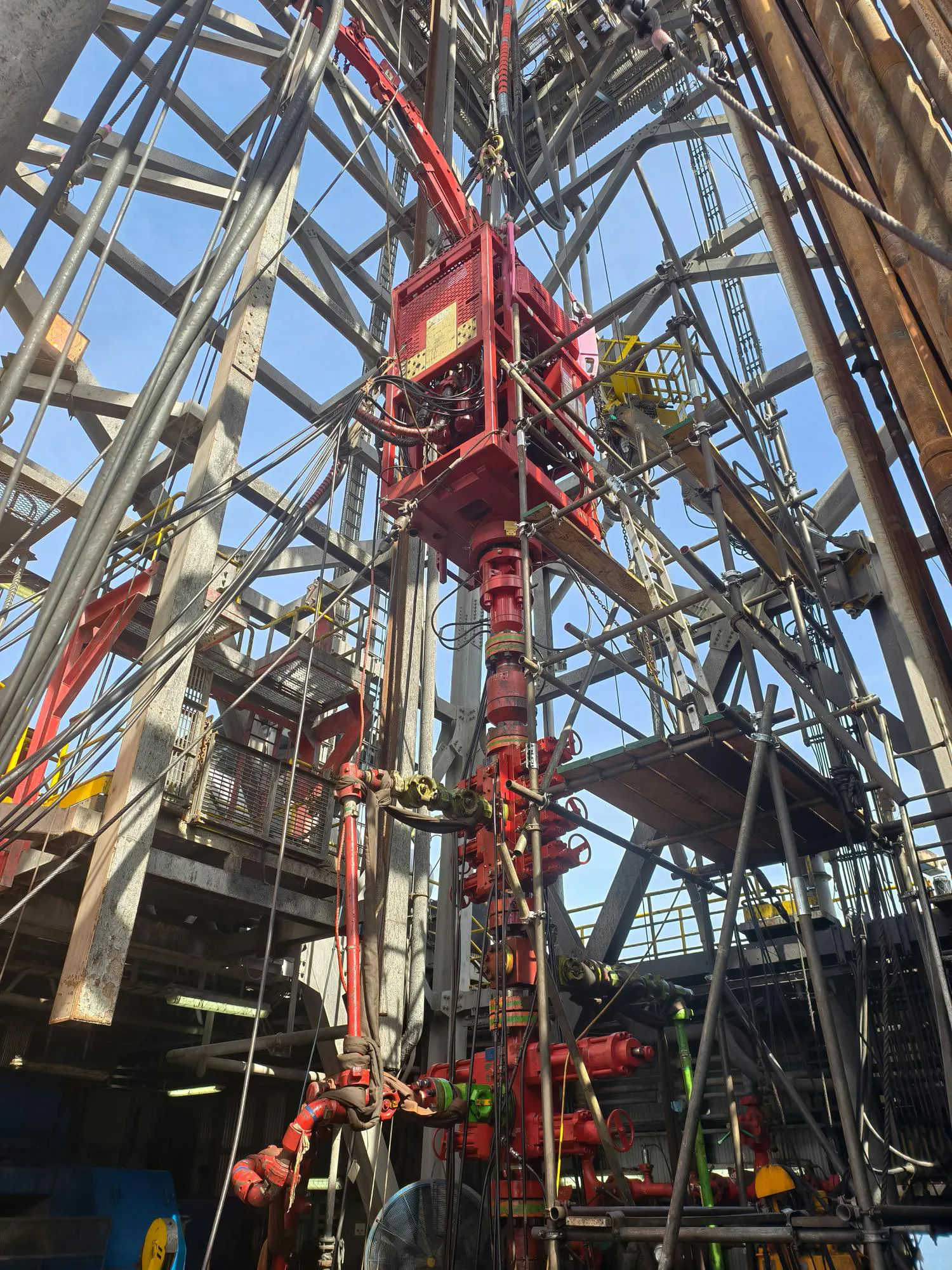
Offshore, the stakes are higher. Every day of lost production on a deepwater well is costly, and mobilizing equipment means chartering vessels or rigs. That is why intervention planning is a discipline of its own.
Types of offshore well intervention
Industry practice typically groups interventions by weight and complexity.
- Light intervention uses wireline, slickline or electric line to run tools into a live well, usually without killing it or pulling the tubing. Typical jobs include logging, gauge surveys, setting plugs, and opening or closing sleeves. It is fast, relatively cheap and by far the most frequent type.
- Medium intervention typically involves coiled tubing or hydraulic workover units. Coiled tubing is a continuous length of flexible pipe that can pump fluids, such as acid or cement, and push tools into horizontal sections that wireline cannot reach. It is used for stimulation, cleanouts and zonal isolation.
- Heavy intervention means full workovers—pulling the production tubing, replacing completion components or sidetracking. These jobs need a drilling rig or a purpose-built vessel with a derrick, so they are the most expensive and time-consuming.
Common offshore well intervention services
Key players:
For additional resources and information on this topic, below are some of the service providers in the well intervention space:
- AGR
- Akofs Offshore
- Aquaterra Energy
- Archer
- Baker Hughes
- BISN Performance Barrier Technologies
- C-Innovation
- Caltex Oil Tools
- FTAI OCEAN
- Halliburton
- Helix Energy Solutions
- Hornbeck Offshore
- Huisman
- Island Offshore
- Jamax Energy Offshore Services
- Kongsberg Maritime
- Oceaneering
- OneSubsea
- SABA Drilling
- SEA1 Offshore
- SLB
- TechnipFMC
- Vantris Energy
- Welltec
- Logging and bottomhole surveys, which measure pressure, temperature and flow to understand well health;
- Tubing and packer repair, which restores well integrity;
- Stimulation, using acid or fracturing to improve flow;
- Sand control and zonal isolation, which stop solids and unwanted water;
- Artificial lift installation, which helps depleted wells keep producing; and
- Fishing, which retrieves lost tools or debris.
How offshore well intervention is performed
Platform wells can often be accessed from the facility itself using skid-mounted wireline or coiled tubing spreads.
Subsea wells are harder. Their trees sit on the seabed, so access comes from a dedicated intervention vessel, a semisubmersible rig or a drillship. Operators use a subsea intervention lubricator or a riser system to keep the well-sealed while tools enter, and remotely operated vehicles (ROVs) support the work.
Riserless light well intervention, which passes wireline through a pressure-control package without a full marine riser, has grown popular because it cuts both time and day rates.
Offshore well intervention market outlook
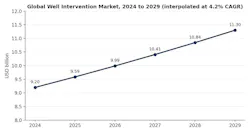
Market research firm MarketsandMarkets tracks intervention, covering both onshore and offshore, rather than publishing an offshore-only figure. Its latest edition estimates the market at $9.2 billion in 2024, growing to $11.3 billion by 2029 at a CAGR of 4.2%. The firm attributes the growth largely to increasing energy demand and the aging of existing brownfields.
Earlier editions show the same pattern of steady, moderate growth:
- The 2017 edition projected growth from $8.18 billion in 2017 to $9.85 billion by 2022, a CAGR of 3.78%;
- The 2018 edition projected $8.5 billion in 2018 rising to $11 billion by 2023, a CAGR of 5.35%; and
- A 2021 baseline put the market at $7.6 billion, reaching $9.3 billion by 2026.
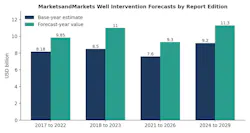
Every edition project growth, and each new baseline sits higher than the last once the 2020 to 2021 downturn is set aside. That reflects a market that is recovering and expanding, though not booming.
The segment story matters most offshore. The 2018 edition identified offshore as the fastest-growing application segment, with logging and bottomhole surveys holding the largest share by service type. The latest edition expects medium intervention to be the fastest-growing type, a sign that coiled tubing and hydraulic workover work is gaining ground. An earlier edition also flagged light intervention as the largest offshore activity by market size.
To visualize the current outlook, Figure 2 interpolates MarketsandMarkets' 2024 to 2029 figures at the stated 4.2% CAGR. The intermediate years are calculations, not published data points.
Challenges and future trends
Offshore intervention faces real obstacles. Deepwater and high-pressure, high-temperature (HP/HT) wells demand specialized tools and tight safety controls. Vessel availability and day rates swing with the oil price. Environmental regulation requires rigorous well-barrier management, and a failed intervention can be more costly than the problem it set out to fix.
Still, economics favor intervention. As operators age their fields and look to extract more from existing infrastructure, it is usually cheaper to revive a well than to drill a replacement. Technology is helping on several fronts: riserless systems, all-electric tooling, real-time downhole data, and remote operations that reduce offshore headcount and risk.
In summary
An offshore well intervention is the routine maintenance, repair and optimization work that keeps offshore wells productive over their lives.
It ranges from a quick wireline survey to a full rig-based workover, and it matters most as fields mature.
MarketsandMarkets projects a steady rather than explosive trajectory for the market, but one that rests on durable fundamentals: aging assets, the need for cost-efficient production, and ongoing technical innovation.
Offshore's "What Is...?" series
Young professionals in the offshore energy industry often encounter technical terms and acronyms that seasoned subject matter experts (SMEs) know by heart—but aren’t always clear to the next generation. Offshore’s new “What Is…?” educational series aims to bridge that gap by providing concise, practical explainers for emerging professionals and newcomers to the industry.
Some of the topics we've already covered include:
- What is an FPSO?
- What is a dynamic positioning (DP) system?
- What is an SOV?
- What is directional drilling?
- What is CCS?
- What is floating wind?
- What is an offshore substation (OSS)?
- What is a digital twin?
- What is the deepwater oil and gas field development life-cycle?
- What is subsea electrification?
- What is a mooring system?
- What is offshore vessel water and waste management?
- What is an FSRU?
- What is subsurface imaging?
If there’s an offshore energy subject you’d like to highlight in a brief explainer article (600-1,000 words), reach out to Chief Editor Ariana Hurtado at [email protected] for more information.
About the Author
 Kapil Garg
Kapil Garg is the practice lead (manager) of the Energy & Power Practice with MarketsandMarkets.
He has more than 13 years of experience in the energy, chemical and material industries. He has worked on various consulting and business research projects in areas such as digital oil field, renewable energy, environmental technology, paints and coatings, construction chemicals, and others. He holds a bachelor’s degree in petroleum engineering from Pune University.
He can be reached at [email protected].
Related
 aqccw_offshore_2
