Well interventions help revive 16 MMbbl from reinstated UK North Sea wells

Efforts to restore shut-in wells and improve operational efficiency delivered millions of additional barrels from existing UK North Sea fields in 2025, according to the NSTA.

Why this news matters:

  • UK operators are increasingly extracting greater value from existing North Sea infrastructure through well reinstatements, interventions and facility upgrades, helping slow basin-wide production declines without significant new project spending.

  • The projected rebound in exploration and appraisal drilling through 2028 could provide an early indicator of future investment confidence in the UK Continental Shelf, where activity has recently been dominated by mature-field optimization.
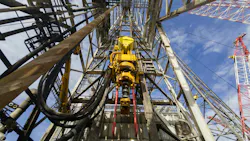

UK North Sea operators produced an additional 16 MMbbl of oil from 56 reinstated wells in 2025, according to the North Sea Transition Authority's (NSTA) 2026 Wells Insight Report.

It attributes the gains in part to improved intervention efficiency, with 398 well interventions conducted across the sector last year.

However, the report forecasts growing activity over the next two years, with potentially five exploration and appraisal wells this year, 12 in 2027, and 15 in 2028. 

Fourteen of the wells should be in the Central North Sea, eight in the Southern North Sea and East Irish Sea, seven in the Northern North Sea, and three West of Shetland.


Related: UK North Sea E&P facing potential turning point or tipping point


Facility improvements helped UK North Sea operators produce an additional 21,000 boe/d overall last year, equivalent to more than 7.5 MMboe, according to another report by the NSTA.

There was also a reduction in the number of unplanned shutdowns.

The NSTA measures production efficiency by comparing actual production with maximum potential output. Last year, this rose by one percentage point to 76% following successive decreases of 2% in 2023 and 2024.

Operators reduced production losses caused by issues with facilities, wells and systems transporting oil and gas to onshore terminals. This was in part due to planning maintenance, better execution of shutdowns, and working with the NSTA to identify shut-in wells that could be brought back online.

Exclusive content:

ID 371716721 © Paul Maguire | Dreamstime.com
Oil rig in North Sea at Blakeney Point, Norfolk, UK
The offshore oil and gas industry’s future is linked to the imminent results of UK government review.
Nov. 10, 2025
Contributors:

About the Author

Jeremy Beckman

Staff Writer / Editor, Europe

Jeremy Beckman has been Editor Europe, Offshore since 1992. Prior to joining Offshore he was a freelance journalist for eight years, working for a variety of electronics, computing and scientific journals in the UK. He regularly writes news columns on trends and events both in the NW Europe offshore region and globally. He also writes features on developments and technology in exploration and production.

Sign up for our eNewsletters
Get the latest news and updates