What is floating wind?
Key highlights:
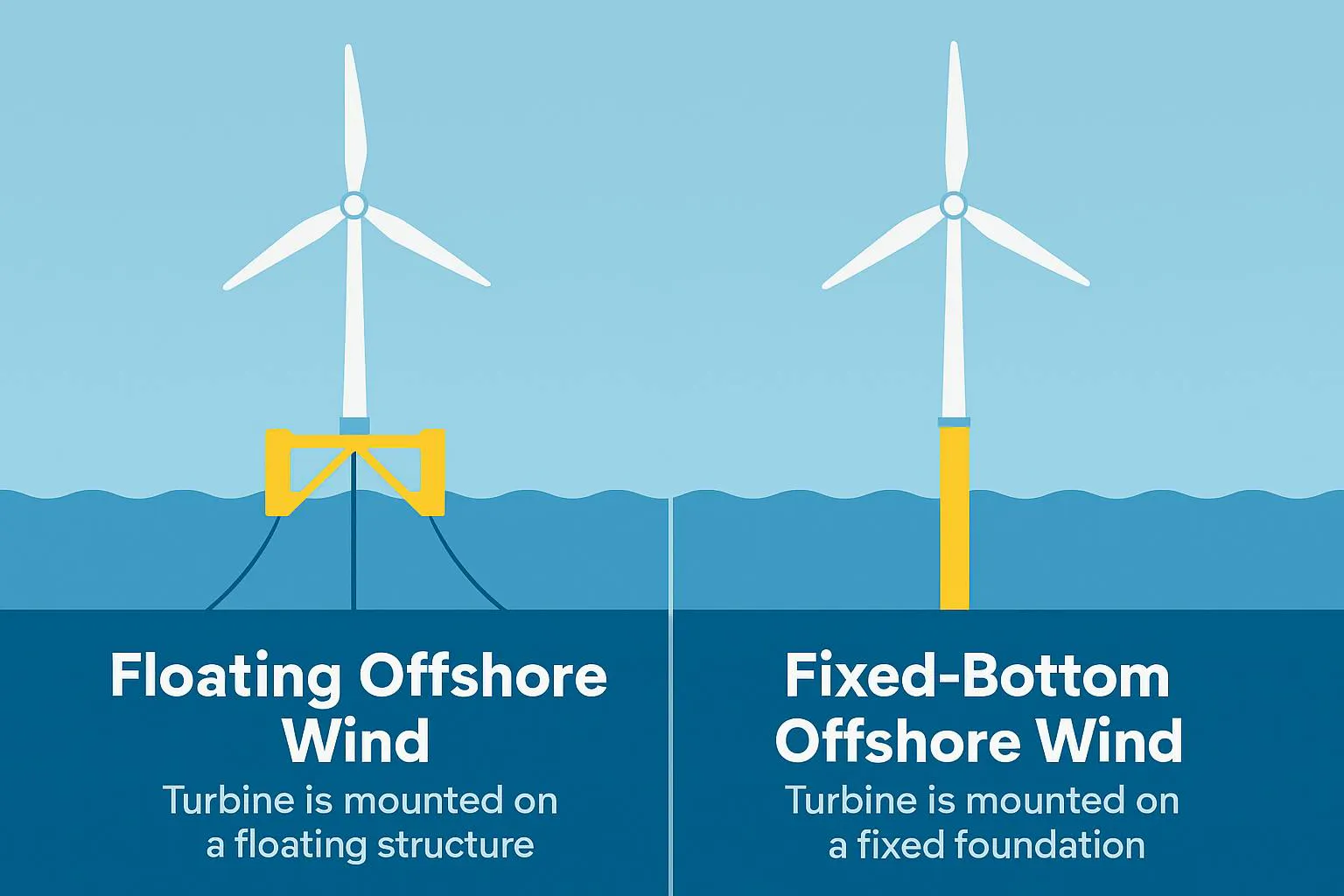
- Floating wind turbines are anchored to the seabed with mooring lines and can operate in water depths exceeding 60 m, unlike fixed-bottom turbines limited to shallow waters.
- Key platform designs include spar, semisubmersible and tension-leg platforms.
- Challenges include platform motion, high costs, limited port infrastructure and complex maintenance operations, which currently restrict large-scale industrialization.
- Floating wind offers access to stronger and more consistent wind resources in deepwater regions, expanding the global offshore wind potential significantly.
Editor’s note: Welcome to Offshore’s new educational “What Is…?” series. If you’re interested in contributing your insights and sharing industry knowledge with the next generation of offshore energy professionals, contact Chief Editor Ariana Hurtado at [email protected] for more information.
By Maëlig Gaborieau, Spinergie
Global offshore wind capacity reached about 40 GW in 2025 (excluding China), yet almost all installed turbines rely on fixed-bottom foundations such as monopiles or jackets. These structures must be installed directly into the seabed, which restricts deployment to relatively shallow waters—typically those less than 60 m.
Floating wind removes this limitation.
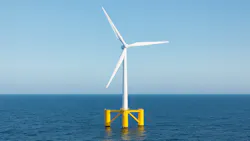
With this technology, the turbine stands on a floating platform that is anchored to the seabed with mooring lines, instead of being installed upon a foundation on the seabed. The floating platform remains stable through ballast systems and hydrodynamic design while allowing limited movement with waves and wind.
This approach enables wind farm development in deepwater areas often exceeding 60 m to 100 m, where wind resources are strong and consistent but fixed foundations are technically impractical.
Floating wind, therefore, expands the geographic reach of offshore wind. Regions such as Japan, South Korea and parts of Europe possess large deepwater zones where floating technology becomes the only viable option for offshore wind.
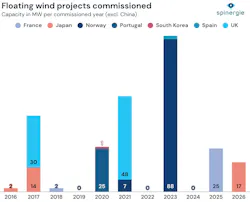
Despite these significant benefits, floating wind remains at an early stage of development. Installed capacity stands at about 260 MW globally, with only a limited number of pilot projects currently operating.
The technology faces several constraints, including higher costs than fixed-bottom offshore wind and challenges related to the large-scale industrialization of floating platforms and supply chains.
Why floating wind?
The main driver behind floating wind lies in bathymetry. Many coastal regions experience a steep seabed slope close to shore, leaving little shallow water suitable for conventional offshore wind construction.
Fixed-bottom turbines dominate markets such as the North Sea, where water depths remain moderate over long distances.
In contrast, countries such as Norway, South Korea or those in the Mediterranean region face depths of several hundred meters only a few kilometers from shore. Floating technology unlocks these locations.
Beyond simple accessibility, deeper waters often provide stronger and more stable wind regimes, improving potential energy production. Therefore, floating wind can increase the theoretical offshore wind resource available worldwide.
Another factor relates to visual impact and coastal constraints. Floating wind farms can be installed farther offshore than many fixed-bottom projects, reducing shoreline visibility and easing permitting constraints in some regions.
The technology also benefits from industrial synergies with offshore oil and gas. Floating structures, mooring systems and offshore installation methods share similarities with long-established floating production systems used in deepwater hydrocarbon fields. This engineering heritage contributes to the development of floating wind platforms.
Exclusive content:
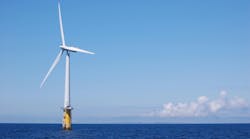 Floating wind turbine off the coast of Karmøy, Norway
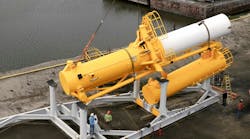 Lifting maneuver
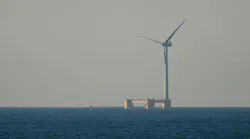 Floating wind turbine
How does floating wind work?
A floating wind turbine consists of three main elements:
- The turbine
- The floating foundation
- The mooring system
The turbine is generally similar to those installed on fixed-bottom projects. The turbine tower is mounted on a floating platform designed to ensure stability and limit motion under wind and wave loads. Several platform concepts exist, each relying on different hydrodynamic principles.
The most widely used designs include:
- Spar platforms, which rely on a deep vertical ballast structure to maintain stability;
- Semisubmersible platforms, which use multiple columns connected by pontoons to distribute buoyancy; and
- Tension-leg platforms (TLPs), which are anchored by taut mooring lines that restrict vertical motion.
Floating wind turbines can be assembled and partially commissioned in port, then towed to their installation site by anchor-handling tug supply vessels. This installation method differs from that of fixed-bottom projects, which rely heavily on large offshore construction vessels and heavy-lift operations at sea.
The platform remains connected to the seabed through mooring lines and anchors, similar to offshore floating production units. These moorings hold the turbine in position while allowing limited movement.
Power generated by the turbine travels through dynamic cables, designed to accommodate platform motion before connecting to the seabed cable network and offshore substations or directly to the shore.
Additional resource:
Floating vs Fixed Offshore Wind Turbines – Key Differences Explained | Maersk Training
Floating and fixed-bottom turbines serve the same purpose but function very differently. Maersk Training compares these two systems.
What are the challenges?
Floating wind introduces several technical and industrial constraints compared with fixed-bottom offshore wind.
1. Platform motion remains one of the central engineering challenges. Unlike fixed foundations, floating structures react continuously to wind, waves and currents. Even small oscillations influence turbine loads, rotor performance and structural fatigue.
Platform geometry, ballast systems, mooring layout and turbine control software operate as an integrated system designed to limit motion while maintaining stability across a wide range of sea states.
2. Scaling the technology also presents structural difficulties. The sector lacks industrialized manufacturing processes for floating foundations, and most platforms are still produced through project-specific engineering rather than standardized serial production.
Without repeatable fabrication methods, the economies of scale that drove cost reductions in fixed-bottom offshore wind remain largely absent. Floating projects, therefore, face higher costs than fixed-bottom projects, linked to complex foundations, mooring systems and dynamic export cables. Cost reductions depend on the emergence of standardized platform designs and industrial fabrication processes capable of producing foundations at volume.
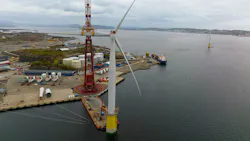
3. Port infrastructure forms another constraint. Floating wind turbines are assembled at the quayside before being towed to their installation site. This approach requires ports with large assembly areas, heavy-lifting capacity and deepwater access close to shore.
Some platform concepts, particularly spar foundations, extend tens of meters below the waterline and require deep draft conditions during assembly and deployment. Only a limited number of ports currently meet these requirements, which creates a bottleneck for future industrial deployment.
4. Operations and maintenance introduce additional complexity. Fixed-bottom turbines can often be accessed by jackup vessels for major component replacement. Floating turbines, however, cannot rely on this method.
When heavy maintenance is required, the turbine may need to be disconnected from its mooring system and towed back to port. This operation involves several vessels, careful coordination and extended downtime. During this period, the turbine remains offline, reducing electricity production and increasing operational costs.
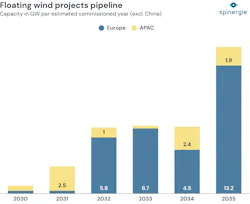
What is the floating wind outlook?
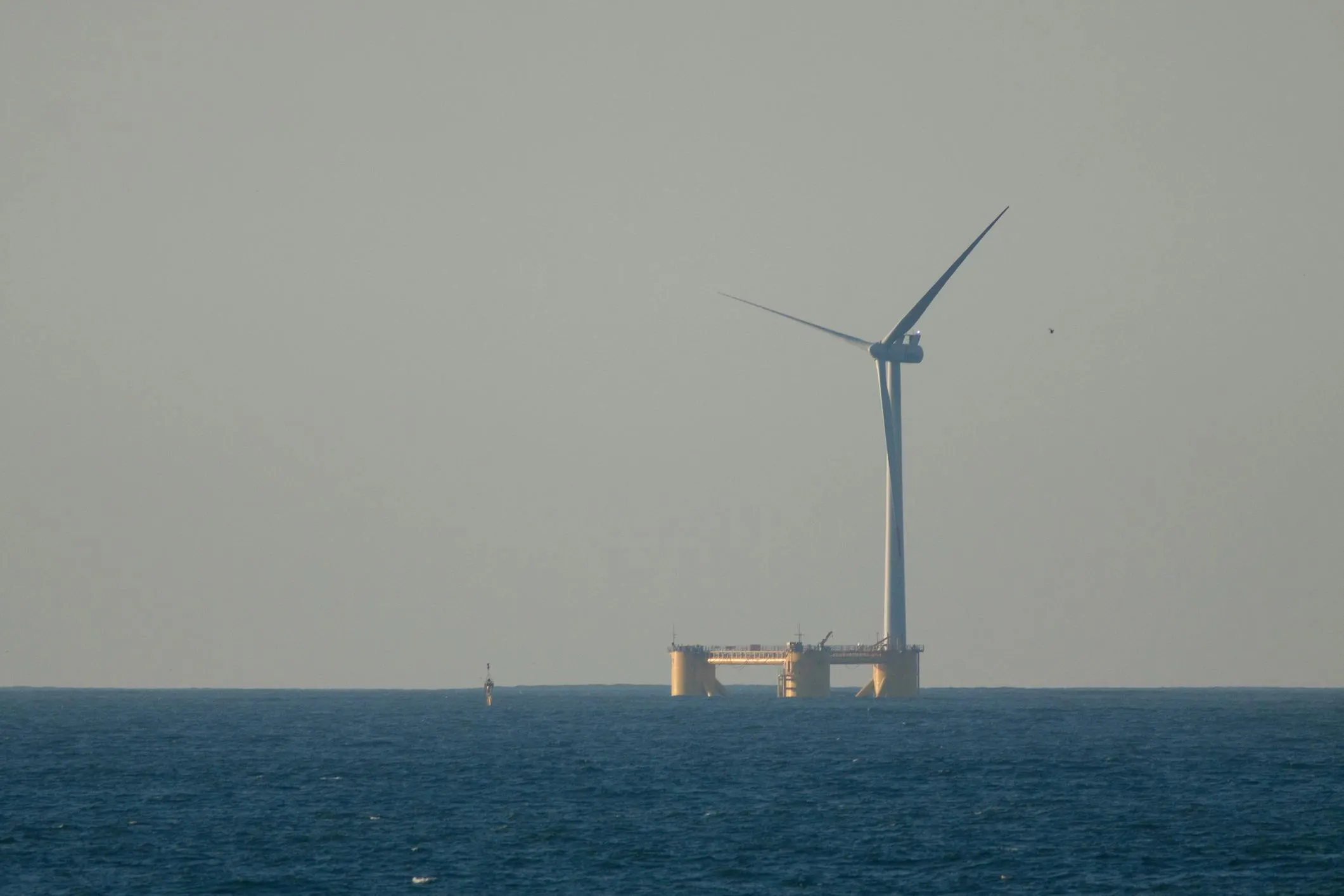
Floating wind remains prospective despite growing policy interest. Several countries with deep coastal waters, including France and Scotland, have launched dedicated leasing rounds and development zones aimed at supporting the technology. These initiatives signal long-term strategic interest but do not yet translate into large-scale deployment.
A significant number of projects appear in development pipelines for the early 2030s, yet many face the technical, industrial and logistical constraints described above. Platform manufacturing capacity remains limited, port infrastructure is scarce and project economics remain less competitive than fixed-bottom offshore wind. These factors create uncertainty around timelines, and several announced projects are likely to experience delays or redesign before reaching final investment decision.
The sector remains in a preparatory phase. Demonstration projects continue to test platform concepts, installation strategies and operational models, while governments and industrial players work to build the necessary supply chain and infrastructure. Substantial progress in standardization, industrial production and cost reduction remains necessary before floating wind reaches large-scale commercial deployment.
As offshore wind expands beyond shallow continental shelves, floating foundations provide the technical pathway that allows the sector to access a much larger share of the global wind resource.
Latest floating wind news:
 Floating wind energy facility concept
 Offshore wind energy during sunset
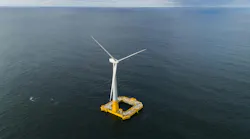 BW Ideol's floating wind technology
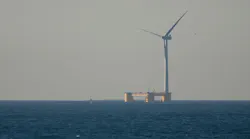 Floating wind turbine installed offshore Portugal in October 2011
 SHI’s new floating offshore wind turbine design approved
Offshore's "What Is...?" series
Young professionals in the offshore energy industry often encounter technical terms and acronyms that seasoned subject matter experts (SMEs) know by heart—but aren’t always clear to the next generation. Offshore’s new “What Is…?” educational series aims to bridge that gap by providing concise, practical explainers for emerging professionals.
Some of the most-searched topics include:
- What is an FPSO?
- What is a dynamic positioning (DP) system?
- What is an SOV?
- What is directional drilling?
- What is CCS?
- What is seismic data acquisition?
- What is floating wind?
- What is an offshore substation (OSS)?
- What is a subsea production system?
- What is a blowout preventer (BOP)?
- What is a subsea tree (christmas tree)?
- What is an offshore riser system?
- What is a jackup rig?
- What is a subsea tieback?
If there’s an offshore energy subject you’d like to highlight in a brief explainer article (600-1,200 words), reach out to Chief Editor Ariana Hurtado at [email protected] for more information.
About the Author
 Maëlig Gaborieau
 Maëlig Gaborieau
Maëlig Gaborieau is a senior analyst at Spinergie, where he works on offshore wind markets, supply chains and energy policy. His work focuses on market analysis, statistical simulation and forecasting. Gaborieau has spoken at industry events including WindEurope and the World Forum for Offshore Wind, and he is the author of a peer-reviewed scientific publication on offshore wind economics.
Related
