What is CCS?
Key highlights:
- Offshore CCS utilizes depleted reservoirs and aquifers to store CO2 safely underground.
- Pipeline transport is cost-effective for large volumes, while shipping offers flexibility for cross-border and offshore storage, with new dedicated ships under construction for CCS purposes.
- Offshore storage methods include enhanced oil recovery (EOR), brownfield and greenfield projects.
Editor’s note: Welcome to Offshore’s new educational “What Is…?” series. If you’re interested in contributing your insights and sharing industry knowledge with the next generation of offshore professionals, contact Chief Editor Ariana Hurtado at [email protected] for more information.
By Marie Hubschwerlen, Spinergie
The energy sector is increasingly turning to carbon capture and storage (CCS) as part of ongoing efforts to accelerate decarbonization. CCS uses depleted oil and gas reservoirs as well as deep saline aquifers to store captured carbon dioxide (CO2) beneath the seabed.
What is the CCS process?
The CCS process captures CO2 from industrial facilities and power plants, then transports it to a site where it can be permanently stored so it does not enter the atmosphere. CCS is particularly relevant for hard-to-abate sectors such as cement, steel, refining, chemicals and some power generation.
It is a three-stage process: capture, transport and storage.
The aim is to prevent high levels of CO2 emissions by separating the gas before it is released, then moving it to a secure storage site.
Stage 1: Capture
Capture is the first step of CCS. The goal is to separate CO2 from the gases produced when fuel is burned or during industrial processes, so it can be transported and stored instead of released into the atmosphere.
CO2 is mainly applied at large industrial facilities, because they produce concentrated emissions. After CO2 is separated from other gases, it is compressed into a dense fluid for transport to storage sites.
Stage 2: Transport
Transport is the second step in the CCS chain, between capture and storage. Its role is to move the captured CO2 from industrial sources to the storage site, which may be located onshore or offshore in storage sites that are located beneath the seabed.
The most common method is through pipelines. CO2 flows through steel pipelines under high pressure, with pumping stations maintaining the pressure. Pipelines are generally the most cost-effective option for large continuous volumes and rely on technology already well established in the oil and gas industry. Transportation through pipelines can be performed onshore and/or ashore.
The second main transport option is shipping. The CO2 is cooled and liquefied, stored in insulated tanks and transported by specialized CO2 carriers to the coastal terminal. It is more flexible.
Shipping is becoming increasingly important for European CCS networks, especially for cross-border transport. Historically, only a handful of small CO2 carriers served niche markets such as food-grade CO2 transport, but dedicated CCS shipping capacity is now being developed at scale.
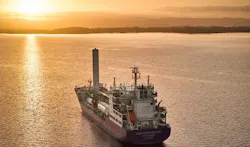
The first new ships specifically designed for CCS transport are now under construction, as Northern Lights* has ordered several 7,500 m3 CO2 carriers, with the Northern Pioneer delivered in 2024.
*Learn more about the Northern Lights project in the case study below.
Stage 3: Offshore storage
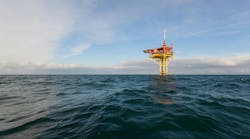
With CCS, CO2 is injected into the storage site, which may be located onshore or offshore, generally using oil and gas fields.There are three primary methods of offshore CCS storage: enhanced oil recovery (EOR), brownfield and greenfield.
EOR: EOR sees captured CO2 injected into oil reservoirs to help extract additional oil from mature fields. Some of the injected CO2 remains underground. According to the International Energy Agency (IEA), about 80 Mt of CO2 per year are currently used globally for EOR.
Brownfield: Brownfield storage usually refers to projects that use depleted oil and gas reservoirs and may reuse or adapt parts of the existing infrastructure, such as platforms, pipelines or wells, where technically and economically feasible.
Greenfield: Greenfield storage refers to a new CO2 storage development built with new wells, transport infrastructure, injection facilities and monitoring systems. A good example is Northern Lights in Norway, a joint venture between Equinor, Shell and TotalEnergies that stores CO2 in the Aurora saline aquifer offshore.

Case Study: Northern Lights, Norway
Equinor’s Northern Lights project provides an opportunity to illustrate the complexity of the CO2 supply chain. As a transport and storage hub, it handles both the midstream and downstream aspects of CCS management.
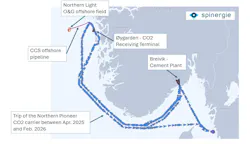
As an example, the supply chain process begins at the Heidelberg Materials’ Brevik cement plant. Since the plant is located at an industrial port, CO2 is liquified and transported with dedicated carriers to a receiving terminal in Øygarden, Norway. From there, the CO2 is directly injected into an offshore reservoir via a subsea pipeline.
Development of Northern Lights
Northern Lights emerged in the late 2010s, with concept and FEED studies progressing from 2017, when Equinor (then Statoil) decided to evaluate CO2 storage on the Norwegian Continental Shelf. By 2019, Equinor had been granted permission to develop the Aurora storage site.
A year later, the Norwegian government launched the full-scale Longship CCS project, of which Northern Lights is the transport and storage component. The storage development plan was formally approved in March 2021.
2025 expansion
The infrastructure for Phase 1 was completed in 2024 with 2025 marking Northern Lights transition to a fully operational commercial entity.
- March 2025: Partners reach a final investment decision (FID) for Phase 2, aiming to expand capacity to 5 million tonnes per annum.
- June 2025: The first CO2 shipment arrived from Heidelberg Materials’ Brevik cement plant.
- August 2025: Northern Lights successfully completed its first offshore CO2 injection.
What’s next for the CCS sector?
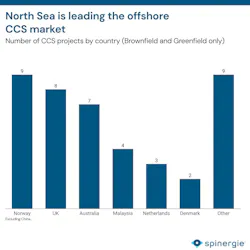
The North Sea is emerging as the leading basin for offshore CCS, with Norway and the UK at the forefront thanks to their offshore experience, storage potential and proximity to industrial emitters.
Norway benefits from decades of offshore oil and gas experience and has several CCS projects in development, including Smeaheia and Polaris. The UK is following closely with multiple offshore storage projects, including Acorn, Net Zero Teesside, HyNet and Viking CCS.
Outside of the North Sea, there is a large-scale project—Eni and Snam’s Ravenna CCS hub—in the Italian Adriatic. Meanwhile, in Australia, Chevron’s Gorgon project, which started up in 2019, is the world’s largest CCS system with ongoing optimization works.
Conclusion
CCS is emerging as a key technology in the global effort to reduce greenhouse-gas emissions, particularly for industries where decarbonization is difficult. By capturing CO2 at its source, transporting through dedicated infrastructure and storing it safely underground, CCS offers a practical way to prevent large volumes of CO2 from entering the atmosphere.
The offshore sector is playing a central role in this development, leveraging decades of oil and gas expertise to transform depleted reservoirs and saline aquifers into long-term storage sites. As infrastructure expands and costs decrease, CCS is expected to become an increasingly important component of the global energy transition.
Related content:
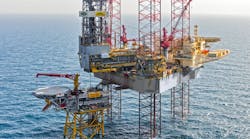 Noble Invincible offshore jackup rig
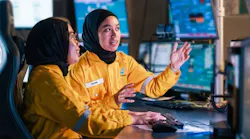 Petronas personnel using technology for downhole CO2 logging assessment
 The UK North Sea can become Europe’s CCS hub, one well at a time.
 CCS_offshore energy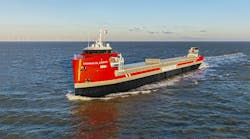
 Santos progressing carbon capture studies offshore Western Australia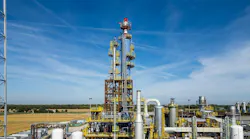
 Penyu Basin seismic map
 Aramis CCS
 offshore_platform
Offshore's "What Is...?" series
Young professionals in the offshore energy industry often encounter technical terms and acronyms that seasoned subject matter experts (SMEs) know by heart—but aren’t always clear to the next generation. Offshore’s new “What Is…?” educational series aims to bridge that gap by providing concise, practical explainers for emerging professionals.
Some of the most-searched topics include:
- What is an FPSO?
- What is a dynamic positioning (DP) system?
- What is an SOV?
- What is directional drilling?
- What is CCS?
- What is seismic data acquisition?
- What is floating wind?
- What is an offshore substation (OSS)?
- What is a subsea production system?
- What is a blowout preventer (BOP)?
- What is a subsea tree (christmas tree)?
- What is an offshore riser system?
- What is a jackup rig?
- What is a subsea tieback?
If there’s an offshore energy subject you’d like to highlight in a brief explainer article (600-1,200 words), reach out to Chief Editor Ariana Hurtado at [email protected] for more information.
About the Author
 Marie Hubschwerlen
Marie Hubschwerlen
Marie Hubschwerlen is an offshore analyst with the maritime analytics company Spinergie. She specializes in the offshore drilling and pipelay markets. She can be reached at [email protected].