What is an FPSO?
Key highlights:
- FPSOs are becoming the preferred solution for remote and deepwater developments, enabling production where fixed platforms or pipelines are impractical. The expanding global fleet underscores their central role in offshore supply.
- Standardized hulls and modular topsides, combined with digital twins and fleetwide data, are improving uptime and reducing costs. New American Bureau of Shipping notations demonstrate measurable progress toward remote operations and lower emissions.
- As complex, 24/7 processing plants at sea, FPSOs rely on skilled crews supported by robotics and drones. These technologies remove personnel from hazardous tasks and enhance safety, integrity and availability.
Editor’s note: Welcome to Offshore’s new educational “What Is…?” series. If you’re interested in contributing your insights and sharing industry knowledge with the next generation of offshore professionals, contact Chief Editor Ariana Hurtado at [email protected] for more information.
By Abhilash Krishna and Sayantan Chatterjee, Ernst & Young LLP
In the last decade, the offshore energy sector has pushed into deeper, more remote waters than ever before. At the heart of this transformation are floating production storage and offloading (FPSO) units. FPSOs have become a cornerstone technology, enabling the extraction, processing, storage and offloading of hydrocarbons in environments where traditional fixed infrastructure is neither feasible nor economical.
The global FPSO fleet exceeds 170 active units operating offshore in 31 countries, underscoring the strategic importance of these assets in meeting global energy demand. South America boasts the largest concentration of FPSOs, with Brazil’s deepwater presalt fields relying heavily on these units for production and also emerging development areas in Guyana and Suriname.
The evolution of FPSOs is being shaped by advances in digitalization, modular engineering and automation—trends that are redefining operational efficiency, safety and sustainability standards across the industry. Today, FPSOs are hubs of advanced engineering, digital intelligence and operational agility.
How do FPSOs work?
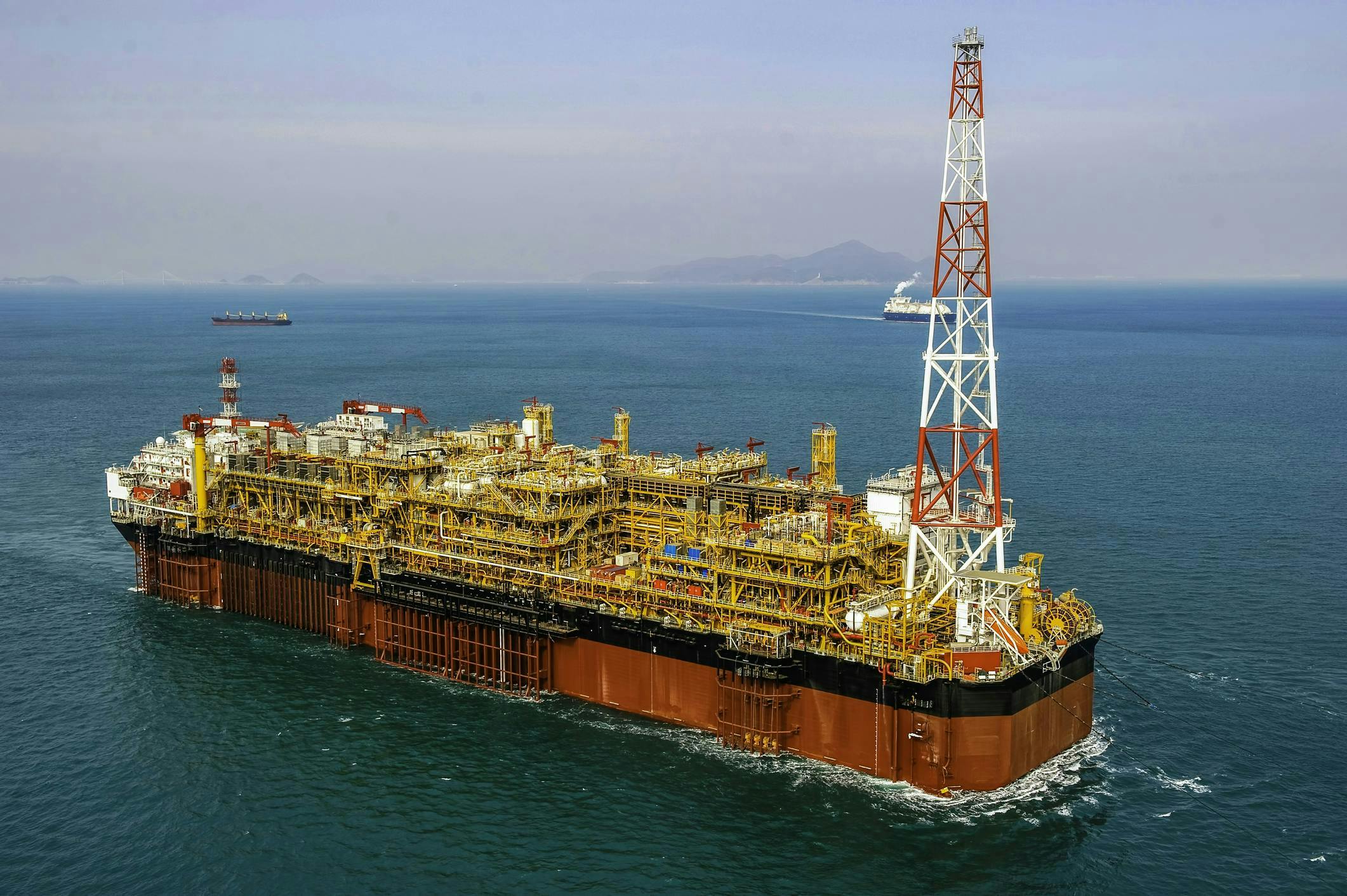
FPSOs are self-contained floating platforms that extract and process oil from subsea wells. The process starts with subsea wells pumping a mixture of oil, gas, water and impurities through flexible risers to the FPSO’s onboard processing facilities.
Onboard, well fluids are separated to isolate crude oil from water and gas. The processed oil is stored in large tanks within the FPSO’s double hull, typically holding up to 2 million barrels, maintaining safety and efficient storage until offloading.
FPSOs are moored using turret systems or spread mooring, enabling them to maintain position while allowing for natural movement from wind and waves. When transporting oil, a shuttle tanker connects to the FPSO to pump crude from storage tanks to onshore refineries. This integrated approach allows FPSOs to serve as versatile hubs for offshore oil production, processing and storage in challenging marine environments.
What are the pros and cons of FPSOs?
Who dominates the FPSO sector today?
Key players in the FPSO sector comprise both international oil companies and specialized engineering and manufacturing firms. Differentiation among FPSO providers is increasingly defined by their ability to deliver flexible and mobile solutions that can be redeployed across multiple fields, as well as by their cost efficiency in accelerating time to first oil.
How is the digital transformation changing FPSO operations?
A further source of competitive advantage lies in technological leadership, particularly in the areas of digital transformation, predictive maintenance and data-driven operations.
Digital transformation can enable operators to leverage real-time data and remotely manage systems. Leading companies are already deploying fleetwide monitoring and remote control capabilities, reducing personnel on board, improving uptime and advancing sustainability commitments.
A key trend is the adoption of digital twins. With modular designs and standardized hulls, FPSOs are well suited for digital replication of onboard systems. Digital twins create a unified mesh of tags, permits and manuals overlaid on a live framework, streamlining work preparation, enabling faster decision-making and embedding operational intelligence across the asset life cycle. As FPSOs are built sensor-rich, the foundation for predictive analytics and intelligent automation is already in place.
Robotics are also emerging as critical enablers. As regulators increasingly recognize remote and robotic operations, the use of robotic systems for tank cleaning, inspections and confined-space tasks is accelerating. These applications enhance workforce safety, reduce downtime and drive step changes in asset integrity management.
Looking ahead, the focus will shift toward predictive and prescriptive capabilities powered by machine learning. Intelligent models will support anomaly detection, optimal work timing and proactive issue identification, paving the way for remote-by-exception operations. Integrated closed-loop systems will improve power generation, compression and flaring, directly improving both cost efficiency and emissions performance.
What is the future outlook of FPSOs?
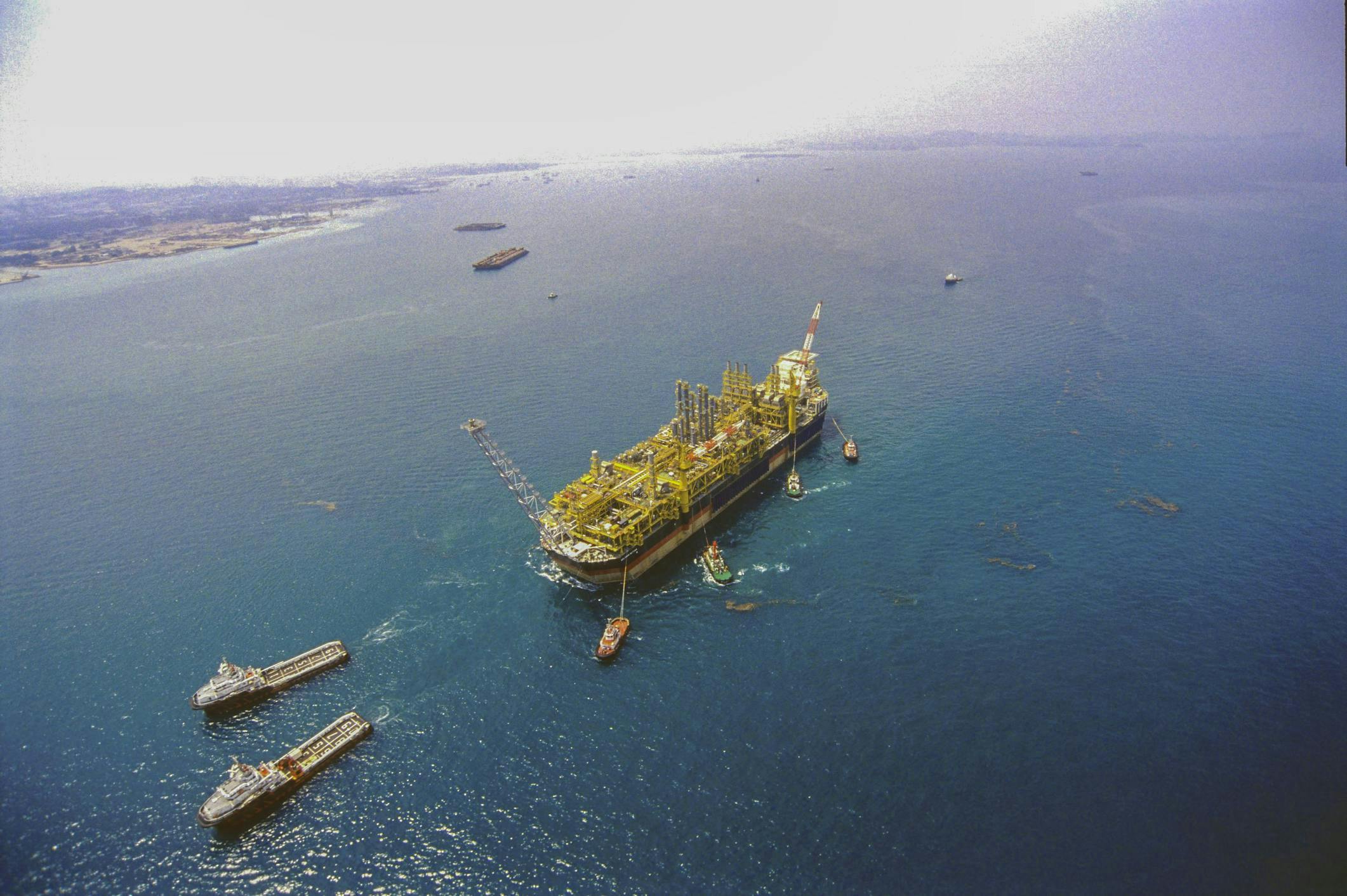
As FPSOs continue to evolve, the orchestration of digital twins, robotics and remote operations will unlock significant value.
Their modular construction will further streamline design-to-deployment cycles, shorten time to first oil and improve capital efficiency.
By embracing these trends, operators can position FPSOs to remain vital in meeting global energy demand while elevating safety, reliability and sustainability.
The views reflected in this article are the views of the authors and do not necessarily reflect the views of Ernst & Young LLP or other members of the global EY organization.
Want to learn even more about FPSOs?
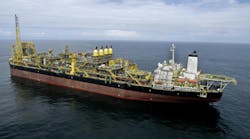 FPSOs have evolved to handle more volatile crudes, gassier fields
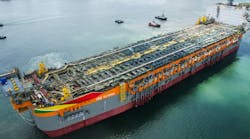 FPSO ONE GUYANA
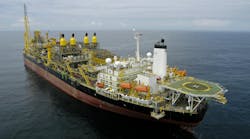 Review of global FPSO inventory reveals deployment trends
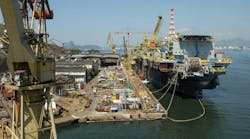 FPS construction market expected to see slight increase in 2025
Offshore's "What Is...?" series
Young professionals in the offshore energy industry often encounter technical terms and acronyms that seasoned subject matter experts (SMEs) know by heart—but aren’t always clear to the next generation. Offshore’s new “What Is…?” educational series aims to bridge that gap by providing concise, practical explainers for emerging professionals.
Some of the most-searched topics include:
- What is an FPSO?
- What is a dynamic positioning (DP) system?
- What is an SOV?
- What is directional drilling?
- What is CCS?
- What is seismic data acquisition?
- What is floating wind?
- What is an offshore substation (OSS)?
- What is a subsea production system?
- What is a blowout preventer (BOP)?
- What is a subsea tree (christmas tree)?
- What is an offshore riser system?
- What is a jackup rig?
- What is a subsea tieback?
If there’s an offshore energy subject you’d like to highlight in a brief explainer article (600-1,200 words), reach out to Chief Editor Ariana Hurtado at [email protected] for more information.
About the Author
 Abhilash Krishna
Abhilash Krishna
Abhilash Krishna is a senior manager in Ernst & Young LLP’s Consulting practice, specializing in business transformation and digital operations for the oil, gas and chemicals sectors. With more than 15 years of industry and consulting experience, he brings perspective across the upstream value chain, from subsurface and exploration to production operations and enterprise integration. Krishna is an adviser and transformation architect, helping operators and energy companies unlock value through advanced analytics, scalable digital platforms and integrated strategies that drive resilience and agility in a rapidly evolving energy landscape. He has an MBA in strategy and finance and a Ph.D. in electrical and computer engineering from Rice University.
 Sayantan Chatterjee
Sayantan Chatterjee
Sayantan Chatterjee is a senior manager in Ernst & Young LLP’s Consulting practice, based in Houston, where he advises clients in the oil, gas and chemicals sectors on transformative business and technology strategies. He leverages his prior engineering and leadership experience at an integrated oil company to guide organizations through operational changes that foster growth and innovation. Chatterjee holds a Ph.D. in chemical and biomolecular engineering from Rice University and is passionate about helping energy companies achieve sustainable performance through digital transformation and strategic execution.