What is directional drilling?
Key highlights:
- Directional drilling unlocks hard-to-reach hydrocarbon reservoirs and subsurface targets while reducing the environmental impact in challenging, offshore and onshore environments, and it can reduce the number of surface locations and the associated infrastructure.
- Advanced technologies like rotary steerable systems enhance precision, asset economics and safety, transforming the way operators navigate the challenges of modern drilling.
- The evolving workforce in directional drilling reflects a blend of innovation and industry knowledge, requiring skilled professionals to manage the increasing operational complexity.

Editor’s note: Welcome to Offshore’s new educational “What Is…?” series. If you’re interested in contributing your insights and sharing industry knowledge with the next generation of offshore professionals, contact Chief Editor Ariana Hurtado at [email protected] for more information.
By Wole Olukoya and Nicholas Batistich, Ernst & Young LLP
Directional drilling is a technique that allows operators to precisely control the trajectory of the wellbore, enabling access to subsurface resources that are not directly beneath the drilling platform.
This method is particularly valuable in the oil and gas industry, both onshore and offshore, where traditional vertical drilling is often insufficient to reach or to optimally develop the target. Offshore, this capability is a strategic lever: Drilling multiple wells (deviated or horizontal) from a single platform or subsea template reduces the capital spend, minimizes the surface and environmental footprint, and accelerates timelines.
How directional drilling works
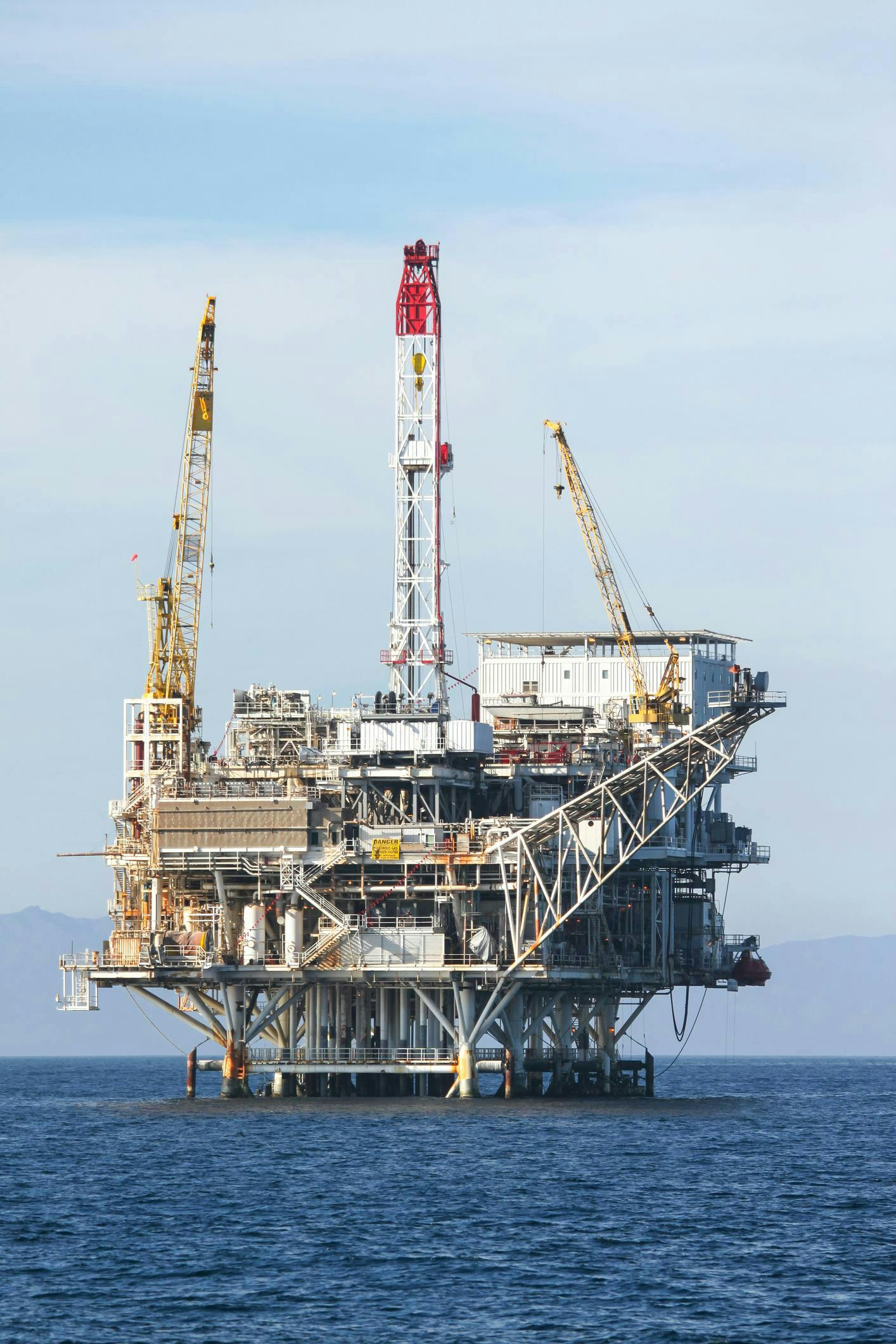
Directional drilling plays a vital role in maximizing the subsurface resource extraction while minimizing the surface impact. Before drilling begins, extensive advance analysis, engineering design and planning are necessary. Subsurface interpretation, which involves geology and geophysics, depicts what lies beneath the surface and the location of oil and gas deposits, along with their associated uncertainties.
Once the interpretation is established, a well plan is developed outlining the intended trajectory of the wellbore. The trajectory is designed to efficiently drill the well—minimizing torque and drag while avoiding potential risks such as existing wellbores—and access the desired reservoir column. The directional driller’s role is to follow this plan, employing a combination of science and engineering to navigate the complexities of drilling through multiple formations, traversing the planned well path and reaching the target coordinates. Real-time adjustments are often necessary because conditions can change unexpectedly during the drilling process. Adjustments are made within agreed tolerances and anti-collision limits, typically coordinated with the drilling and geology teams and documented in the daily report.
The two technologies most commonly used to steer wells toward their targets are the bent motor and the rotary steerable system (RSS). The bent motor is a technologically less complicated, more affordable option that allows operators to adjust the direction of the wellbore by controlling the orientation of the toolface (the bend direction) while sliding downhole. However, in longer, higher-inclination wells, bent motor steering can be limited by toolface control, slide efficiency, torque and drag, and hole-cleaning constraints.
In contrast, the RSS is a more advanced and costly technology that uses downhole sensors and control mechanisms to steer the drillbit while rotating. This system allows for greater precision and control over the drilling trajectory, making it particularly useful for extended-reach wells. RSS often delivers smoother wellbores, which can reduce drag, improve the casing running and enhance the overall drilling efficiency.
Bent motors are common where cost and simplicity dominate, while RSS is selected when smoother wellbores, tighter tolerances or complex 3D trajectories justify the added cost. Often, the key decision is selecting the trajectory and steering approach that meets the target, anti-collision requirements, and cost and time objectives.
Benefits and drawbacks of directional drilling |
|
Benefits |
Drawbacks |
|
Extended reach: This enables multi-well placement to improve the reservoir access, optimize field development and reduce the infrastructure. |
Time consumption: Directional operations can add time through planning, surveys and slide intervals. However, RSS and improved practices can offset this by improving the rate of penetration (ROP) and reducing nonproductive time. |
|
Safety: Anti-collision measures and precision control help avoid interference and collisions with existing wells, reducing risks in densely drilled areas. |
Higher costs: Advanced technologies like RSS can be more expensive, impacting the overall project economics. |
|
Economic viability: Leveraging a single offshore platform to drill several wells increases the resource access efficiency and strengthens the overall project economics. |
Operational complexity: Directional wells require tighter coordination among drilling, measurement, logging, geology and wellbore positioning teams, with stricter quality assurance and control, and anti-collision processes. |
|
Reduced surface footprint: Using one offshore platform minimizes the surface disturbance, lowers the permitting and infrastructure needs, and reduces the environmental impact. |
Functional challenges: Issues such as torque and drag, hole-cleaning difficulties in high-angle drilling and survey uncertainty due to magnetic interference can hinder drilling efficiency and accuracy. |
|
Operational flexibility: Wells can target reservoirs that are not directly beneath the rig or platform, providing access to complex or isolated subsurface targets without relocating the infrastructure. |
Reliability and risk factors: Tool reliability concerns, including downhole failures and the risk of stuck pipe, pose significant operational risks and can lead to costly offshore trips and complications in running casing or liners in tortuous holes. |

Safety and workforce considerations
Safety remains a paramount concern in the drilling industry. The ability to avoid collisions with existing wells through precise directional control enhances the safety for workers on the rig and in the surrounding area. Anti-collision relies on survey quality control and uncertainty modeling, with defined separation rules and continuous monitoring as wells approach one another. Ongoing training and development are essential to equip workers with the skills and knowledge needed to navigate the intricacies of modern drilling technologies.
Directional drilling requires the driller to have a deep understanding of downhole conditions. Directional drillers typically develop through years of field experience, often via measurement while drilling and logging, drilling engineering or rig operations, before taking the lead responsibility for wellbore placement. The right talent provides value through rapid diagnosis of dysfunction, disciplined survey quality assurance and quality control, and making course corrections without violating anti-collision and dogleg severity limits.
Digital technology and the future of directional drilling

Advances in digital systems are transforming how directional drillers understand and react to downhole conditions. Real-time data, automated tools and emerging artificial intelligence models now support faster detection of dysfunction, such as stick-slip, whirl, bit bounce or high vibration, which are conditions that can lead to tool damage or failure.
Using machine learning to analyze real-time drilling data helps detect early warning signs so the team can adjust parameters and prevent downhole issues, protecting tools and maintaining the wellbore’s trajectory and hole stability.
Additionally, improving the communication between different service providers and software platforms through standardized real-time data streams (e.g., wellsite information transfer standard markup language) and integrated operations centers enhances the operational efficiency because multiple companies with unique software are involved in the drilling.
These technologies enable faster dysfunction recognition, fewer tool-damage events and better consistency in the trajectory execution, strengthening operational safety and improving the drilling performance while potentially improving the asset economics.
The views reflected in this article are the views of the authors and do not necessarily reflect the views of Ernst & Young LLP or other members of the global EY organization.
Offshore's "What Is...?" series
Young professionals in the offshore energy industry often encounter technical terms and acronyms that seasoned subject matter experts (SMEs) know by heart—but aren’t always clear to the next generation. Offshore’s new “What Is…?” educational series aims to bridge that gap by providing concise, practical explainers for emerging professionals.
Some of the most-searched topics include:
- What is an FPSO?
- What is a dynamic positioning (DP) system?
- What is an SOV?
- What is CCS?
- What is a subsea production system?
- What is a blowout preventer (BOP)?
- What is a subsea tree (christmas tree)?
- What is an offshore riser system?
- What is a jackup rig?
- What is a subsea tieback?
If there’s an offshore energy subject you’d like to highlight in a brief explainer article (600-1,200 words), reach out to Chief Editor Ariana Hurtado at [email protected] for more information.
About the Author
 Wole Olukoya
Wole Olukoya
Wole Olukoya is a senior manager in Ernst & Young LLP’s Consulting practice, based in Houston, where he advises clients across the energy sector on operating model modernization and digital operations transformation.
With 18 years of experience spanning upstream operations, asset management, oilfield services and technology, he helps organizations strengthen operational performance, asset reliability and enterprise execution. Drawing on deep engineering and operational leadership experience from an integrated oil company, he guides organizations through complex performance improvement and transformation initiatives that enable sustained growth and innovation.
Olukoya holds an Executive MBA in Operations and Strategy from The Wharton School of the University of Pennsylvania and is passionate about building modern, resilient operating models for the future of energy.
 Nicholas Batistich
Nicholas Batistich
Nicholas Batistich is a senior consultant in Ernst & Young LLP’s Consulting practice, advising oil and gas operators on upstream operations.
He brings more than a decade of hands-on directional drilling and upstream experience, including extensive time supporting rig-site operations and complex well delivery programs. His consulting work centers on optimization and performance improvements across production operations and capital projects in upstream oil and gas. Batistich works with operators to improve drilling and production performance by grounding decisions in field-level realities.
He holds a Bachelor of Science in Civil Engineering from Purdue University and is completing an MBA at the University of Illinois.
Related
