What is subsea electrification?
Editor’s note: Welcome to Offshore’s new educational “What Is…?” series. If you’re interested in contributing your insights and sharing industry knowledge with the next generation of offshore energy professionals, contact Chief Editor Ariana Hurtado at [email protected] for more information.
By Gaurav Gupta, MarketsandMarkets
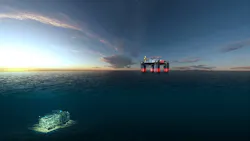
Subsea electrification is the practice of powering seabed-mounted oil and gas equipment—pumps, compressors, separators and control systems—using electrical power delivered from a topside facility, rather than relying solely on hydraulic or mechanical actuation.
It has become one of the defining technologies behind modern subsea processing, enabling operators to boost recovery rates and tie back fields from much greater distances than earlier hydraulic-only systems allowed.
Why did the industry move to electrical systems?
Early subsea fields relied on hydraulic power and control fluid pumped down through umbilicals from a host platform.
This approach worked well for short step-out distances, but as operators pushed into deeper water and fields farther from existing infrastructure, hydraulic systems began to show their limits:
- Pressure losses grow with distance;
- Response times slow down; and
- The equipment that can be operated hydraulically is fundamentally simpler than what electrical power can support.
Electrical power distribution solves these problems. It transmits energy more efficiently over long distances, responds faster and can drive sophisticated rotating equipment (e.g., multiphase pumps and compressors) directly on the seabed.
This has made electrification a prerequisite for the most ambitious subsea processing projects of the last two decades.
What are the core components of a subsea electrical system?
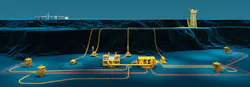
A typical subsea electrification architecture includes:
- Topside power supply that converts and conditions electrical power, often through variable speed drives (VSDs), before it is sent subsea.
- Umbilicals that now carry high-voltage electrical cables alongside hydraulic, control and chemical injection lines.
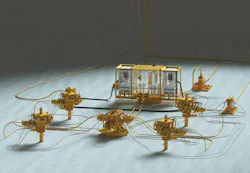
- Subsea transformers and switchgear that step down voltage and distribute power at the seabed.
- VSDs that regulate motor speed for pumps and compressors at depth.
- Subsea connectors and penetrators that provide wet-mate or dry-mate electrical connections, one of the toughest engineering challenges given pressure and sealing demands.
What are the advantages of subsea electrification?
One of the most significant advantages is the ability to support longer tiebacks. Electrical power can be transmitted more efficiently over long distances than hydraulic fluid, enabling fields tens of kilometers from the nearest host facility.
Subsea electrification can also improve hydrocarbon recovery and field economics (i,e., higher recovery rates). Electrically driven pumps and compressors help maintain flow rates and reservoir pressure as fields mature, extending production life and increasing the amount of recoverable resources.
Another benefit is the ability to deploy advanced subsea processing equipment. Technologies such as multiphase pumps and subsea gas compressors require electrical power and enable operators to process and boost production directly on the seabed.
Electrical systems further provide faster and more precise control than traditional hydraulic systems. This can improve operational performance, enhance equipment protection and enable more sophisticated monitoring and automation capabilities.
Finally, subsea electrification can reduce the topside footprint and environmental risk of offshore developments. Processing equipment located on the seabed may reduce the need for new platform infrastructure, while fewer hydraulic fluid lines lower the potential for fluid leaks. Electrified systems can also support phased field developments, allowing operators to expand subsea infrastructure as new tiebacks are added.
What are the key engineering challenges?
While subsea electrification offers significant operational benefits, deploying electrical equipment on the seabed presents unique engineering challenges. Because subsea systems are expected to operate for decades with limited intervention, reliability and qualification standards are particularly stringent.
The main challenges are:
-
Ensuring long-term reliability: Subsea electrical systems are typically designed to operate for more than 20 years in harsh offshore environments. Because repairs are costly and access is limited, operators place a premium on equipment reliability, fault tolerance and condition monitoring.
-
Developing robust subsea electrical connections: High-voltage wet-mate connectors must maintain electrical insulation and sealing integrity under extreme pressure and corrosive seawater conditions. Limited standardization across suppliers can also create integration and maintenance challenges.
-
Managing heat and power transmission: Electrical equipment installed in sealed subsea enclosures must dissipate heat without traditional cooling methods. In addition, power losses can become a concern when transmitting electricity across long-distance tiebacks.
-
Controlling project costs: Subsea-rated electrical equipment is expensive to design, manufacture and qualify. The power distribution infrastructure required for long tiebacks can further increase upfront development costs.
-
Meeting qualification and regulatory requirements: New subsea electrical technologies must pass extensive testing and certification before operators will deploy them in critical offshore applications. This qualification process can lengthen project schedules and increase development costs.
Despite these challenges, continued advances in subsea power distribution, monitoring and control technologies are helping accelerate adoption of electrified and all-electric subsea production systems.
What are examples of subsea electrification in practice?
1. Åsgard Subsea Compression (Norway)
Operated by Equinor in the Norwegian Sea, Åsgard was the world's first full-scale subsea gas compression system. Electrically driven compressors installed directly on the seabed boost pressure to maintain gas flow from declining reservoirs, extending field life by an estimated several years without requiring a new platform.
2. Jansz-Io Compression, Gorgon Project (Australia)
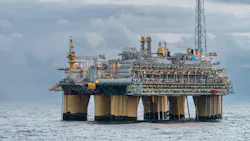
Chevron's Jansz-Io project uses subsea electrically powered compression to sustain gas deliverability from a high-pressure reservoir as it depletes, illustrating how electrification supports fields where topside compression would be impractical.
3. Ormen Lange (Norway)
Shell's Ormen Lange is a subsea gas field where all production equipment sits on the seabed, with processed gas piped directly to an onshore plant. While primarily hydraulically controlled in its original design, it laid important groundwork for later electrification concepts used in similar deepwater, long-tieback developments.
4. Peregrino Field (Brazil)
The Peregrino development uses subsea boosting with electrically driven pumps to improve heavy oil recovery, demonstrating electrification's role in maximizing output from technically challenging reservoirs.
(Note, Equinor closed the sale of a 40% operated interest in the Peregrino Field to PRIO, which then assumed full operatorship, in November 2025.)
Looking ahead
Subsea electrification continues to expand in scope, with the industry now exploring all-electric subsea factories that remove hydraulic systems entirely in favor of fully electric actuation and power distribution.
This approach replaces traditional hydraulic controls with electric actuators that operate valves and other subsea equipment, simplifying system architecture and reducing maintenance requirements.
As step-out distances grow and marginal fields become harder to justify with new platforms, electrification is likely to remain central to how the offshore industry unlocks remaining reserves.
Offshore's "What Is...?" series
Young professionals in the offshore energy industry often encounter technical terms and acronyms that seasoned subject matter experts (SMEs) know by heart—but aren’t always clear to the next generation. Offshore’s new “What Is…?” educational series aims to bridge that gap by providing concise, practical explainers for emerging professionals and newcomers to the industry.
Some of the most-searched topics we've already covered include:
- What is an FPSO?
- What is a dynamic positioning (DP) system?
- What is an SOV?
- What is directional drilling?
- What is CCS?
- What is floating wind?
- What is an offshore substation (OSS)?
- What is a digital twin?
- What is the deepwater oil and gas field development life-cycle?
- What is subsea electrification?
If there’s an offshore energy subject you’d like to highlight in a brief explainer article (600-1,200 words), reach out to Chief Editor Ariana Hurtado at [email protected] for more information.
About the Author
 Gaurav Gupta
Gaurav Gupta
Gaurav Gupta is associate manager with MarketsandMarkets, where he specializes in market research, business consulting and strategic analysis across the global energy sector. With more than a decade of experience spanning oil and gas, energy markets, and industry intelligence, he has led research teams and advised clients on market trends, growth opportunities, and competitive dynamics.
Gupta holds an MBA in oil and gas management from the University of Petroleum and Energy Studies (UPES) and has extensive expertise in upstream energy analysis and market forecasting.
He can be reached at [email protected].
Related
