Seatrium advances next-generation offshore platforms through research partnerships
Key highlights:
-
Seatrium is leveraging AI, digital twins and advanced digital engineering to improve the design, operation and lifecycle performance of floating offshore wind and offshore production assets.
-
Research collaborations with NUS, TCOMS and SIT are supporting developments in floating wind, offshore digitalization, remote operations, and workforce development.
-
Technologies being developed for floating wind applications could also be applied to FPSOs, FLNG vessels, offshore construction vessels and future carbon management infrastructure.
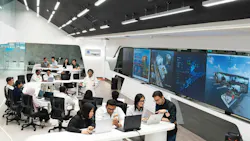
Global energy insecurity is driving the upsurge in offshore oil and gas investment and the resurgence of offshore wind. This presents widespread opportunities for the major engineering and construction groups, but also attendant pressures to safeguard the long-term performance and security of the new-generation facilities.
Over the past couple of years, Seatrium has formed various collaborations to strengthen and modernise its design and engineering capabilities, most recently with academic institutions in Singapore. Offshore spoke to Wey Lii Lee, senior vice president of Seatrium Digital, and Aziz Merchant, executive vice president of Tech & New Product Development with Seatrium Ltd., about these initiatives and some of the main priorities for the company's clients going forward.
What you'll learn:
-
How Seatrium is applying AI and digitalization to offshore engineering
-
Where floating wind technology development is headed
-
Why research partnerships are becoming increasingly important in offshore innovation
Offshore: Seatrium has recently expanded its collaborations with research institutions, technology partners and academia. How are these partnerships helping the company advance digitalization, innovation and lower-carbon solutions for the offshore and marine industry?
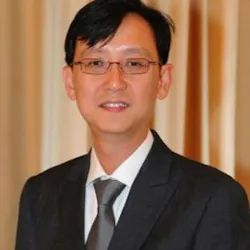
Wey Lii Lee: Seatrium continues to invest in technology development, digitalization, and industry partnerships to enhance the performance, safety, and sustainability of offshore and marine assets. Through collaborations with research institutions, customers, and technology partners, Seatrium is advancing solutions across floating offshore wind, offshore energy infrastructure, digital engineering, and low-carbon solutions, while applying its decades of offshore engineering experience to support the transition towards a lower-carbon energy future.
Today, our approach to innovation is increasingly ecosystem-led. Through platforms such as the AI Acceleration Hub and tie-ups with institutes of higher learning, including the Seatrium Professorship Forum with the National University of Singapore, we are bringing industry partners and technology companies, academia, and government to co-develop, test, and scale new solutions. Our focus on tripartite collaboration is intentional, as it not only accelerates innovation but also helps to build the next generation of engineering and digital talent needed by the offshore and marine industry in Singapore and globally.
At the same time, our integrated capabilities allow us to take innovation from concept into application. Across the Group, we bring together proprietary technology and design, EPC, and fabrication capabilities with digital, software and operational technology expertise, as well as offshore and lifecycle services. This enables us to look not only at the physical asset, but increasingly at the intelligence and services that can be embedded into and delivered around that asset throughout its lifecycle.
Offshore: The Technology Centre for Offshore and Marine (TCOMS) and the National University of Singapore Artificial Intelligence Institute announced the CATALYST initiative in May. Then they signed an MoU with Seatrium to advance deployment of AI in maritime and marine/offshore operations. What are some of the areas of improvement that are of mutual interest in the offshore sphere?
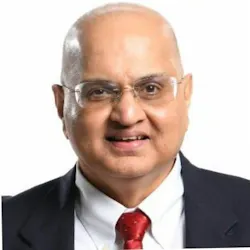
Aziz Merchant: The CATALYST collaboration focuses on applying artificial intelligence (AI), machine learning, and advanced digital technologies to enhance the design, engineering, operation, and lifecycle performance of floating offshore wind systems. A key research area we are focusing on is AI-assisted cyber-physical operations, where better prediction of ocean conditions and platform motion can help anticipate how a floating wind system will behave and support more proactive control within turbine operating limits. We are also looking at hydrodynamic performance and more accurate modeling of platform motions, as well as mooring behavior, including the interaction between the platform, mooring system, and surrounding environment.
Floating wind remains both a technically complex yet relatively nascent energy source. Better modeling and simulation can give engineers greater confidence earlier in the design process while reducing engineering cycle times, computational requirements, data-storage needs, and cost. Ultimately, the intention is for research outcomes to directly strengthen our floating wind technology development capabilities and support the continued advancement of our floating wind solutions, including our semisubmersible floating wind foundation concept.
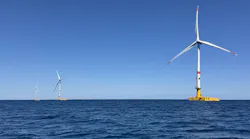 floating Eolmed turbines
Offshore: Is wider use of AI and digital twin solutions also needed because of limited operational feedback, with so few floating offshore wind projects up and running?
Lee: The relatively limited operational history of floating offshore wind when compared to conventional offshore energy developments creates an opportunity for digital technologies to accelerate learning and reduce uncertainty. At the same time, these are highly complex, coupled systems. Turbine behavior, platform motion, moorings, subsea cables, structural fatigue, and environmental loading all interact. AI and digital twins allow engineers to bring together numerical simulations, physical model testing, design data and, increasingly, measurements from operating assets to build a more complete picture of how the system is likely to behave.
However, I would say that the use of digital twins is not intended to replace operational experience. Rather, they provide an additional tool to improve design validation, optimize operations, and enhance lifecycle management as the floating wind industry scales.
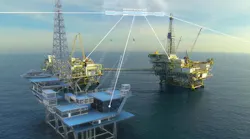 digital twin offshore platforms
Offshore: Could the capabilities developed through CATALYST also benefit Seatrium’s R&D and engineering for floating offshore oil and gas facilities such as deepwater production platforms, FLNG and construction vessels?
Merchant: The underlying AI, data analytics, and digital twin capabilities developed through CATALYST do have potential applications beyond floating offshore wind. One of the primary benefits of developing and investing in capabilities in this area is that the underlying technologies are not necessarily limited to a single energy solution.
For floating production systems, for example, similar approaches could support better prediction of vessel motions and station-keeping performance, fatigue monitoring, and predictive maintenance. For FLNG facilities, applications could include digital monitoring of topsides equipment, process optimization, and reliability-centered maintenance. The same underlying capabilities can also support vessel-performance prediction, condition monitoring, and safer marine operations on offshore construction vessels and other marine assets.
Ultimately, our objective is to build digital engineering capabilities that can be applied broadly across Seatrium’s offshore and marine technology portfolio. This is strengthened by the breadth of capabilities we have across the Group that allow us to connect the “hardware” of our assets with the digital intelligence needed to optimize how it is designed, built, operated, and maintained over time. Over time, we see potential to move further towards technologically enhanced offshore and marine assets, where technologies such as digital twins, AI, remote monitoring, and predictive analytics are considered from the design stage rather than added later in the asset lifecycle.
 FPS sentiments survey market to stay active through 2028
Offshore: Since the Seatrium Professorship at the NUS College of Design and Engineering was established in 2023, what offshore-related research has it supported?
Merchant: The Seatrium Professorship provides a platform for research in areas closely linked to the future of offshore and marine engineering. These include advanced offshore engineering, structural health monitoring, offshore renewable energy technologies, marine engineering optimization, and advanced modeling and simulation.
Digitalization is also becoming increasingly important. This includes research into how AI and other digital tools can be applied to marine and offshore systems to improve the way assets are designed, constructed, and managed through their operating lives.
For Seatrium, the value of the collaboration is not only individual research outcomes. It also helps deepen the engineering and R&D capabilities needed to take emerging technologies from research into practical offshore applications. Just as importantly, collaborations with institutes of higher learning (IHLs) such as NUS allow us to connect experienced industry practitioners with researchers, students, and the next generation of engineers. Building that pipeline of talent and creating opportunities for knowledge transfer and exchange are essential if the industry is to continue pushing the boundaries of offshore engineering.
Offshore: Another new initiative to advance Singapore’s offshore and marine sector is the Offshore & Marine Digital Learning Laboratory at SIT Punggol Campus, inaugurated by Singapore Institute of Technology (SIT) and Seatrium in February. What are the shared goals, and what are the potential benefits to Seatrium’s future operations?
Lee: The Offshore & Marine Digital Learning Laboratory is intended to bridge the gap between developing a technology and applying it to a real operating environment. Through our partnership with SIT, we work on applied research where we co-develop and test solutions against practical challenges in shipyard and offshore operations, while also building the workforce capabilities needed to deploy them.
This collaborative model is important to Seatrium: we see innovation as something that only flourishes when we work together across the ecosystem at large. By connecting our engineering and operational expertise with institutes of higher learning, technology partners and other specialists in the ecosystem, we can bring different disciplines together, test ideas against real industrial challenges, and accelerate their path towards practical deployment. At the same time, students and researchers gain exposure to real-world offshore and marine applications, helping to develop the future talent base for the industry.
One area of focus that we’re always looking at is applied research settings on sustainability and energy efficiency. Technologies such as microgrid digital twins, energy-system modeling, and simulation tools can be used to develop and test ways of optimizing nearshore and coastal energy infrastructure. These capabilities can also support Seatrium’s longer-term work in nearshore electrification, drawing together our engineering, digitalization, and energy-systems expertise.
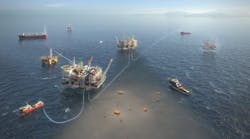 Tampnet Connected Platform
Offshore: The company stated that research conducted at the laboratory would be anchored on three strategic themes, including “Digital Yard Technology”, and 5G maritime use cases featuring AI-driven remote inspection and monitoring.
Lee: When we refer to Digital Yard Technology, we mean the suite of digital tools being applied across the shipyard value chain, from engineering and procurement through to construction and commissioning. This includes digital twins, AI and machine learning, and applied robotics. The objective is practical: better real-time operational visibility, stronger data-driven decision-making, more efficient processes, and safer operations.
The AI-driven remote inspection and monitoring capability is currently being piloted within our yard operations. Leveraging Vision AI and 5G connectivity, the solution supports inspection activities, enhances real-time asset monitoring, and improves situational awareness across the yard.
Beyond the current pilot, our objective is to progressively expand these AI vision capabilities by collaborating with the broader innovation ecosystem, including the Singapore Institute of Technology (SIT) and other technology partners. Through these partnerships, we aim to accelerate the adoption of AI-enabled solutions that enhance safety, productivity, and operational efficiency across our operations.
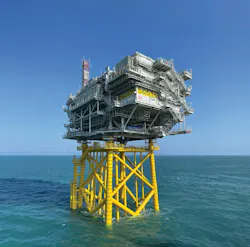
Offshore: Turning to Seatrium’s own in-house R&D, what improvements is the company pursuing in terms of topsides integration for FPSOs, FSRUs, and FLNG vessels?
Merchant: A key focus is making increasingly complex offshore facilities easier and more efficient to engineer and integrate, while maintaining the safety, reliability, and performance these assets require. That includes greater modularisation and standardisation to reduce integration complexity and improve schedule certainty. We are also using integrated 3D engineering environments to bring different engineering disciplines together earlier, improve constructability reviews, and identify potential integration issues before they reach the fabrication stage.
Weight and space optimization remain important, particularly for topsides where equipment layout, footprint and overall weight have direct implications for the wider facility design. Our integrated capabilities are particularly relevant here. Seatrium can bring together technology development and proprietary design with detailed engineering, procurement, fabrication, integration, and commissioning. Increasingly, digital engineering, and software capabilities can also be incorporated earlier in that process, helping us create a more continuous digital thread from design and construction through to operations and lifecycle management.
These capabilities are also increasingly relevant beyond traditional oil and gas facilities. The same integration expertise can be adapted to LNG infrastructure, carbon capture-related facilities, low-carbon energy hubs, and floating renewable energy systems.
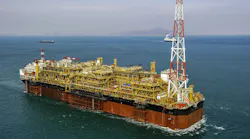 Offshore FPSO
Offshore: In that regard, Seatrium recently entered a marine carbon capture and storage (CCS) retrofit collaboration with Solvang. Can you provide details of this and any other CCS R&D projects or new dual-purpose production/CO2 injection vessel concepts that the company is pursuing?
Merchant: The work with Solvang is focused on carbon capture solutions for gas carriers and other vessels, including the onboard capture of CO2, conditioning and liquefaction, temporary onboard storage, and potential integration with the wider carbon transport infrastructure. Beyond the Solvang collaboration, we continue to explore opportunities in CCS infrastructure and marine solutions that can support carbon management.
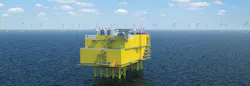
Offshore: Is the company working on new designs for offshore wind converter stations and higher-capacity cable-lay vessels for the same sector, in response to growing requirements for longer distance power transmission networks?
Merchant: We continue to develop our offshore renewable energy capabilities as the scale and technical requirements of offshore wind projects evolve. On offshore substations, our technology work includes modular solutions, high-capacity HVAC electrical infrastructure, and floating substation concepts. In floating wind, we continue to advance our floating foundation technologies.
For specialized installation vessels, such as cable-lay and construction-support vessels, we continue to assess how market requirements are evolving. Any future vessel concepts will ultimately need to respond to customer demand, project requirements, and technology readiness.
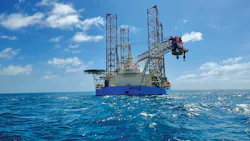
Offshore: What is the status of Seatrium’s SWACH floating foundation development for offshore wind and its Floating Living Lab Testbed?
Lee: Our floating foundation technology development has continued to evolve as offshore wind requirements, turbine sizes, and market needs have advanced. SWACH is part of a broader lineage of Seatrium's circular hull technology development, which has been explored across floating production, offshore wind and other offshore energy applications. Today, our work includes the continued development of our Floating Wind Semi-Submersible solution, a modular steel foundation concept designed to support larger next-generation turbines and serial fabrication, alongside our broader portfolio of offshore wind and floating energy technologies. More broadly, our approach is to iteratively build on the engineering knowledge and insights gained through earlier technology development as we refine and advance the next generation of floating offshore solutions.
The Floating Living Lab (FLL), similarly, remains an active part of Seatrium’s new energy and low-carbon technology program and has progressed beyond the initial testbed stage. In July 2026, it achieved its first transfer of electricity to Singapore’s national grid, validating that a marine-classed floating platform can meet the technical and regulatory requirements for grid connection and export. The FLL also achieved ABS Remote-CON notation and can be monitored and controlled from an onshore Remote Operations Center, demonstrating how our combination of physical engineering, power systems, automation, software, and operational technology capabilities can move beyond the yard and into the operation of a live offshore energy asset.
Over time, the capabilities being piloted through the FLL could also support new digital and energy service models, including floating energy storage, remote operations, and digitally enabled asset management. The broader objective is to validate solutions at relatively small scale first, then assess how they can be scaled for other applications in Singapore and internationally, including with progressively lower-carbon energy mixes.
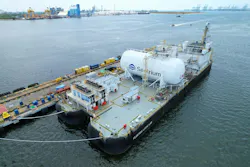
Offshore: At TCOMS in Singapore, scaled model testing has been conducted for the series of FPSOs that Seatrium is constructing for Petrobras. What is the status of this research?
Lee: Following the successful scaled-model testing program, Seatrium and TCOMS have continued discussions on how the data generated through testing can be used to support digital twin development. The aim is to combine model-test results with hydrodynamic data, station-keeping performance, and engineering simulations to develop a more complete digital representation of FPSO behavior. Potential applications include stronger design validation, improved prediction of asset behavior and, over time, lifecycle performance monitoring.
This lays a solid foundation for the development of a digital twin at commercial scale where the individual project requirements, metocean conditions and operational parameters and data can be applied across broader site and scale of the deployment.
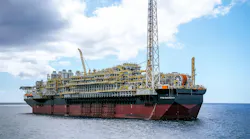 FPSO Bacalhau
Offshore: Is the company working on new concepts or research related to future deepwater production units offshore Namibia and Equatorial Brazil — for example, to address local environmental conditions or hydrocarbons composition?
Merchant: From an engineering perspective, these and other emerging deepwater basins illustrate why offshore production solutions increasingly need to be adaptable to very different field conditions.
Our technology work includes areas such as hull and station-keeping optimization, performance in challenging metocean environments, topsides integration, lifecycle reliability, and digital monitoring and predictive maintenance. Seatrium’s integrated technology portfolio allows these challenges to be considered across the asset lifecycle — combining proprietary hull and offshore design capabilities with engineering and EPC execution, and increasingly with digital twins, software, remote monitoring, and predictive analytics.
The engineering solution for any particular field has to take account of factors including water depth, environmental conditions, reservoir characteristics, produced-fluid composition, and available local infrastructure. Our approach is therefore to develop capabilities that can be configured around the requirements of the individual development rather than assume that one design will suit every basin. While we do not have anything new to share on this matter at this stage, we will inform the market of new research and development projects as our plans progress.
Offshore: Finally, is Seatrium pursuing new joint ventures in Malaysia, Indonesia, Thailand, Vietnam or Brunei to capture the offshore oil and gas and CCS opportunities emerging throughout the Southeast Asia region, in both shallow water and deepwater basins?
Merchant: Southeast Asia remains an important offshore energy market for Seatrium, spanning conventional oil and gas developments, brownfield extensions and floating production systems, as well as emerging opportunities in CCS and other energy-transition infrastructure.
We continue to evaluate different ways of working with customers, technology providers, and local industry partners across the region. Depending on the opportunity, that could involve technology or engineering collaboration, local capability development or project-specific partnerships.
Taking a more agile approach to how we work with prospective customers is increasingly important as offshore energy projects become more technologically complex and multi-disciplinary. Seatrium’s role is often to integrate capabilities across that ecosystem — bringing together our own technology, design, engineering, EPC, digital, and offshore-service capabilities with those of customers, specialist technology providers, research institutions, and local partners to develop practical solutions at scale.
About the Author
 Jeremy Beckman
Jeremy Beckman
Staff Writer / Editor, Europe
Jeremy Beckman has been Editor Europe, Offshore since 1992. Prior to joining Offshore he was a freelance journalist for eight years, working for a variety of electronics, computing and scientific journals in the UK. He regularly writes news columns on trends and events both in the NW Europe offshore region and globally. He also writes features on developments and technology in exploration and production.