How modular floating production is reshaping FPSO, FLNG and FSRU project delivery
Key highlights:
-
Modular, standardized FPSO, FLNG and FSRU concepts are gaining traction as operators seek to improve schedule certainty, reduce execution risk and enhance capex predictability across offshore developments.
-
Earlier assurance and repeatable design frameworks can streamline project delivery, allowing stakeholders to focus reviews on project-specific differences rather than repeatedly assessing proven baseline designs.
-
Industry collaboration will be critical to the next generation of floating production, bringing together operators, shipyards, EPC contractors, regulators, lenders and classification societies to support faster and more predictable project execution.
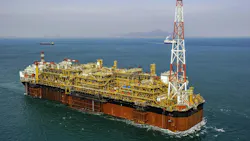
By Anna Apostolopoulou and Goz Gwam, Lloyd's Register
The offshore industry is entering a new phase of floating production delivery, shaped by repeatability, earlier assurance and stronger execution confidence.
As operators seek faster sanctioning, lower delivery risk and better life-cycle performance, the market is moving toward modular and pre-approved FPSO, FLNG and FSRU concepts.
This creates opportunities for established contractors while opening space for innovation across shipyards, EPC contractors and offshore technology developers.
The future of floating production will be defined by how effectively the industry combines innovation, repeatability and independent assurance into scalable delivery models that improve confidence across the project lifecycle.
Why this matters
- Operators are looking for ways to reduce cost overruns and schedule delays on increasingly complex offshore developments.
- Standardized FPSO, FLNG and FSRU concepts could help shorten development timelines while improving project certainty.
Beyond speed: Delivering capex confidence
The value of modular floating production is not only faster delivery. It is also about improving certainty around capex, execution and long-term performance. Early-stage design maturity, standardized engineering and repeatable equipment strategies can help reduce redesign, procurement disruption and integration risk.
This is where early assurance becomes commercially important. By engaging during concept development and pre-sanction phases, Lloyd’s Register can help stakeholders review design maturity, constructability, interface risk, integration complexity, standardization, life-cycle integrity and procurement exposure.
The objective is not simply compliance, but a faster and cheaper pathway from concept selection to final investment decision and safe operation.
 FPS sentiments survey market to stay active through 2028
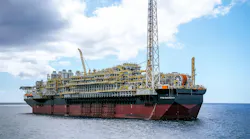 FPSO Bacalhau
Supporting a broader offshore ecosystem
The move toward modularization is not limited to a small group of contractors. Across Asia, particularly in China, South Korea and other shipbuilding centers, yards and engineering groups are investing in standardized hull concepts, modular integration and repeatable construction models.
That broader participation matters. A stronger offshore market needs a diverse ecosystem of designers, yards, fabricators and technology providers. Modularization should not mean one standard design for every project. It should mean creating proven building blocks that can be adapted to different field requirements, while maintaining confidence in their safety, performance and delivery.
Independent assurance should support that ecosystem fairly and transparently, enabling innovation while maintaining technical rigor and safety confidence.
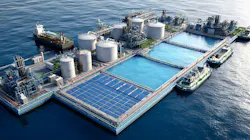
A collaborative model for next-generation FPSOs
For contractors, there is significant opportunity to deepen collaboration around next-generation offshore delivery models. This could include early concept assurance, Approval in Principle pathways, capex-focused design reviews, modular approval, repeatable classification frameworks, life-cycle integrity planning, digital assurance, redeployment support and regulatory alignment across jurisdictions.
These principles are equally applicable to modular concepts being developed by shipyards, EPC contractors and technology providers. The goal is not to promote one design solution, but to create a framework where credible concepts can move through assurance pathways efficiently and predictably.
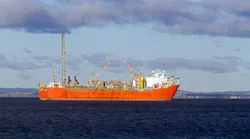 offshore FPSO operations
Independent assurance as an enabler of investment confidence
As floating production concepts are deployed across West Africa, Brazil, Guyana and Southeast Asia, operators, governments and lenders increasingly require assurance that standardised designs can meet the requirements of different environmental, operational and regulatory conditions.
This is where equivalence-based and delta-focused review models become valuable. Once a proven design has an established technical basis, subsequent projects can focus assurance on the differences that matter rather than repeating the full review from the beginning. Independent class assessment remains essential, but effort can be concentrated on project-specific changes and risk drivers.
That approach can support improved capex predictability, schedule confidence, procurement planning, lender confidence, alignment between operators, EPCs, shipyards and regulators, and more effective life-cycle integrity management. In a selective offshore capital environment, these advantages are becoming strategically important.
 FLNG designs evolve to meet market needs
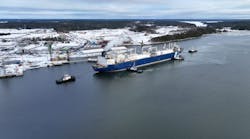 Gasgrid Finland
Building the next offshore delivery model together
The offshore industry is under pressure to deliver energy infrastructure faster, more safely and with greater certainty. Meeting that challenge will require stronger collaboration across the value chain: operators, floating production contractors, shipyards, EPC companies, regulators, lenders and classification societies.
The next generation of floating production will be shaped by partnerships that combine innovation with independent assurance, modularity with project-specific discipline, and execution efficiency with long-term asset integrity. The opportunity is not only to develop repeatable designs, but repeatable confidence.
While companies are playing an important role in advancing next-generation FPSO, FLNG and FSRU concepts, the broader industry is also evolving rapidly. Shipyards, EPC contractors and offshore designers across Asia are developing their own modular and standardized floating production solutions.
This diversity of innovation is positive for the sector. The objective is not to promote a single pathway, but to support the wider industry with independent assurance, transparent technical evaluation and proportionate classification approaches.
The direction is clear: repeat what is proven, verify what is different and create assurance models that support safer, smarter and more commercially predictable offshore projects.
Key takeaway
The floating production sector is increasingly moving toward modular, repeatable FPSO, FLNG and FSRU designs supported by early assurance, with the goal of improving project economics, reducing risk and accelerating offshore project delivery.
About the Author
 Anna Apostolopoulou
Anna Apostolopoulou
Anna Apostolopoulou is Lloyd’s Register’s global floating offshore installations director, leading the organization’s global offshore segment strategy and supporting clients across the offshore energy sector. Based in Athens, she works with stakeholders worldwide to advance safe, efficient and sustainable offshore operations.
With extensive experience in offshore and maritime industries, she helps drive innovation and collaboration across the floating offshore sector, supporting the development of projects and technologies that enable the energy transition.
 Goz Gwam
Goz Gwam
Goz Gwam is Lloyd’s Register’s business director and senior representative for Africa, leading strategic growth and client engagement across the continent. Since joining LR in 2013, he has played a key role in expanding the organization’s presence across Sub-Saharan Africa and strengthening relationships with maritime and energy stakeholders.
Alongside his commercial leadership, Goz champions talent development initiatives across Africa, including LR’s Chevening Scholarship program. Before joining LR, he held technical and project management roles in the offshore and communications sectors. He holds an MBA from IE Business School.