ADIPEC 2026: Drydocks World CEO sees diversification reshaping offshore energy through 2030
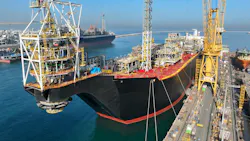
Deepwater oil and gas developments, FPSOs and offshore wind transmission projects are expected to remain important sources of offshore investment through the end of the decade.
During ADIPEC 2026, Offshore spoke with Captain Rado Antolovic, CEO of Drydocks World, about growth opportunities across conventional and renewable energy markets, the role of AI and digitalization, and how offshore contractors are adapting to a more integrated energy landscape.
Offshore: Where are you seeing the strongest investment activity today?
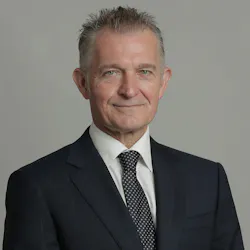
Antolovic: We are seeing strong investment activity across several offshore energy segments, particularly deepwater oil and gas, offshore gas developments, floating production infrastructure and offshore wind transmission systems.
Deepwater oil and gas remain major drivers of investment, particularly in Brazil, West Africa and selected emerging offshore basins. These developments are supported by long-term energy demand, advances in subsea technologies and the need to replace declining production from mature fields.
Offshore gas and LNG infrastructure are also attracting substantial investment. Natural gas continues to play an important role in energy security and in supporting the transition toward lower-carbon energy systems. We see growing opportunities in floating LNG solutions, offshore gas processing and associated marine infrastructure.
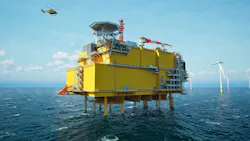
At the same time, offshore wind is creating significant demand for large-scale electrical infrastructure, particularly high-voltage direct current (HVDC) converter platforms required to transmit renewable electricity from offshore wind farms to onshore grids.
At Drydocks World, we are actively involved in this market through major offshore wind transmission projects, including Norfolk Vanguard West and East, while pursuing additional large-scale HVDC opportunities in Europe.
Our perspective is that the strongest long-term opportunity lies in maintaining a diversified portfolio across conventional energy, natural gas and renewable energy infrastructure. These sectors are complementary from an engineering and fabrication perspective and allow us to leverage our capabilities across multiple markets.
Offshore: What are the biggest challenges offshore developers face between FID and first production?
Antolovic: The principal challenges remain project complexity, cost escalation, supply-chain constraints, engineering maturity and schedule certainty.
Offshore projects are becoming increasingly sophisticated, often involving highly integrated engineering systems, advanced electrical equipment, complex subsea infrastructure and demanding installation requirements.
One of the most significant challenges is ensuring that engineering is sufficiently mature before major procurement and construction activities begin. Changes introduced during fabrication can have substantial consequences for cost, productivity and delivery schedules.
Another critical factor is the availability of specialized equipment and skilled resources. Long-lead electrical systems, turbines, compressors and other critical components can determine the overall project schedule.
We also see increasing pressure on contractors to deliver greater certainty in pricing, construction milestones and final commissioning.
At Drydocks World, our approach is based on early contractor involvement, integrated engineering and construction planning, disciplined project execution, and close collaboration with customers and technology partners.
Successful offshore developments require three fundamental disciplines:
- Engineering maturity;
- Rigorous project management; and
- Early identification and mitigation of risks.
Ultimately, the objective is not simply to complete fabrication on time, but to ensure that the entire offshore development reaches first production safely, efficiently and within its approved investment framework.
Offshore: What trends are you seeing in platform life-extension, upgrades and integrity management?
Antolovic: The life extension of existing offshore infrastructure represents one of the most attractive and sustainable areas of investment in our industry.
Many offshore platforms, floating production units and marine assets were originally designed for operational lives of approximately 20 to 30 years. With appropriate engineering assessment, structural reinforcement, equipment replacement and technology upgrades, many can remain productive beyond their original design life.
We are seeing increasing demand for structural integrity assessments, corrosion management, equipment modernization, process optimization, safety system upgrades and digital monitoring solutions.
Operators are also placing greater emphasis on improving energy efficiency and reducing emissions from existing assets rather than automatically replacing them with entirely new facilities.
From our perspective, this represents a significant opportunity for specialized repair, conversion and upgrade facilities.
Drydocks World has extensive experience in complex vessel and offshore asset conversions, life-extension programs and major repair projects. These activities are an important part of our business, complementing newbuild EPC projects.
The industry is increasingly recognizing that extending the productive life of existing infrastructure, where technically and economically justified, can provide substantial financial and environmental benefits.
However, life extension must always be supported by rigorous engineering verification, independent assurance where required, and uncompromising safety standards.
Offshore: How do you see demand evolving for FPSOs and floating production infrastructure?
Antolovic: We expect demand for floating production infrastructure to remain strong through the remainder of this decade, particularly in Brazil, West Africa and selected emerging offshore markets.
FPSOs continue to provide one of the most effective solutions for developing deepwater and remote offshore fields, especially where fixed infrastructure or pipeline networks are economically or technically challenging.
Brazil remains a particularly important market because of its substantial deepwater resource base and continued investment in presalt developments.
West Africa also offers significant opportunities, including developments in established producing countries and emerging offshore provinces.
We see increasing interest in both newbuild FPSOs and the conversion or redeployment of existing floating assets, depending on reservoir characteristics, project economics and delivery requirements.
There is also growing demand for floating gas processing and LNG solutions, which can provide greater flexibility and, in certain circumstances, shorter development schedules than conventional onshore infrastructure.
At Drydocks World, we are pursuing opportunities in FPSO conversion, offshore production upgrades and floating LNG infrastructure, including our involvement in the AMIGO LNG barge development in Mexico.
Looking forward, we expect customers to place greater emphasis on standardized designs, modular construction, reduced emissions and improved delivery certainty.
The future of floating production will be defined not only by production capacity, but increasingly by life-cycle economics, environmental performance and the speed at which assets can be brought into operation.
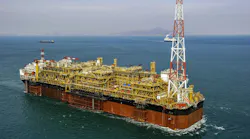 Offshore FPSO
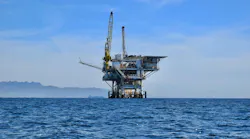
 Shell's Appomattox platform in the Gulf of Mexico
Offshore: Can you discuss a recent offshore project demonstrating changing customer expectations?
Antolovic: A particularly relevant example is our involvement in the Norfolk Vanguard offshore wind transmission program, comprising major HVDC converter platform projects.
These are highly sophisticated offshore electrical infrastructure developments, integrating large-scale structural fabrication with advanced electrical and control systems.
Unlike conventional offshore fabrication projects, HVDC platforms require exceptionally close coordination between structural engineering, electrical system suppliers, technology partners, construction teams and offshore installation contractors.
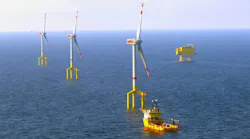 HVDC use on DolWin1 offshore wind farm near Germany
The scale and complexity of these projects demonstrate how customer expectations are evolving:
- First, customers expect a much higher degree of engineering integration before fabrication reaches critical milestones.
- Second, schedule certainty has become increasingly important because offshore converter platforms form part of a much larger energy infrastructure system. A delay in one major component can affect the commissioning of the entire transmission network.
- Third, digital engineering, advanced project controls and transparent progress reporting are becoming essential for managing interfaces and anticipating potential delays.
At Drydocks World, we are responding by expanding our EPC capabilities, including our engineering operations in Europe, and strengthening integration between design, procurement, fabrication and project execution.
Our objective is to provide customers with greater certainty throughout the project lifecycle.
The fundamental change is that customers increasingly expect contractors to act as integrated delivery partners, rather than simply fabrication providers.
Offshore: Which energy transition opportunities make the most business sense today, and which are still several years away from scaling?
Antolovic: From an offshore infrastructure perspective, the most commercially attractive energy transition opportunities today are offshore wind electrical infrastructure, electrification of offshore assets, energy-efficiency upgrades and the modernization of existing production facilities.
Offshore wind, particularly HVDC transmission infrastructure, represents an important long-term opportunity for companies with advanced engineering and large-scale fabrication capabilities.
 Offshore Wind Farm with Dozens of Turbines at Sunset
At Drydocks World, we see significant potential in the design, fabrication and integration of offshore converter platforms supporting renewable energy transmission.
Electrification of offshore oil and gas infrastructure also offers opportunities to reduce operational emissions, particularly where reliable lower-carbon electricity is available.
Another commercially attractive segment is the upgrading of existing vessels and offshore installations to improve fuel efficiency, reduce emissions and extend operational life.
Carbon capture and storage is a promising longer-term market, especially where offshore geological storage can be integrated with established industrial clusters. However, its broader commercial deployment remains dependent on carbon pricing, regulatory frameworks, infrastructure investment and long-term commercial commitments.
Similarly, large-scale offshore green hydrogen production and certain emerging floating renewable technologies will require further cost reductions, infrastructure development and stronger commercial frameworks before they achieve widespread deployment.
Recent energy outlooks reinforce this distinction between commercially established technologies and emerging solutions that still require policy support and improved economics.
Our strategy is, therefore, to remain technologically flexible while maintaining strict commercial discipline.
We believe the energy transition must be supported by commercially viable solutions, not simply technological ambition.
Offshore: Where do you see the biggest opportunities for digital technologies and AI?
Antolovic: Digitalization and artificial intelligence (AI) will fundamentally transform the offshore engineering, construction, repair and maintenance industries over the coming decade.
The greatest opportunities are in engineering optimization, project planning, predictive maintenance, productivity improvement and operational safety.
In engineering, AI-assisted design and advanced simulation can help optimize structural configurations, reduce material consumption, improve constructability and identify potential design conflicts before fabrication begins.
In project execution, integrated digital platforms can connect engineering, procurement, production and commissioning information, providing real-time visibility of progress, productivity, costs and schedule risks.
This is particularly valuable for complex offshore EPC projects, where thousands of engineering documents, equipment packages and construction activities must be coordinated.
Predictive maintenance represents another major opportunity. By combining equipment monitoring, historical maintenance records and advanced analytics, operators can identify developing failures before they result in costly downtime.
We also see considerable potential for AI-supported inspection systems, robotics, drones and digital twins to improve structural integrity management and reduce personnel exposure to hazardous environments.
At Drydocks World, we see digital transformation as an important part of our continued development as an integrated EPC organization.
However, technology must deliver measurable improvements in safety, productivity, quality and profitability.
Our objective is not simply to introduce AI, but to use it to make offshore project delivery safer, faster, more predictable and more cost-effective.
Companies that successfully integrate AI with engineering expertise and practical construction experience will establish a significant competitive advantage.
 Person using laptop with holographic data visualizations
Offshore: What will be the biggest change in the offshore energy industry between now and 2030?
Antolovic: The most significant change will be the transformation of the offshore industry from a traditionally segmented construction and fabrication model into a more integrated, technology-driven and diversified energy infrastructure industry.
By 2030, offshore contractors will increasingly be expected to deliver complete engineering, procurement, construction, integration and commissioning solutions rather than individual fabrication packages.
Customers will demand greater certainty in project costs, delivery schedules, technical performance and life-cycle value.
Digital technologies, AI, automation and advanced project management systems will become increasingly important in meeting these expectations.
At the same time, the offshore energy market will continue to diversify.
Oil and gas will remain important components of the global energy system, particularly in deepwater developments and natural gas production. However, offshore renewable energy, electrical transmission infrastructure and lower-carbon technologies will represent an increasing share of offshore engineering and construction opportunities.
Energy security will also become a more prominent investment consideration, alongside cost competitiveness and environmental performance. The IEA’s 2026 investment outlook identifies energy security as a major influence on capital allocation across both conventional and clean energy sectors.
I also expect the industry to experience further consolidation and greater collaboration between engineering companies, fabrication yards, technology providers and energy developers.
At Drydocks World, we are preparing for this transformation by expanding our EPC capabilities, strengthening our international engineering resources, developing strategic partnerships and evaluating additional fabrication capacity to support future growth.
Our ambition is to continue evolving from a ship repair and offshore fabrication business into an international provider of integrated offshore energy infrastructure solutions.
Ultimately, I believe the winners by 2030 will be those companies capable of combining engineering excellence, digital innovation, operational efficiency and financial discipline while maintaining the highest standards of safety and quality.
More exclusive ADIPEC content:
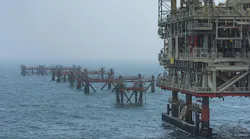 Offshore jackets in oil field in Arabian Gulf
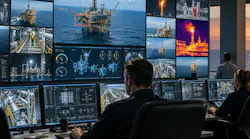 remote operations center monitoring multiple offshore assets
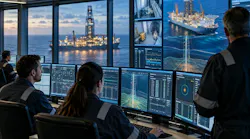 Offshore personnel monitor real-time drilling and well performance data from a digital operations center.
About the Author
 Ariana Hurtado
Editor-in-Chief
With more than a decade of copy editing, project management and journalism experience, Ariana Hurtado is a seasoned managing editor born and raised in the energy capital of the world—Houston, Texas. She currently serves as editor-in-chief of Offshore, overseeing the editorial team, its content and the brand's growth from a digital perspective.
Utilizing her editorial expertise, she manages digital media for the Offshore team. She also helps create and oversee new special industry reports and revolutionizes existing supplements, while also contributing content to Offshore's magazine, newsletters and website as a copy editor and writer.
Prior to her current role, she served as Offshore's editor and director of special reports from April 2022 to December 2024. Before joining Offshore, she served as senior managing editor of publications with Hart Energy. Prior to her nearly nine years with Hart, she worked on the copy desk as a news editor at the Houston Chronicle.
She graduated magna cum laude with a bachelor's degree in journalism from the University of Houston.
Related

 offshore renewable energy
You May Also Like
