Offshore wind's next growth phase shifts toward emerging markets despite industry headwinds
Key highlights:
-
Global offshore wind capacity reached 92.5 GW at the end of 2025 and is forecast to grow to 420 GW by 2035, with more than 328 GW of new capacity expected over the next decade.
-
While China and Europe account for more than 94% of installed capacity today, emerging markets including the Philippines, Vietnam and Brazil are laying the groundwork for significant future deployment.
-
Continued growth will depend on expanding supply chains, ports, vessels, workforce capabilities and grid infrastructure, while governments refine auction and permitting frameworks to improve project economics.
By Nina Melkonyan, Global Wind Energy Council (GWEC)
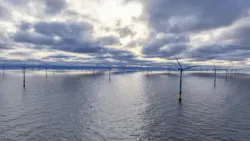
Offshore wind is quietly developing into one of the energy transition's success stories, with a current trajectory that should see 420 GW of offshore wind capacity by 2035. The technology's high-capacity factors, large-scale generation potential and the proximity to many major coastal centers of electricity demand make it particularly well placed to support rising power consumption, strengthen energy security and enable deeper electrification.
Offshore wind can meet the twin demands of clean electricity needed to power emerging industries and drive long-term industrial development, both of which drive economic growth and spur a positive cycle of economic and energy development.
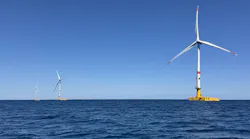 floating Eolmed turbines
The sector continues to expand despite economic and policy headwinds largely beyond its control; its inherent benefits are seeing the sector through the natural challenges of an expanding industry.
Offshore wind growth continues despite market recalibration
GWEC Market Intelligence reports a total of 9.3 GW of new offshore wind capacity connected to the grid worldwide, which is a 16% increase on 2024’s figures. That made 2025 the third-highest year for annual installation.
Across the last decade, the global offshore wind market grew by an average of 10% every year. That means at the end of 2025 total installations stood at 92.5 GW, accounting for 7.1% of total global wind capacity.
There are two stories to tell about offshore wind:
- The current mature markets, and
- The rapid advancement of the next wave of offshore wind growth.
Emerging markets poised to drive the industry's next expansion
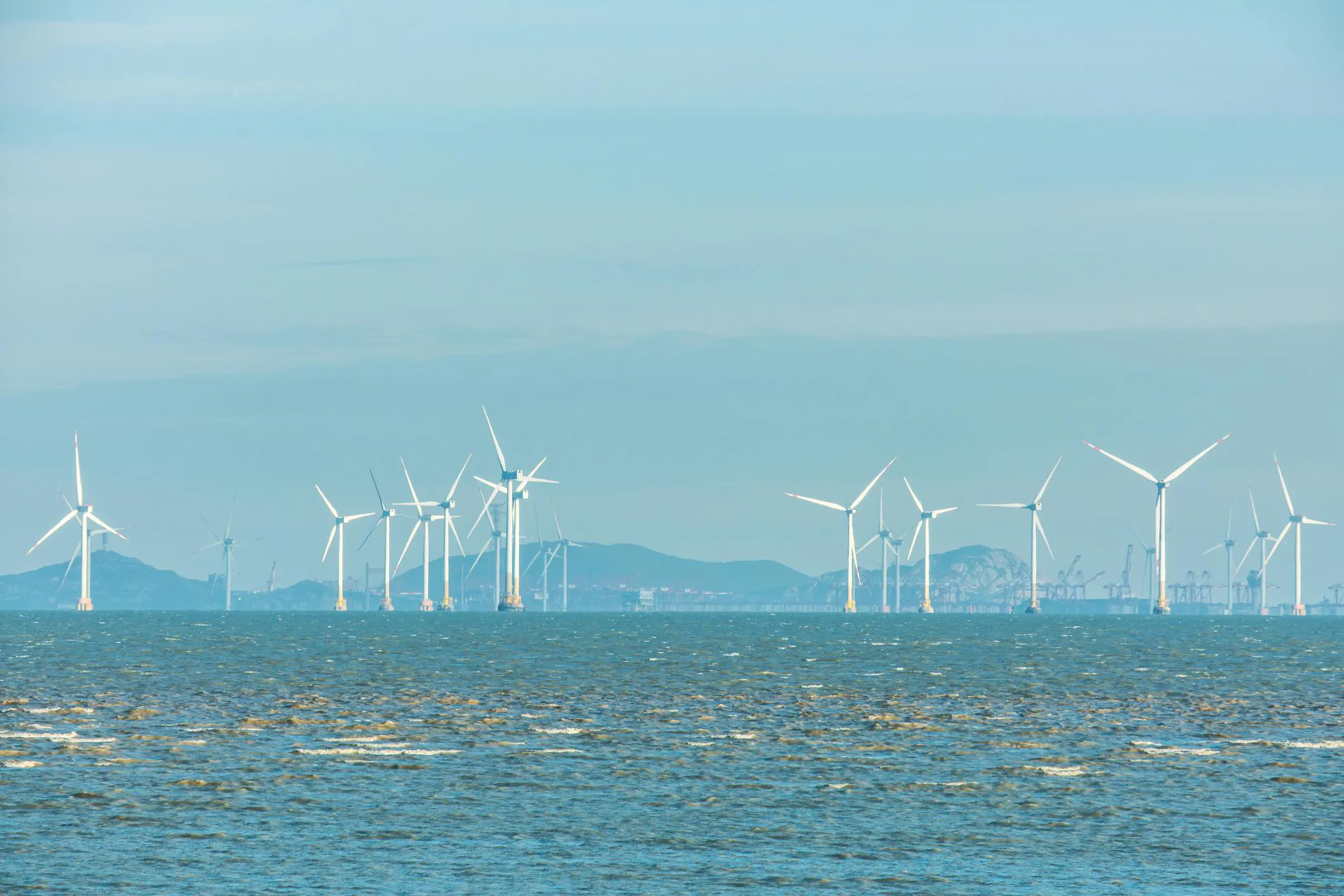
China and Europe currently dominate offshore wind. At the end of 2025, the countries are 52.3% and 41.9% of global installed capacity, respectively. China leads in APAC, while the UK, Germany and the Netherlands remain Europe’s main markets.
The excitement in the offshore sector lies in the emerging markets that are racing to deliver offshore wind as a key part of their energy infrastructure. Strong policy signals and growing investor interest are driving momentum in several key markets
In the Philippines, the Board of Investments committed US$18.9 billion to financing offshore wind with a 3.3-GW target for the country’s first auction. This support should start delivering, with the results of the country’s first offshore wind auction expected by the end of first-quarter 2027.
Vietnam is demonstrating an equally strong political commitment. The country’s rapidly growing electricity demand, heightened focus on energy security and increasingly favorable market conditions make offshore wind a perfect fit for the country’s ambitious growth plans. The government has announced plans to install 6-17 GW of offshore wind capacity by 2035, rising to 113.5-139 GW by 2050.
Brazil is another market to watch. In 2025, the country adopted a new offshore wind legal framework, supported by the Global Wind Energy Council (GWEC). This set a pathway for offshore wind to diversify the country’s power mix while driving industrial and economic development. The World Bank forecast the sector could create more than 516,000 jobs by 2050 and contribute at least US$178.5 billion to the Brazilian economy. The projections highlight why offshore wind is increasingly being viewed as both an energy and industrial development strategy.
Market recalibration lays the groundwork for future growth
For these emerging markets, the next few years are critical to translating ambition into deployment. Clear auction schedules and revenue frameworks set the market on a course to turn targets into turbines. There also needs to be early investment in ports, grids and supply chains to move projects from planning to bankability. The industry is an ally, and sustained government-industry dialogue will maintain momentum and realize the enormous potential of the offshore sector.
Policymakers and markets are now adjusting to the lessons from failed tenders and cancelled projects as the industry grows in scale. This is a necessary period of recalibration that will help establish more resilient market frameworks for future growth. The project pipeline remains inconsistent and uncertain, but fundamentals of offshore wind remain unchanged.
Global offshore wind capacity will continue to grow through this period of adjustment—the industry is working through the gears rather than stalled. A compound average annual growth rate of 24% until 2030 and 13% up to 2035 shows the trajectory is clear.
The industry expects to sail past the milestones of 30 GW of annual new capacity in the early 2030s and reach 50 GW by 2035. GWEC Market Intelligence expects more than 328 GW of new offshore wind capacity to be added over the next decade, bringing total offshore wind capacity to 420 GW by the end of 2035.
Infrastructure investment will determine the pace of future growth
The pace of deployment will increasingly depend on execution capacity. Supply chains, ports, specialized vessels and a skilled workforce must scale alongside the project pipeline, while long-term visibility will unlock early investment in manufacturing, logistics and infrastructure.
Grids can move from being a constraint to an enabler if existing networks are modernized and operated more efficiently through digitalization, storage and grid-enhancing technologies. New transmission capacity must be planned and built ahead of generation. Coordinated investment in existing and new grid infrastructure is critical to offshore wind ambitions translating into electricity delivered to consumers.
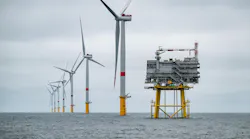
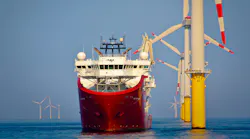 Service Operational Vessel by Offshore Wind Turbine
Infrastructure investment alone will not be enough; auction frameworks must reflect changing project economics. The industry needs long-term policy visibility, revenue certainty and risks allocated to the parties best placed to manage them. Established markets must adapt while emerging markets can design bankable frameworks now.
Realizing this potential will require decisive action from both governments and industry. Offshore wind is critical energy infrastructure, delivered through bankable auction frameworks, faster and more coordinated permitting, anticipatory investment in grids and ports, and long-term market visibility that can unlock capital and strengthen supply chains. The industry must work collectively to galvanize political momentum and turn ambition into action.
About the Author
 Nina Melkonyan
Nina Melkonyan
Nina Melkonyan is a policy officer with the Global Wind Energy Council (GWEC), based in Lisbon, Portugal. She leads GWEC's Wind Sustainability Initiative and plays a key role in the organization's offshore wind program, including coordination of the Global Offshore Wind Report. Her work focuses on offshore wind policy, sustainable supply chains and industry development. Melkonyan holds a master's degree in public policy and administration from Central European University in Vienna.