ADIPEC 2026: Why the Middle East remains a magnet for offshore investment
Key highlights:
-
Middle East offshore investment remains resilient as operators prioritize projects that combine strong economics with strategic value.
-
Offshore gas growth, emissions management and capital productivity are expected to be key themes shaping investment decisions through 2027 and beyond.
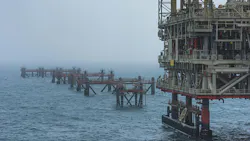
Low-cost, long-life resources and strong government support continue to make the Middle East one of the world's most attractive regions for offshore energy investment, according to Craig Nicol, Xodus' MENA advisory manager.
During ADIPEC 2026, Offshore spoke with the 25-year energy industry veteran about the trends shaping capital allocation and project development across the region.
In this exclusive Q&A, Nicol discusses how operators are balancing project economics, emissions performance, local content requirements and execution risk as they evaluate offshore oil and gas opportunities.
Offshore: The Middle East continues to attract significant offshore investment despite global economic uncertainty. What investment trends are you seeing among NOCs and operators, and which offshore sectors or project types are receiving the most attention today?

Nicol: The Middle East remains one of the most attractive regions globally for offshore energy investment, largely because operators continue to benefit from comparatively low-cost, long-life resources and strong government support.
Key trends, many of which we [Xodus] have supported on, include:
- Continued investment in offshore oil and gas developments;
- Increasing focus on brownfield optimization and infrastructure-led developments;
- Growing investment in offshore gas to support energy security; and
- Selective investment in decarbonization opportunities, such as carbon capture and storage (CCS) and electrification.
Capital allocation remains disciplined, with operators favoring projects that combine strong economics with broader strategic objectives. We are seeing that clients particularly appreciate the invaluable support on government and regional energy strategic insight, including how operators can complement existing value chains.
Offshore: From an advisory perspective, what factors are most influencing final investment decisions on offshore projects in the region?
Nicol: Investment decisions are shaped by a combination of factors that includes project economics, energy security objectives, emissions performance, local content requirements, schedule certainty and execution risk. In our advisory role, it’s clear that firms are certainly having to contend with a lot. We have recently supported many major offshore developments with portfolio and investment assessments in order to prioritize capital allocation and align the correct investment case.
While economic performance remains fundamental, operators are increasingly seeking projects that optimize across multiple objectives. Projects that demonstrate both strong commercial returns and alignment with wider strategic priorities often receive greater attention than those focused solely on production growth.
Offshore: Many Middle Eastern operators are balancing traditional oil and gas development with lower-carbon initiatives. How are companies evaluating investment opportunities across these different areas?
Nicol: Across the Gulf Cooperation Council (GCC), lower-carbon initiatives are generally not being viewed as alternatives to oil and gas investment. The focus remains firmly on developing hydrocarbon resources, maintaining production capacity and maximizing value from some of the world's most competitive energy assets.
Operators are increasingly evaluating technologies such as carbon capture and storage, electrification and emissions reduction measures where they can enhance asset value, improve efficiency, reduce carbon intensity or strengthen long-term competitiveness.
The emphasis is on using these technologies to support and optimize core oil and gas operations rather than replace them. This is a key differentiator from many global energy strategies, where investment decisions are increasingly framed as a transition away from hydrocarbons.
In the GCC, the approach is centered on producing oil and gas more efficiently and with lower emissions while continuing to invest in long-term hydrocarbon growth. Ultimately, lower-carbon initiatives are increasingly seen as complementary to, rather than substitutes for, a hydrocarbon-led growth strategy.
Offshore: Where are you seeing the biggest opportunities for creating value through better planning and advisory services?
Nicol: One of the largest opportunities for value creation remains improving decision quality during the early phases of project development.
Common challenges include:
- Uncertainty in technical and commercial assumptions;
- Incomplete evaluation of development concepts;
- Supply chain constraints; and
- Insufficient consideration of emissions performance during early design stages.
Integrated assessments that combine economics, emissions, execution risk and strategic alignment help operators make more informed investment decisions and optimize portfolio value.
Offshore: Looking ahead to 2027 and beyond, what will be the defining trends shaping offshore investment across the Middle East?
Nicol: Key trends that we are seeing now and into next year are likely to include continued growth in offshore gas investment, greater integration of emissions management into project planning, and increasing deployment of CCS and electrification technologies. On that, we are increasingly involved in advising on how offshore operators can reduce electrification and emission reduction opportunities.
We also anticipate wider use of digital tools and analytics to support decision-making and increased focus on capital productivity. Success will depend on balancing long-term hydrocarbon development with initiatives that improve efficiency, resilience and competitiveness.
ADIPEC 2026:
Offshore is an official media partner of ADIPEC. The event is taking place this week, Nov. 2-5, in Abu Dhabi.
Craig Nicol will be presenting the "From AIS Data to Emissions Reduction: Assessing decarbonisation strategies for offshore wind installation vessels" ADIPEC conference paper on Thursday, Nov. 5, in the Marine Theatre, Hall 16.
Missed the event last year?
We've got you covered: ADIPEC 2025 Special Report
About the Author
 Ariana Hurtado
Editor-in-Chief
With more than a decade of copy editing, project management and journalism experience, Ariana Hurtado is a seasoned managing editor born and raised in the energy capital of the world—Houston, Texas. She currently serves as editor-in-chief of Offshore, overseeing the editorial team, its content and the brand's growth from a digital perspective.
Utilizing her editorial expertise, she manages digital media for the Offshore team. She also helps create and oversee new special industry reports and revolutionizes existing supplements, while also contributing content to Offshore's magazine, newsletters and website as a copy editor and writer.
Prior to her current role, she served as Offshore's editor and director of special reports from April 2022 to December 2024. Before joining Offshore, she served as senior managing editor of publications with Hart Energy. Prior to her nearly nine years with Hart, she worked on the copy desk as a news editor at the Houston Chronicle.
She graduated magna cum laude with a bachelor's degree in journalism from the University of Houston.
Related

 Offshore equipment on the coast of the Persian Gulf at the Saudi Arabia port
