ADIPEC 2026: AI-enabled video is transforming offshore operations centers
Key highlights:
-
AI-enabled video analytics help offshore operators monitor multiple assets more effectively, improving safety, incident response and operational decision-making from centralized onshore operations centers.
-
Advances in edge AI, thermal imaging and private 5G are supporting smaller offshore crews, normally unattended facilities and more targeted maintenance strategies while helping reduce unnecessary offshore interventions.
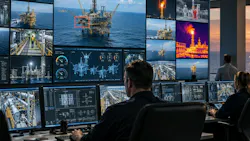
Just ahead of ADIPEC 2026, Offshore chatted with Darren Alder, head of global energy at security and surveillance specialist Synectics, about how AI-enabled video is helping onshore teams identify issues, prioritize responses and manage offshore assets with fewer personnel.
In this exclusive Q&A, Alder discusses how visual analytics, edge AI and private 5G connectivity are supporting safer operations, more targeted maintenance and improved decision-making across offshore facilities, from PPE and restricted-area monitoring to flare surveillance and equipment condition assessment.
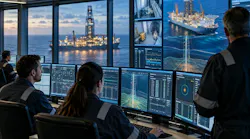
As operators expand remote operations capabilities and pursue leaner offshore staffing models, visual analytics and AI-enabled monitoring are emerging as key tools for improving situational awareness, safety and asset performance.
Offshore: Many offshore oil and gas operators are expanding remote operations capabilities. How is AI-enabled visual monitoring changing the way offshore assets are managed from onshore operations centers?

Alder: The real step change is that we're moving from cameras simply showing operators what's happening offshore to systems that can actively identify events and draw attention to things that need investigating.
Remote surveillance itself isn't new. We've been involved in projects for years where cameras on offshore installations feed into onshore control rooms. In Australia, for example, we've supported the integration of surveillance across numerous onshore and offshore facilities, with centralized monitoring and management from Perth.
But traditionally, someone still had to be watching the footage or reviewing recordings to spot an issue. AI changes that. Cameras can now analyze scenes continuously, recognize defined events and alert operators when something needs attention.
And when you combine those alerts with information from other operational systems, it becomes even more powerful. An onshore team receiving an alarm can immediately access relevant footage, assess what's happening and involve the right people, rather than starting with a call offshore to find out what's going on.
That's particularly important as operators move towards smaller offshore crews and normally unattended installations. You can't have eyes everywhere, and you don't necessarily want to send someone offshore just to establish whether there's a problem.
AI doesn't replace experienced operators or their judgement. What it does is make it possible to monitor more effectively across multiple assets, prioritize what needs attention and make better decisions with the people and resources available.
Offshore: What offshore applications are delivering the greatest value today from visual analytics, and where are oil and gas operators seeing measurable improvements in safety, efficiency or uptime?
Alder: Safety monitoring is certainly a key area, particularly where analytics can identify defined events linked to essential protocols.
On a production platform, for instance, AI analytics can detect someone entering a restricted process area or alert a supervisor when required PPE, such as goggles, a hard hat, gloves or high-visibility clothing, is not worn. This is valuable at any time, but especially during maintenance campaigns, when activities and personnel movements can change significantly.
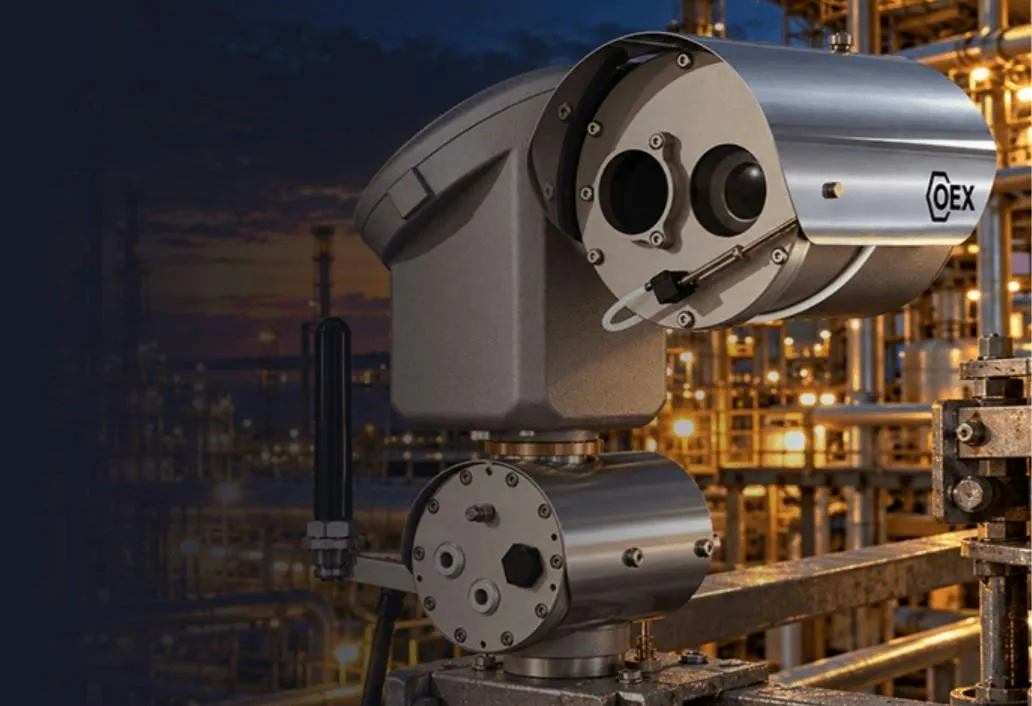
It’s useful to highlight the benefit of edge-based analytics here, something we’ll be demonstrating at ADIPEC with our COEX cameras. Here, the analytics run within the camera itself, rather than relying on a central server.
Why is this particularly interesting for offshore? Because the in-camera processing reduces demands on network bandwidth and central processing resources. It also gives operators more flexibility to introduce AI where it will deliver the greatest benefit—perhaps on just a handful of cameras monitoring higher-risk areas—without necessarily having to invest in additional server infrastructure.
It's a practical way to strengthen safety monitoring while keeping deployment proportionate to the need.
Equipment and process monitoring is another important application for analytics. Take flare monitoring. Thermal imaging paired with analytics can help operators assess flame conditions and identify changes that may indicate abnormal combustion or the potential for unburned hydrocarbon releases. With ever-tightening regulations regarding environmental impact, this has demonstrable value.
Radiometric-enabled thermal cameras can also identify temperature anomalies at selected equipment locations, helping maintenance teams target inspections more effectively and investigate potential faults before they develop into problems that could cause unplanned downtime.
And then there's the quality of the image itself. Offshore facilities can be difficult to monitor at any time of day or night due to environmental conditions, particularly around reflective pipework. Solutions like adaptive infrared illumination are worth mentioning here. This capability adjusts illumination to changing viewing conditions, providing more consistent imagery for incident verification without the need for constant manual adjustment.
These developments all result in benefits that operators can measure, whether that's time saved on inspections and incident investigations, maintenance costs avoided or reductions in unplanned downtime. And in an offshore environment, where interventions can be costly and disruptive, even relatively small improvements can have a meaningful impact on the bottom line.
Offshore: As oil and gas operators look to reduce offshore personnel exposure, what role do surveillance and monitoring technologies play in supporting normally unattended installations and other remote offshore assets?
Alder: This is where reliable remote visibility really comes into its own.
Think about a normally unattended satellite wellhead platform. If an equipment alarm comes through, the onshore team needs to establish what's happening and whether somebody needs to go out there. Having access to camera footage alongside process data can make that assessment much easier.
For mature assets, that matters commercially as well as operationally. Operators are under pressure to manage costs as production declines, and unnecessary visits can be expensive.
There's also the safety benefit of reducing personnel exposure to offshore travel, transfers and hazardous working environments.
For installations operating with smaller crews, there's another advantage. Onshore specialists can support fault investigations remotely, so expertise doesn't always need to be physically based on the platform.
With experienced people becoming harder to replace, making better use of that knowledge is increasingly important.
Essentially the aim is to make offshore intervention more targeted, while giving both offshore crews and onshore teams the information they need to manage the asset safely.
It’s important to add [that] none of this completely removes the need for physical inspections or reliable communications. And any equipment used has to be suitable for the offshore environment in terms of hardiness. But these are considerations, not challenges. The benefits are there for the taking.
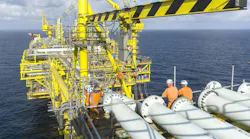 Offshore workers on oil and gas platform in South China Sea
Offshore: Private 5G is gaining traction across the energy sector. What opportunities does it create for offshore facilities, particularly for connecting cameras, sensors, drones and other monitoring systems?
Alder: One of the biggest opportunities is making it easier to get monitoring into places where it's traditionally been difficult or expensive to install.
Anyone who's worked on an established offshore platform will know that adding a camera isn't necessarily straightforward. You've got congested steelwork, complicated cable routes, hazardous-area requirements and equipment that's been modified over decades.
If an operator already has a suitable private 5G network, which is increasingly the case, compatible cameras can potentially be added or repositioned without running new data cables all the way back to the network infrastructure.
Likewise, it makes sense to consider what else it could support, whether that's connected sensors, mobile inspection equipment or potentially drone applications. It's about getting more value from the infrastructure investment rather than approaching each new requirement separately.
Again, there are practical considerations. For instance, private 5G provides connectivity around the installation, but in most cases operators will still need a suitable connection back to shore. Steelwork can affect wireless coverage, cameras still require power, and hazardous-area certification, bandwidth and cybersecurity all need to be addressed.
That's why proper planning and the right design and deployment support really matters. The technology offers genuine flexibility, but only if the installation and network are designed around the operating environment.
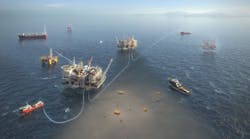 Tampnet Connected Platform
Offshore: Looking ahead, what technologies or capabilities do you believe will have the biggest impact on offshore monitoring and operational decision-making over the next five years?
Alder: The biggest advances will come from bringing different technologies together more effectively, rather than any single breakthrough.
AI will certainly continue to play an important role, particularly in helping operators make better use of the video and operational information they already collect.
Natural-language video search is a good example, and it's something we're already being asked to demonstrate with offshore customers. Instead of manually reviewing hours of footage, an operator can describe what they're looking for and retrieve relevant video much more quickly.
I also expect greater use of different sensing technologies alongside conventional video. For instance, we are likely to see increased interest in cameras fitted with specialist gas detection technologies. That’s certainly a key product development focus for us right now.
But I think there's one universal challenge for operators and EPC contractors that we can’t lose sight of in all this. Offshore installations can operate for decades, and the technology available in 10 years will be very different from what we're discussing today. All of which means you have to consider not just whether a system meets the current specification, but whether it can be maintained, integrated and expanded long after commissioning.
You don't necessarily need every capability from day one, but you do need the right foundations so you can introduce new technologies and adapt as operational requirements change.
For me, that's where the lasting value comes from. It's about making better decisions today without limiting the options you'll need tomorrow.
ADIPEC 2026:
Offshore is an official media partner of ADIPEC.
The event is taking place this week, Nov. 2-5, in Abu Dhabi. For more information about this article's topic, visit Synectics booth 8438 in Hall 8. Both Darren Alder, head of global energy, and Ross Chapman, international business development manager for energy, will be present.
Missed the event last year?
We've got you covered: ADIPEC 2025 Special Report
About the Author
 Ariana Hurtado
Editor-in-Chief
With more than a decade of copy editing, project management and journalism experience, Ariana Hurtado is a seasoned managing editor born and raised in the energy capital of the world—Houston, Texas. She currently serves as editor-in-chief of Offshore, overseeing the editorial team, its content and the brand's growth from a digital perspective.
Utilizing her editorial expertise, she manages digital media for the Offshore team. She also helps create and oversee new special industry reports and revolutionizes existing supplements, while also contributing content to Offshore's magazine, newsletters and website as a copy editor and writer.
Prior to her current role, she served as Offshore's editor and director of special reports from April 2022 to December 2024. Before joining Offshore, she served as senior managing editor of publications with Hart Energy. Prior to her nearly nine years with Hart, she worked on the copy desk as a news editor at the Houston Chronicle.
She graduated magna cum laude with a bachelor's degree in journalism from the University of Houston.
Related
 AI in the Middle East
You May Also Like
