ADIPEC 2026: Fully autonomous rigs remain a distant prospect
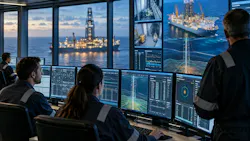
Automation is well suited for repetitive tasks, equipment monitoring and data analysis.
Future wellsite teams will need stronger digital skills, but human judgment, accountability and intervention will remain essential, according to Expro COO Alistair Geddes, who spoke with Offshore just ahead of ADIPEC 2026.
In this exclusive Q&A, Geddes discusses where automation is delivering value today, how workforce requirements are evolving and why human oversight remains indispensable.
Offshore: Many operators are pursuing greater automation across offshore drilling and well operations. Which activities are most likely to become highly automated over the next five years, and where will human expertise remain essential?
Geddes: Over the next five years, we expect to see more automation of repetitive physical operations, particularly in hazardous areas like the rig floor, where automation can significantly reduce red zone exposure and improve operational efficiency too.
But we also expect to see more automation where equipment monitoring, anomaly detection, routine testing, data analysis and validation present huge opportunities to streamline operational sequences.
Human expertise will remain essential when conditions are uncertain, consequences are significant or decisions require interpretation across technical, operational and safety considerations.
The objective should be to reduce people’s exposure to hazardous environments while keeping their expertise at the center of critical decisions.
 Noble Sam Croft drillship
Offshore: Expro has advocated for "Verified Decision Control." How should operators balance automated recommendations with human judgment during critical offshore operations?
Geddes: For me, Verified Decision Control means ensuring that automated recommendations support expert decision making and do not compromise our service delivery. Operators must understand how information is acquired and analyzed as well as the risks related to accuracy of automated decision-making.
The appropriate level of human involvement will depend on the risk and complexity of the activity. Automated systems can analyze information and propose responses rapidly, but suitably qualified personnel remain the experts and retain the authority and responsibility to validate, challenge or override recommendations where necessary.
The aim is not automation for its own sake, but a disciplined partnership between technology and human judgment where together decision-making can be improved.
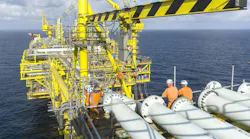 Offshore workers on oil and gas platform in South China Sea
Offshore: How are offshore operators currently using AI, automation and real-time data to improve well integrity and reduce operational risk throughout the well lifecycle?
Geddes: During the well construction phase of the well lifecycle, operators are increasingly combining real-time operational data, historical information and automated analytics to enable each new well to be built with integrity from Day 1. A prime example is the use of AI to assure the correct makeup of premium casing and tubing connections that form part of the primary barriers in all wells.
Once wells become operational, the focus switches to integrity monitoring and/or reinstating integrity where it has been compromised. During this phase of the well lifecycle, AI, automation and real-time data monitoring all support earlier identification of integrity weaknesses or failures, enabling faster intervention to reinstate integrity and ensure operational uptime is maximized.
The greatest value comes from connecting these capabilities across the well lifecycle rather than treating them as isolated tools. Reliable data, clear decision rights and experienced interpretation are fundamental.
Technology can highlight emerging risks and support timely action, but it must operate within a robust well integrity management system. Only then can asset condition and economic life be managed in a way that enables operators to attain maximum value from their well stock.
Offshore: As offshore operations become increasingly digitalized, how do you see workforce requirements changing, and what skills will be most valuable for future wellsite personnel?
Geddes: Future wellsite personnel will need to combine strong operational knowledge with greater electronic and digital competency. Skills in electronics, controls and knowledge of data interpretation and risk, together with a greater understanding of the capabilities and limitations of automated systems will become increasingly valuable.
Human factors will remain equally important. Situational awareness, disciplined verification, communication between offshore and remote teams, and the confidence to question an automated recommendation will all be critical.
Automation is more likely to change the nature of work than eliminate expertise: people will increasingly supervise systems, manage exceptions and apply judgment to complex situations rather than control each piece of equipment, analyze each piece of data and make each decision in isolation from the entire dataset.
Offshore: What are the biggest opportunities to reduce nonproductive time during offshore well construction through automation and decision-support technologies?
Geddes: The biggest opportunities lie in identifying developing problems earlier, standardizing repeatable activities and reducing delays in gathering, validating and communicating information.
Real-time monitoring and decision-support technologies can help teams intervene before a deviation becomes a more significant event. Automation can also improve consistency and reduce variability, interruptions and rework. However, success should be measured by improved reliability and operational certainty, not simply by the number of tasks automated.
One example I would give is the use of automated connection makeup technologies that we [Expro] have deployed with tremendous success. We’ve seen up to a 50% reduction in connection makeup times as a result of automating routine operations. Not only did this technology save the customer in the order of $300,000 per month in rig time, it removed personnel from the rig floor, thus eliminating personnel from high-potential risks in the red zone.
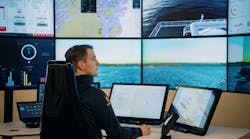 Remote Operations Centre
Offshore: Looking ahead, what does a highly automated offshore wellsite realistically look like by the end of this decade?
Geddes: By the end of the decade, I expect highly automated wellsites to feature increasingly more automated execution of defined sequences and repetitive operation, more remote operation where operation remains too challenging or too costly, continuous equipment and well monitoring, and significant improvements in decision-support systems that interpret live data and flag emerging risks.
The most important measure of progress will be whether these capabilities are an economically viable way of making operations safer and more efficient. Automation will continue to reduce the need for people to work in hazardous areas and identify developing risks earlier, enabling more consistent execution. Offshore teams will become smaller and more technical in their skillsets, supported by operational and technical experts onshore.
However, in the next four years, highly automated rigs will unlikely be entirely autonomous. The nature of rig site activities is so varied and changeable that ‘entirely autonomous’ is still a long way off.
Critical decisions will still require clear accountability, verification and the ability for competent personnel to intervene. We expect our customers’ goals will remain the same: to improve efficiency and reduce human exposure to risk without removing their expertise, judgment or responsibility.
ADIPEC 2026:
Offshore is an official media partner of ADIPEC.
The event is taking place this week, Nov. 2-5, in Abu Dhabi. For more information about this article's topic, visit Expro at the show in Hall 12 at booth 12630.
Missed the event last year?
We've got you covered: ADIPEC 2025 Special Report
About the Author
 Ariana Hurtado
Editor-in-Chief
With more than a decade of copy editing, project management and journalism experience, Ariana Hurtado is a seasoned managing editor born and raised in the energy capital of the world—Houston, Texas. She currently serves as editor-in-chief of Offshore, overseeing the editorial team, its content and the brand's growth from a digital perspective.
Utilizing her editorial expertise, she manages digital media for the Offshore team. She also helps create and oversee new special industry reports and revolutionizes existing supplements, while also contributing content to Offshore's magazine, newsletters and website as a copy editor and writer.
Prior to her current role, she served as Offshore's editor and director of special reports from April 2022 to December 2024. Before joining Offshore, she served as senior managing editor of publications with Hart Energy. Prior to her nearly nine years with Hart, she worked on the copy desk as a news editor at the Houston Chronicle.
She graduated magna cum laude with a bachelor's degree in journalism from the University of Houston.
Related

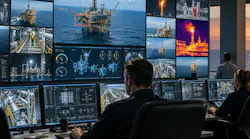 remote operations center monitoring multiple offshore assets
