ROG.e 2026: ABS sees larger, more complex FPSOs reshaping Brazil's offshore future
Key highlights:
-
Brazil's FPSOs are becoming larger and more complex, with presalt developments driving demand for advanced CO2 handling, gas reinjection and higher production capacities while project costs approach the $4 billion to $5 billion range.
-
Petrobras' emerging BOT contracting model could reshape how FPSOs are financed, operated and ultimately transferred to asset owners, offering an alternative to traditional lease and EPC approaches.
-
Digital twins, remote operations and future developments in Brazil's Equatorial Margin, Guyana and Suriname are expected to influence the next phase of offshore production growth across South America.
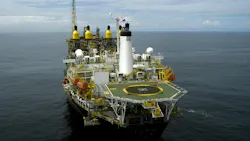
During this week's ROG.e event, Luiz Feijo, ABS Director, Global Offshore - Production Lead, shared his insights with Offshore about the rapid growth and increasing complexity of Brazil's FPSO market, highlighting technological advancements, project cost challenges, and evolving contractual strategies like build-operate-transfer (BOT) models to optimize offshore oil production.
Offshore: Brazil remains the world's largest driver of FPSO demand. What key trends is ABS seeing in the Brazilian FPSO market, and how do you expect project requirements to evolve over the next five years?
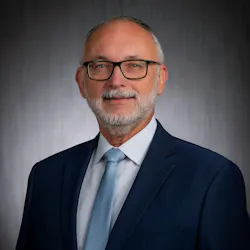
Feijo: FPSOs are getting more complex and larger, and a lot of new technologies are being implemented, not just for the actual processing systems.
Most of the presalt FPSOs have CO2, so they need to separate CO2 during processing, and reinject it. All the gas is reinjected. That's likely a factor in Petrobras’ publicly discussed interest in FLNG, which would let them monetize the gas instead of reinjecting it.
Some of the new fields in the Equatorial Margin have H2S, which brings another layer of complication.
And because the presalt is so productive, the FPSOs are huge. The economics generally favor building one FPSO of 250,000 barrels a day over two at 125,000, so building larger with incremental investment wins out over building two smaller units.
As far as a trend, it’s unclear how long that approach will remain sustainable. FPSO costs are now approaching the $4 billion mark and could reach $5 billion soon. That’s part of why the industry, including Petrobras, is looking at smaller, lighter FPSOs—lighter meaning lower steel weight. Reducing topside weight in particular reduces the overall weight and the steel required, so that’s one path being explored to lower costs.
Another trend, not a technical one, is Petrobras moving toward a build-operator-transfer (BOT) contract strategy. Under this model, Petrobras orders and owns the FPSO, but a third party operates it for a set period, all under the same contract.
Traditionally, Petrobras has gone one of two ways: build and own (an EPC FPSO it owns and operates), or lease (where a company like MODEC, SBM or Yinson owns and operates the FPSO while Petrobras pays a monthly or annual lease fee).
The new BOT model is a hybrid and appears financially attractive to both sides. It may let the builder spread costs across the operational phase while easing Petrobras’ overall burden. After a set number of years, Petrobras takes over operations since it already owns the asset, unlike a lease.
So contractual strategy is part of the story, along with finding the ideal balance between larger FPSOs with high production and a structure that makes financial sense. That’s the trend I see.
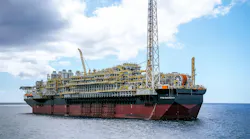 FPSO Bacalhau
Offshore: Petrobras continues to advance major presalt developments while exploring new frontier opportunities. What are the biggest technical and operational challenges facing the next generation of offshore production projects in Brazil?
Feijo: The technical challenges come from the different characteristics and locations of each field. Operationally, there isn't much left in the presalt that Petrobras hasn't already done.
The real challenge will be the new Equatorial Margin, close to Guyana and Suriname. That's going to be difficult because of logistics, infrastructure and the sensitive environment, which requires close coordination with environmental agencies. There's no infrastructure there; even mineral water has to be shipped in. All the logistics, personnel, offshore bases and supply chains have to be built from scratch, even though the rest of Brazil's supply chain exists just to the south.
The bigger challenge is livability; it's hot and humid year-round, right on the equator, and the logistics simply aren't in place yet.
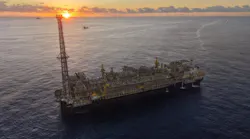 Petrobras' P-79 platform offshore Brazil
Offshore: How is floating production technology evolving to improve project economics, operational efficiency, safety and asset life extension in deepwater developments?
Feijo: FPSO operators have been exploring reducing manning on board and increasing autonomous and remote operations, but it's still a ways off because the technology isn't there yet.
The core problem with a remote-controlled FPSO is communication reliability. You can't rely on satellites alone, so subsea fiber networks are considered the more reliable option with today’s technology. Given the huge number of FPSOs spread across a deep escarpment down to the seabed, laying that fiber network is a real challenge.
Those are the technical hurdles standing in the way, but the industry is actively studying and working toward bringing more autonomy to FPSOs.
Offshore: What emerging technologies or digital solutions are having the greatest impact on FPSO and offshore production operations today, and where do you see the industry gaining the most value in the near term?
Feijo: Digital twins are probably one of the biggest digital technologies that can make an impact now. Digital twins are virtual models of the FPSO that mirror the real asset in real time, so you can run scenarios, test changes and catch problems before they happen on the actual unit.
ABS has actually been supporting digital twins on some active FPSOs, building a structural digital twin that pulls in inspection data, metocean conditions and cargo operations to give a live, continuous view of how the hull and structure are actually holding up.
Early results have shown digital twins can help reduce inspection and maintenance costs. That’s where the value is.
Digital twins are becoming part of how decisions get made on these assets, and I think that's only going to grow as more FPSOs come online and operators want a faster way to manage a fleet instead of one unit at a time.
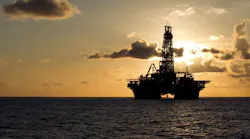 Suriname emerges as a high-potential offshore E&P frontier
Offshore: Looking beyond Brazil, which offshore markets in South America appear most promising for future offshore investment and development, and what factors are driving that growth?
Feijo: Suriname and Guyana continue to stand out for future growth.
Argentina is also active, though its activity isn't offshore; it's offshore units bring onshore gas ashore to liquefy and ship out. Argentina's market has traditionally been domestic within South America, but now the country wants to sell overseas, so four different LNG export terminals are in the works (two under construction and two in planning).
Uruguay will take more time. Large companies leased a lot of its fields, betting on the geological match with Namibia, but activity is still limited to exploration.
In the equatorial region, FPSOs are the leading unity type in Guyana, while both FLNG and FPSO units are being explored in Suriname.
In Venezuela, the water is much shallower, so development will likely favor fixed platforms and jackups in the near term. As activity moves farther offshore into the Caribbean and water depth increases, FPSOs are more likely to become a fit.
ROG.e 2026:
Offshore is an official media partner of ROG.e 2026 (formerly Rio Oil & Gas), taking place Sept. 21-24 in Rio de Janeiro, Brazil.
For more information on the topics discussed in this article, visit ABS in Pavilion 4 at booth T52. The following ABS team members will be on site at event this week:
- Matthew Tremblay, ABS Senior Vice President, Global Offshore Markets
- Luiz Feijo, ABS Director, Global Offshore - Production Lead
- Michael Kei, ABS Vice President, Technology
- Rafael Torres, ABS Director, Global Offshore South America
- Bruno Batista, ABS Director, Global Marine South America
Related content:
ROG.e 2026: TGS CEO discusses the prospects and challenges facing Brazil's frontier basins
ROG.e 2026: Remote subsea inspections move from pilot projects to operational reality
ROG.e 2026: Subsea infrastructure enters new growth phase, says JDR Deputy CEO
ROG.e 2026: CoreMarine CEO says execution is becoming Brazil's next offshore challenge
ROG.e 2026: New alloy approaches target hydrogen embrittlement risks in subsea bolting
About the Author
 Ariana Hurtado
Ariana Hurtado
Editor-in-Chief
With more than a decade of copy editing, project management and journalism experience, Ariana Hurtado is a seasoned managing editor born and raised in the energy capital of the world—Houston, Texas. She currently serves as editor-in-chief of Offshore, overseeing the editorial team, its content and the brand's growth from a digital perspective.
Utilizing her editorial expertise, she manages digital media for the Offshore team. She also helps create and oversee new special industry reports and revolutionizes existing supplements, while also contributing content to Offshore's magazine, newsletters and website as a copy editor and writer.
Prior to her current role, she served as Offshore's editor and director of special reports from April 2022 to December 2024. Before joining Offshore, she served as senior managing editor of publications with Hart Energy. Prior to her nearly nine years with Hart, she worked on the copy desk as a news editor at the Houston Chronicle.
She graduated magna cum laude with a bachelor's degree in journalism from the University of Houston.