ROG.e 2026: Remote subsea inspections move from pilot projects to operational reality
Key highlights:
-
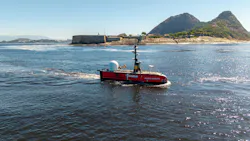
Fugro completed a 330-day remote inspection campaign offshore Brazil using a USV, eROV, and onshore remote operating center.
-
The project included 46 inspections with zero safety incidents and removed more than 15,000 offshore exposure hours.
-
Brazil's evolving regulatory framework is helping pave the way for wider adoption of remote and autonomous offshore operations.
Editor's note: This contributed opinion article discusses lessons learned from remote subsea inspection operations offshore Brazil and the implications for broader adoption of autonomous offshore technologies.
By Céline Gerson, Fugro
For years, the conversation around remote and autonomous operations centered on one question: Does it work safely and reliably in real-world conditions? When it comes to subsea inspections of shallow-water infrastructure, the answer is a resounding yes.
The more pressing question now is how the industry moves from isolated demonstrations to standard practice within asset integrity programs. Brazil, with its mature offshore sector, offers a compelling example of that transition already underway.
What we’ve learned from offshore Brazil
With some of the world's most sophisticated offshore developments, an extensive network of subsea infrastructure and a strong focus on asset integrity, Brazil represents an ideal environment to test and implement new ways of working. Recent deployments have shown that fully remote solutions can meet operational requirements while advancing the industry's priorities around safety, efficiency and sustainability.
More importantly, they illustrate how these technologies can move beyond pilot projects and become a practical part of routine asset integrity programs.
Earlier this year, Fugro completed a 330-day inspection campaign for one of Brazil's largest offshore operators, using an uncrewed surface vessel (USV) paired with an electric remotely operated vehicle (eROV), with every operation managed from an onshore remote operating center (ROC).
The campaign covered hull, jacket and subsea equipment inspections, visual surveys, cathodic protection measurements, and light cleaning at depths of up to 250 m.
Over the course of the project, 46 inspections were completed with zero safety incidents, removing more than 15,000 offshore exposure hours.
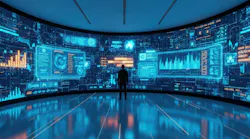 remote operations concept
Environmentally, the lower fuel demands of a remote vessel helped avoid approximately 4,000 tons of CO2 emissions. More broadly, USV-based operations have demonstrated the potential to cut emissions by up to 95% compared to traditional inspection methods. These numbers directly translate into fewer people at risk and a significantly smaller environmental footprint for the same inspection scope.
Safety and sustainability remain the primary drivers, but operational efficiency also plays a significant role. Remote workflows simplify mobilization, reduce logistical complexity and extend inspection windows. USVs can operate in congested areas inaccessible to larger IMR vessels while delivering the same or better ROV and geophysical sensor data. Near real-time data sharing allows faster onshore decision-making without compromising asset integrity standards.
Less visible but equally important are the benefits for the workforce. Remote operations allow highly skilled maritime and subsea professionals to contribute from onshore control centers instead of spending extended periods offshore, creating new career pathways and helping the industry attract a broader range of talent, including those with disabilities who might have been limited by offshore deployment.
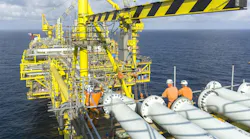 Offshore workers on oil and gas platform in South China Sea
What enabled success?
These outcomes were not achieved through technology alone. They resulted from operators, regulators and service providers working together within the operational and regulatory framework. While innovation may grab headlines, the supporting ecosystem ultimately determines whether it moves beyond demonstration and into routine operations.
That framework was built in stages. Fugro worked alongside the Directorate of Ports and Coasts, the Capitania dos Portos, Brazil's Tribunal Marítimo and a specialized maritime consultancy to help shape NORMAM-205/DPC, the norm that first authorized commercial operation of uncrewed vessels in Brazilian waters. That groundwork paved the way for a second milestone: an ordinance recognizing time spent operating vessels from shore-based remote and local operations centers as valid maritime service time.
By formally recognizing this experience as maritime service time, the regulation helps establish a framework that supports operational deployment and signals to the workforce that operating from shore is a legitimate maritime career, not a departure from one.
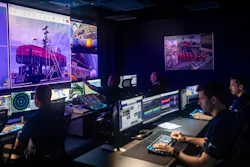
Remote inspections depend on proven procedures, resilient communications, trained personnel and ROCs capable of maintaining continuous visibility over offshore activity. Shared digital environments, where operators, vessel teams and clients collaborate in real time, ensure operational transparency and confidence throughout a project. This foundation is precisely what turns a successful pilot into a repeatable, scalable service.
Scaling beyond the pilot
The next challenge is turning these successful projects into standard practice.
That means moving beyond individual campaigns and integrating remote inspections into long-term inspection and maintenance strategies. It involves establishing repeatable standards, procedures and assurance frameworks that simplify specification, procurement and execution. More importantly, it means applying today's lessons to more complex offshore environments.
Many early successes have occurred in relatively accessible shallow-water settings. Yet some of the greatest potential benefits lie in deeper-water operations, where reducing offshore exposure, lowering emissions and improving operational flexibility can deliver even greater value. The knowledge gained today is laying the foundation for that next phase of growth.
The takeaway
Brazil's experience demonstrates that the future of remote subsea inspection is not a question of technological capability. The technology is already delivering results. The real work is building the operational, regulatory and organizational foundations, as well as the workforce's willingness to embrace a new way of performing offshore work.
With those foundations increasingly in place, the offshore industry has the opportunity to move beyond proof of concept and toward widespread adoption, setting a new standard for how asset integrity is managed in the years ahead.
ROG.e 2026:
Offshore is an official media partner of ROG.e 2026 (formerly Rio Oil & Gas).
For more information on the topic discussed in this op-ed, visit Fugro in Pavilion 2 at booth D40 at the event next week, Sept. 21-24.
Related content:
ROG.e 2026: TGS CEO discusses the prospects and challenges facing Brazil's frontier basins
About the Author
 Céline Gerson
Céline Gerson
Céline Gerson is Fugro’s president and group director for the Americas, leading strategic growth and full P&L management across 10 countries from Canada to Argentina.
She brings three decades of experience in offshore energy and related sectors, including senior leadership roles at Schlumberger and Cameron International, where she made history as the first female executive to lead a global business unit.
A Harvard Business School alumna and licensed attorney, Gerson is recognized for driving digital transformation, accelerating innovation and steering complex organizational turnarounds.
Gerson is also a member of Offshore's 2026 Editorial Advisory Board.