ROG.e 2026: New alloy approaches target hydrogen embrittlement risks in subsea bolting
By Marcus Hillbom, Alleima
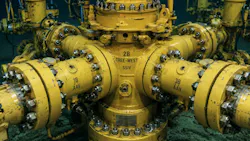
Subsea fasteners face one of the most demanding briefs in offshore engineering. Bolting on christmas trees, manifolds and pipelines must hold high mechanical strength for the life of the installation, resist chloride-driven localized corrosion, and do so while under cathodic protection on the seabed. That last point is where the problem lies.
Cathodic protection guards the wider structure, but overprotection drives hydrogen onto the metal surface. In high-strength materials, that hydrogen can embrittle the fastener and lead to sudden failure at loads below the design limit.
The precipitation-hardened nickel alloys used for subsea bolting today, such as Alloy 718, deliver the strength but carry a documented track record of hydrogen embrittlement failures in exactly this environment. For an operator, a failed fastener 250 m down is not a simple maintenance item; it is a costly intervention with potential safety and environmental consequences.
Developing an alternative to traditional nickel alloys
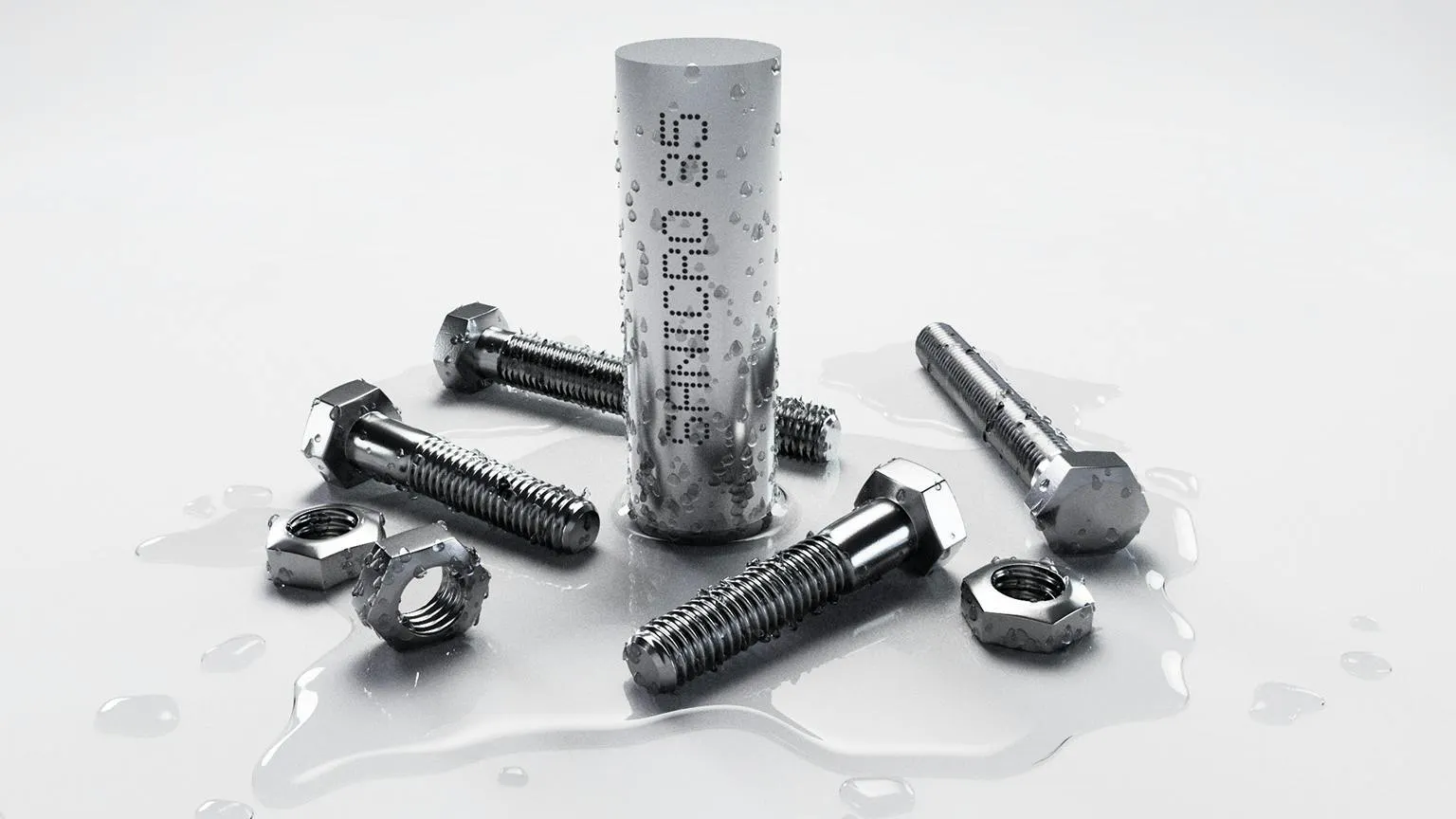
Alleima has developed Sanicro 35-HS, a cold-worked, high-strength version of its super-austenitic stainless steel Sanicro 35 (UNS N08935), for this application.
With a pitting resistance equivalent above 52, the grade sits at the boundary between stainless steels and nickel-base alloys, combining corrosion resistance comparable to Alloy 625 with mechanical strength approaching Alloy 718. Its high nitrogen content lets it build strength rapidly under cold work; it is available as bar from a minimum 120-ksi strength level and has been cold worked in testing up to 180 ksi.
Because it is a fully austenitic material, it exhibits a high resistance to hydrogen embrittlement, and testing by both Alleima and the industry demonstrated a high resistance to hydrogen embrittlement.
From laboratory testing to industry qualification
The grade has been evaluated from full-scale heats across three areas: pitting corrosion performance, modified critical pitting temperature (CPT) testing, and hydrogen embrittlement evaluation by slow strain rate testing (SSRT).
Testing indicated that Sanicro 35-HS maintained both corrosion resistance and resistance to hydrogen embrittlement after cold working to 180 ksi. Compared with Alloy 718 at equivalent strength, the alloy exhibited higher elongation and impact toughness.
Over the past two years, the grade has also been through qualification programs with end users, OEMs and universities, which have supported end-user-specific fastener specifications and moved the material from basic performance research toward use in real subsea equipment designs.
Expanding material options from topside to subsea
For subsea fastener applications, the material is intended to provide strength levels comparable to Alloy 718 while offering resistance to hydrogen embrittlement and general corrosion. These properties are designed to help support long-term fastener performance in demanding offshore environments.
As a lower-alloyed grade than the nickel-base alternatives, it also carries a lower cost.
The corrosion performance opens a wider design question. Because the grade resists hydrogen-induced stress cracking and offers strong localized corrosion resistance, it can be specified with or without cathodic protection. This extends its use beyond the seabed into splash and tidal zones where protection may be intermittent or absent, from fixed coastal structures and offshore wind foundations to FPSO waterlines. In effect, one grade can serve a range of positions from topside to subsea that currently call for several different, more expensive materials.
Recent qualification work has supported the material's use in both topside and subsea applications, potentially simplifying material selection for engineers and equipment suppliers.
Qualification progress and next steps
Industry interest is translating into standards acceptance. Sanicro 35-HS currently holds acceptance under ASME code case 2982, a PED Particular Material Appraisal, and NACE MR0175/ISO 15156-3 and MR0103/ISO 17495-1 for sour service. Inclusion in NORSOK M630 and API 6A is in progress, with both still pending.
With qualification work continuing, Alleima said the first field installations could follow in the coming year. The company is extending the range to larger high-strength bar dimensions for components such as safety valves, packers and mechanical seals.
ROG.e 2026:
Offshore is an official media partner of ROG.e 2026 (formerly Rio Oil & Gas).
For more information on the topic discussed in this article, visit Alleima in Pavilion 3 at booth J52 at the event this week, Sept. 21-24.
Related content:
ROG.e 2026: TGS CEO discusses the prospects and challenges facing Brazil's frontier basins
ROG.e 2026: Remote subsea inspections move from pilot projects to operational reality
ROG.e 2026: Subsea infrastructure enters new growth phase, says JDR Deputy CEO
ROG.e 2026: CoreMarine CEO says execution is becoming Brazil's next offshore challenge
About the Author
 Marcus Hillbom
Marcus Hillbom
Marcus Hillbom is Alleima's business development manager. He brings nearly three decades of experience with Sandvik and Alleima, having held a range of technical and commercial roles throughout his career. Hillbom currently focuses on corrosion-resistant alloys and materials solutions for demanding industrial applications, including offshore energy and subsea systems. Based in Sweden, he works with OEMs and end users on material selection, qualification and performance in challenging operating environments.