Offshore wind projects, grid links and floating technologies advance across key markets
Why this matters:
-
Large-scale project milestones and new grid investments highlight continued momentum but also underscore the industry’s reliance on infrastructure to keep pace with capacity growth.
-
Floating wind and connection system innovations signal a push to cut installation time and costs, critical to unlocking deeper-water projects.
-
Advances in logistics, digitalization and electrification concepts point to a broader shift toward more integrated, system-level offshore energy solutions.
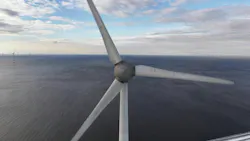
Offshore wind activity continues to accelerate across project delivery, grid infrastructure and enabling technologies, with recent developments underscoring both near-term execution progress and longer-term scalability challenges. From a 1.4‑GW installation milestone in the UK North Sea to new grid connections, floating wind installation systems and digital supply chain tools, the latest announcements reflect an industry focused on reducing costs, improving installation efficiency and expanding into new markets.
Installation and project delivery:
Cadeler completes turbine installation at Sofia wind farm
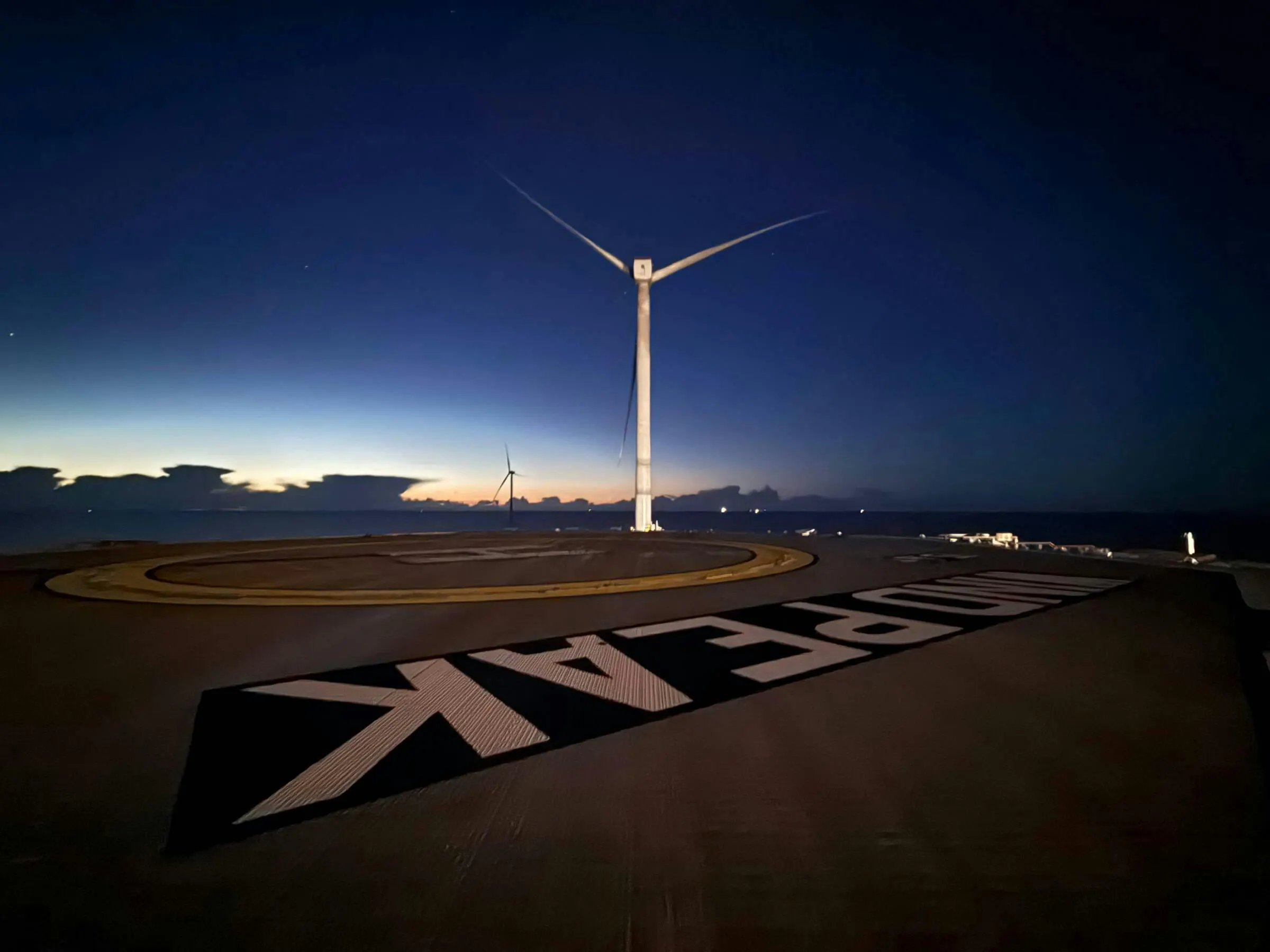
Cadeler has installed all 100 turbines for RWE at the 1.4-GW Sofia offshore wind farm in the UK southern North Sea.
It was also the first installation project for Wind Peak, the first of Cadeler’s two P-class vessels since its delivery in August 2024. Cadeler’s contract covered transportation and installation of all 100 of Siemens Gamesa's SG 14-222 turbines.
Wind Peak was purpose-built to support installation of latest generation offshore wind turbines. Cadeler claims the vessel has one of the industry’s largest crane capacities, with a deck layout optimized for transporting large structures.
The vessel first mobilized for the campaign from the Port of Hull on England’s east coast.
Source: RWE Sofia Offshore Wind Farm YouTube; Posted Aug. 21, 2025
Tersan delivers Acta Gemini offshore wind service vessel
Tersan Shipyard has delivered the Acta Gemini, a DP2 construction service operation vessel (CSOV) built for Acta Marine, from its Yalova facilities. The vessel is the third in a four-ship series designed to support offshore wind construction and maintenance.
Acta Gemini can accommodate up to 88 personnel and features offshore access systems, a helideck and two daughter craft to enable technician transfers. The vessel is also equipped with methanol dual-fuel engines and a methanol-ready design, reflecting a focus on lower-carbon operations.
Siemens Energy and NSORe secure North Sea grid project
Siemens Energy and Neptun Smulders Offshore Renewables (NSORe) will jointly deliver a new grid connection system for offshore wind farms in the North Sea for German transmission system operator 50Hertz.
The North Sea Connector 2 will enable up to 2 GW of offshore wind power to be transmitted to the shore in the future.
NSORe, a joint venture between Neptun Werft and Smulders, will fabricate the project’s offshore converter platform, the topside at the Neptun Werft shipyard in Rostock-Warnemünde, Germany, and the jacket in The Netherlands.
Siemens will equip the facility with electrical transmission systems manufactured at the company’s factories in Germany (transformers and converters in Nuremberg and SF6-free gas-insulated switchgear in Berlin) and also has a long-term service contract covering maintenance, IT services and on-call support.
The platform will be installed about 200 km west of the island of Sylt in the North Sea.
Skyborn secures PPA and project partner for Gennaker offshore wind farm
Skyborn Renewables has advanced its 976.5‑MW Gennaker offshore wind project in the German Baltic Sea through a major corporate power purchase agreement (PPA) and a new equity partnership.
Amazon has signed a 600‑MW long-term PPA for electricity generated by the project, described as the largest single PPA in Germany and one of the largest in Europe. The agreement provides financial certainty to support construction of the wind farm, which is expected to supply power equivalent to more than 1 million households.
In parallel, Stadtwerke München (SWM) has agreed to acquire a 25% equity stake in Gennaker, forming a strategic partnership with Skyborn as the project moves toward construction. The transaction is subject to approvals and anticipated financial close in third-quarter 2026.
Located about 15 km north of the Fischland-Darß-Zingst peninsula, Gennaker is set to become the largest offshore wind farm in the German Baltic Sea. The project has a planned capacity of up to 976.5 MW and is expected to begin construction following financial close, with startup targeted toward the end of 2028.
Skyborn said the combination of long-term offtake and strategic investment marks a key milestone in advancing the project, supporting Germany’s energy transition and strengthening domestic renewable power supply.
Crown Estate restarts tender for Morgan wind site
The UK’s Crown Estate is launching a tender process for the Morgan offshore wind site in the Irish Sea, which it plans to award to a developer in late 2026.
The site, with the potential for up to 1.5 GW, was first offered via the Offshore Wind Leasing Round 4 in 2021. However, EnBW and JERA Nex bp decided not to proceed with the Agreement for Lease for the Morgan offshore wind project, and development was discontinued this January.
It currently retains a grid connection.
 Subsea Micropiles installed first drilled-and-grouted micropile anchor
Floating wind and enabling technologies:
ABS advances SQUID system for floating wind installation
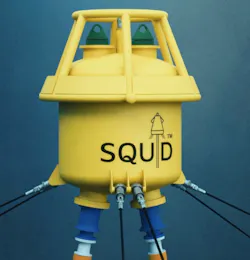
ABS has issued product design assessment (PDA) to the Encomara-designed system SQUID, manufactured by Aurora Energy Services (AES). This is designed to improve the process of installing floating offshore wind turbines.
The connection service integrates pre-installed mooring lines and electrical connections into a single subsea unit, dispensing with the need for multiple vessels and sequential operations across unpredictable weather windows.
Modeling studies suggest SQUID could halve installation times compared to traditional methods.
ABS reviewed the system against class and industry requirements for floating offshore wind applications. Confirmation of the PDA follows SQUID's approval in princle certification seven months ago and represents the next step toward Technology Readiness Level assessment and commercial adoption.
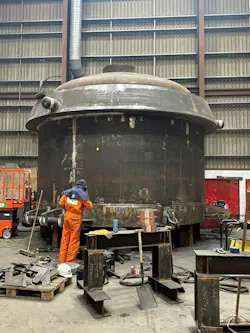
Various demonstrations will take place in July at the Aurora Energy Services (AES) site in Huntly, eastern Scotland, followed by inshore wet testing and client-staged run-throughs at Ardersier in August.
The SQUID development has support from Scottish Enterprise and the Offshore Wind Growth Partnership. AES’ Huntly facility could perform manufacture once the technology is ready for commercial deployment.
Bureau Veritas validates Apollo floating wind connection system
Bureau Veritas has awarded Apollo approval in principle (Level 2) for its PALM Quick Connection System (QCS) for floating offshore wind.
It follows a 12-month FEED study of the system, funded by the Offshore Wind Growth Partnership and Wave Energy Scotland.
Certification confirms the PALM QCS has been independently reviewed against recognized industry standards and can proceed toward full technical qualification and type approval.
The PALM QCS is designed to simplify connection and disconnection of dynamic cables from floating wind turbines, without the need for specialist vessels or divers. To date, 50 successful connect and disconnect operations have been conducted in an offshore environment.
Benefits of the full-scale system are said to include cable reconnection in 5.5 hours, compared with marine operations that can last several days, as well as potential through-life savings of £120 million (US$158.3 million) for a gigawatt-scale floating wind farm.
Apollo plans further subsea electrical trials in 2027 under an EU Horizon project led by the European Marine Energy Centre. And the company will work with Bureau Veritas to progress the PALM QCS through technical qualification and toward full type approval.
Source: Apollo YouTube; Posted March 26, 2026
Systems, logistics and digitalization:
Spinergie and Roll Group target offshore wind logistics insights
Spinergie has entered a non-exclusive partnership with heavy offshore T&I provider Roll Group. The latter has used Spinergie’s offshore wind Supply Chain intelligence to identify new business opportunities.
As the offshore wind sector scales up in size, logistics are becoming more complex, with project sites moving farther away from established industrial bases, and manufacturing hubs being dispersed globally.
According to Spinergie, the geographic shift increases vessel demand and complicates coordination of supply chains.
The company’s Supply Chain module incorporates live vessel tracking and advanced data analytics. Roll Group uses the service to monitor global fleet deployments, benchmark competitor performance, and track Tier 1 component movements.
An interactive map integrated with live weather and wave context supports assessment of route efficiencies.
Roll Group operates a fleet of semisubmersible and wide deck vessels, providing transportation for complex project cargoes globally.
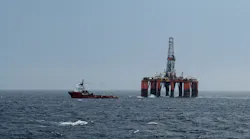 Oil drilling platform and supply vessel
Compute Maritime reveals AI-designed CTV concept
Compute Maritime and its partners have unveiled what they describe as the world’s first crew transfer vessel (CTV) designed using artificial intelligence, targeting offshore wind operations. The concept applies AI-driven design methods to vessel development, aiming to improve performance and support next-generation offshore wind support fleets.
Subnero and HydroSurv develop autonomous subsea monitoring solution
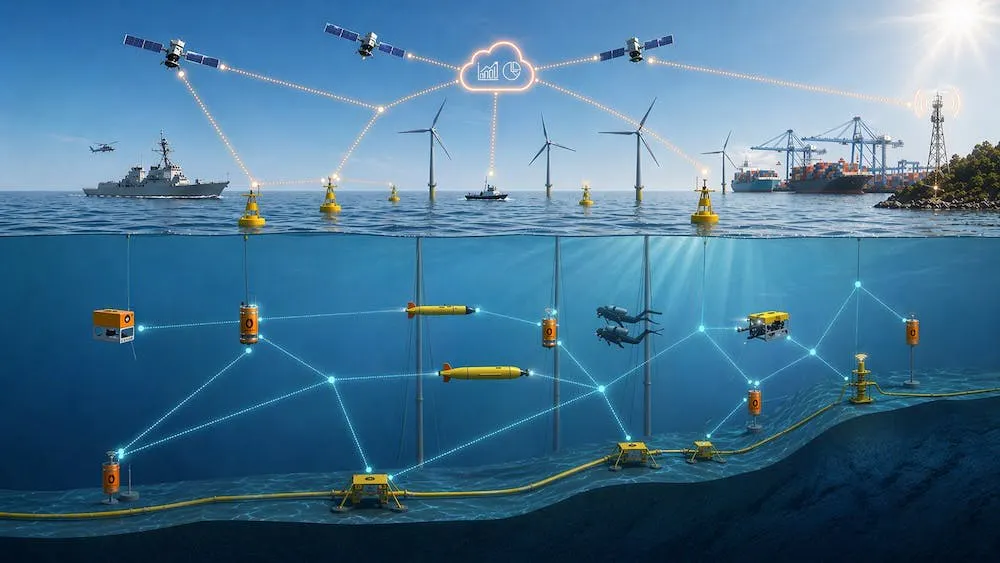
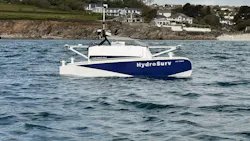
This will combine HydroSurv’s battery-electric and battery-hybrid USVs with Subnero’s acoustic smart modems and underwater networking software.
Seabed landers equipped with industry-standard sensors and pressure sensors can communicate acoustically with a Subnero modem on board the USV, enabling data retrieval, remote configuration, status updates and onward relay over satellite.
The arrangement is said to enable longer-term subsea monitoring of seabed assets with reduced reliance on routine crewed vessel mobilization and lander recovery cycles.
Edge processing on Subnero Acoustic Smart Modems can filter, package and prioritize sensor data before transmission, helping users receive mission-relevant information that is ready to flow into their own analytics, models and decision workflows.
Potential applications include offshore wind subsea infrastructure monitoring.

Market development and future concepts:
Study explores offshore wind power for maritime electrification
A new study by Stillstrom, Maersk, Baltic Energy Island and Port of Roenne has found that operators of ferries, cargo vessels and service operation vessels could draw power from multiple offshore wind farms to cut fuel dependence and costs, and accelerate maritime electrification.
The whitepaper, Bornholm Energy Island: Powering Maritime Electrification, suggests that planned offshore wind farms and grid infrastructure around Bornholm, Denmark, could serve as a blueprint for enabling large-scale maritime electrification.
About 37,000 cargo vessels passing Bornholm each year consume close to 3 MMmt of marine fuel annually. Full electrification of these vessels could require about 17 TWh/year of electricity, according to the study.
The whitepaper also highlighted the potential for "Offshore Power Zones," where vessels could access electricity directly at sea for accommodation loads or battery charging. These, combined with electrified ports, could help establish an electric shipping highway from the English Channel through the North Sea and into the Baltic Sea.
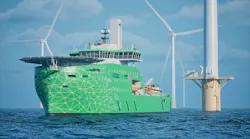 Bibby Marine eCSOV
 offshore charging
OWC and PIC expand offshore wind advisory in Vietnam
At the APAC Wind Energy Summit in Hanoi, renewable energy consultancy OWC and Pioneer International Consulting (PIC) have signed an agreement to jointly provide technical, regulatory and commercial advisory services for wind and other renewable energy projects in Vietnam.
PIC works with investors and developers to support energy developments in Vietnam and the Greater Mekong region.
The two parties prepared the Vietnam Offshore Wind Investment Guidelines, developed by the Global Wind Energy Council, which were launched last week at the APAC Wind Energy event.
These provide a roadmap for developing offshore wind projects in Vietnam, including regulatory, commercial and financing considerations.
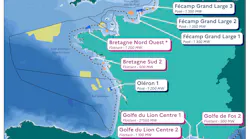 France issues tender for 11 offshore wind farms
About the Author
 Jeremy Beckman
Jeremy Beckman
Staff Writer / Editor, Europe
Jeremy Beckman has been Editor Europe, Offshore since 1992. Prior to joining Offshore he was a freelance journalist for eight years, working for a variety of electronics, computing and scientific journals in the UK. He regularly writes news columns on trends and events both in the NW Europe offshore region and globally. He also writes features on developments and technology in exploration and production.
Related
