Celtic Sea seabed conditions challenge conventional offshore wind foundations
Why this matters:
- The Celtic Sea highlights how expanding offshore wind into new regions introduces geotechnical complexity not seen in earlier developments.
- Conventional foundations face both technical and economic constraints in rocky or variable seabeds.
- Improved site characterization is becoming critical to project viability and cost control.
- Alternative foundation technologies, such as micropiles, could play a larger role across offshore wind, oil and gas, and marine infrastructure projects globally.
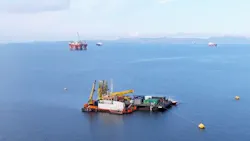
As developers expand offshore wind into more complex geologies, the Celtic Sea has emerged as both a promising and challenging frontier.
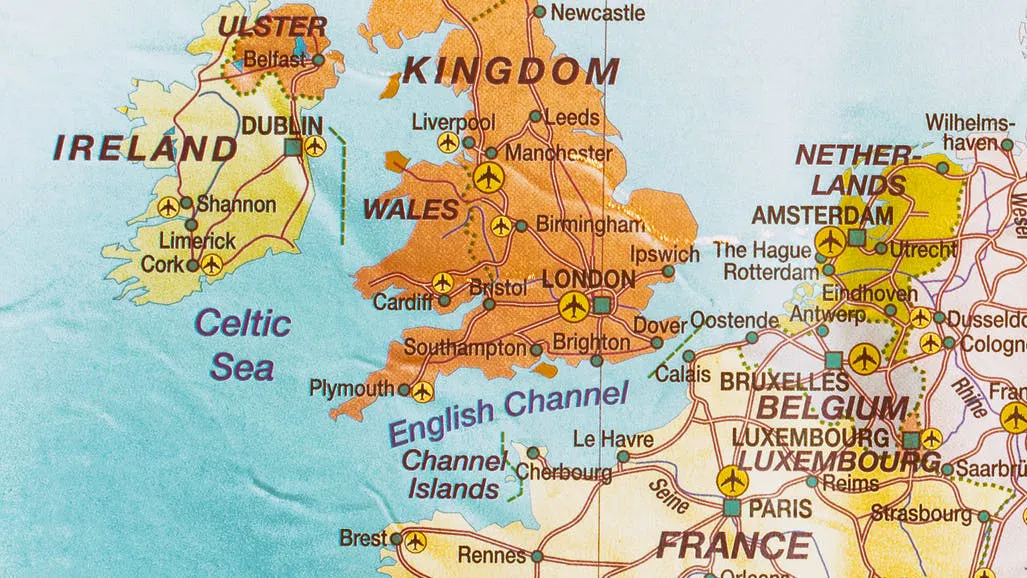
There are not yet offshore wind farms at commercial scale located in the Cetic Sea, meaning there are no fully built, utility-scale wind farms in operation yet. However, the Celtic Sea has multiple projects in development and early demonstration stages.
The Celtic Sea is considered a new frontier for offshore wind development in the UK and Ireland. As of 2026, activity has been focused on testing and demonstration projects as well as leasing rounds for future commercial-scale projects.
Several floating offshore wind demonstration projects are progressing, including the:
- TwinHub (32 MW) offshore Cornwall;
- Erebus (~100 MW) offshore Pembrokeshire;
- White Cross (~100 MW) offshore North Devon; and
- Llŷr 1 & 2 (~100 MW each) offshore Wales.
These are expected to be stepping-stone projects to prove floating wind technology in deeper waters.
Looking ahead, the UK’s Crown Estate Round 5 leasing is targeting ~4.5 GW of floating offshore wind capacity in the Celtic Sea. Major developers (e.g., Equinor, EDF/ESB JV, Ocean Winds) have already secured or are securing development rights for ~1.5‑GW-scale projects. The first large projects are expected to come online in the 2030s.
Derek Robertson, CEO of Ireland-based Subsea Micropiles, shared his insights with Offshore about how variable seabed conditions are testing conventional foundation designs, the critical role of geotechnical data, and why micropile technology could help unlock new offshore opportunities.
Offshore: You recently said the Celtic Sea has a seabed problem. What specifically distinguishes its ground conditions from other offshore wind regions, and why do these conditions create challenges for conventional foundation solutions?
Robertson: Much of the installed offshore wind capacity developed to date has been based on monopile structures (>75%) installed in medium to dense sand or clay, which was sought after as ideal seabed for development. Driven pin piles used with jacket foundations are generally more tolerant of challenging seabed conditions than monopiles, because the loads are distributed across multiple smaller piles and the required pile diameters are much smaller. However, they still rely on suitable soils or weathered rock to develop capacity.
The Celtic Sea provides an attractive wind resource and development opportunity for many reasons, but existing survey data indicates this is a geologically diverse region where sediment thickness can vary and shallow bedrock may be encountered. Compared with the southern North Sea, the Celtic Sea presents a higher probability of encountering conditions where conventional pile driving becomes difficult.
Offshore: Why do you believe traditional foundation approaches, such as monopiles or jackets, are insufficient or inefficient in parts of the Celtic Sea? Where are their technical or economic limitations most exposed?
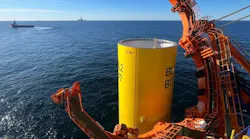
Robertson: Rocky formations greatly limit traditional foundation and anchor solutions to include monopiles, drag anchors and driven piles. Large diameter drilled piles and gravity based anchors are technically feasible but have a high delivered cost, which would prevent many projects from reaching financial close.
Offshore: What role does early-stage site investigation and geotechnical data play in determining whether micropiles are viable, and are current survey approaches sufficient for these more complex seabed conditions?
Robertson: Site selection and site design is heavily survey-driven and requires a significant investment in both geophysical and geotechnical survey campaigns early in project development, and ahead of a final investment decision. Current survey approaches do not result in high-quality ground models with sufficient coverage to meet the needs of offshore wind developers.
Inadequate site characterization can lead to foundation redesigns, installation delays, claims or hundreds of millions of pounds in additional expenditure.
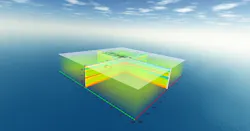
Micropile structures are adaptable to a wide range of soil conditions, but foundation design still depends on a well characterized site and quality ground models.
With the goal of delivering an optimized foundation (soil + structure), we have developed a site investigation capability based on a fusion of geophysical and geotechnical survey methods to provide enhanced assurance.
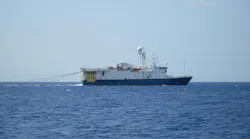 offshore seismic vessel
Offshore: Looking beyond the Celtic Sea, where else globally do you see similar seabed challenges emerging, and how transferable is this technology across different offshore wind or subsea infrastructure markets?
Robertson: Offshore construction is inevitably about soil interventions, which often represents the biggest risk to cost and schedule in a project. Offshore renewable energy requires scalable industrial solutions that are affordable and sympathetic to marine ecosystems, but seabed challenges also drive cost and constrain development in the wider offshore industry to include oil and gas and marine infrastructure markets.
Micropile technology became a dominate solution for onshore infrastructure given its versatility, and we see vast markets for its use in the global offshore industry.
Key takeaway:
Challenging and variable seabed conditions in the Celtic Sea are exposing the technical and economic limits of conventional offshore wind foundations, increasing the need for improved site characterization and alternative solutions such as micropiles.
About the Author
 Ariana Hurtado
Ariana Hurtado
Editor-in-Chief
With more than a decade of copy editing, project management and journalism experience, Ariana Hurtado is a seasoned managing editor born and raised in the energy capital of the world—Houston, Texas. She currently serves as editor-in-chief of Offshore, overseeing the editorial team, its content and the brand's growth from a digital perspective.
Utilizing her editorial expertise, she manages digital media for the Offshore team. She also helps create and oversee new special industry reports and revolutionizes existing supplements, while also contributing content to Offshore's magazine, newsletters and website as a copy editor and writer.
Prior to her current role, she served as Offshore's editor and director of special reports from April 2022 to December 2024. Before joining Offshore, she served as senior managing editor of publications with Hart Energy. Prior to her nearly nine years with Hart, she worked on the copy desk as a news editor at the Houston Chronicle.
She graduated magna cum laude with a bachelor's degree in journalism from the University of Houston.