IMCA tracking impact of offshore wind expansion on marine operations
Key highlights:
-
IMCA is advancing offshore wind safety and competency standards, from walk-to-work transfers and lifting operations to marine assurance and workforce training.
-
Growing vessel traffic, larger turbine components and expanding offshore infrastructure are increasing operational complexity across offshore wind projects.
-
The association is urging practical decarbonization policies and greater investment in specialized vessels, cable-repair capability and offshore power networks.
By Jeremy Beckman, Editor, Europe
Safety, security and e-fuel directives are issues the International Marine Contractors Association (IMCA) is closely monitoring, as offshore wind development continues to scale up and extend out to deeper waters.
The London-based association represents the interests of more than 800 companies globally, lobbying on their behalf with governments and international agencies as well as promoting best practices in offshore operations via its divisional and regional committees.
As offshore wind projects move farther offshore, increase in scale and expand into new markets, IMCA is focusing on three key areas: operational safety, fleet capability and infrastructure resilience.
Walk-to-work operations

According to Chief Executive Iain Grainger, the association was one of the driving forces behind the introduction from the late 2000s onward of commercial motion-compensated gangway systems for offshore personnel transfers, now used globally by wind farm maintenance crews.
An IMCA workshop in 2024, conducted jointly with the G+ (Global Offshore Wind Health and Safety Organisation), examined the scope for further safety improvements in walk-to-work access systems. The conclusions formed the basis of a three-phase initiative now led by IMCA’s Offshore Wind Special Interest Group.
Phase 1, overseen by the association’s Marine Renewable Energy Committee, was supported by feedback from further workshops held in the Far East, US and western Europe. The team identified a scope for various improvements in gangway operations, including competence and the information that developers require from the vessel operators. This led to a revision of IMCA’s guidance for walk-to-work operations.
The current Phase 2 focus is on the competence of users, operator training, potential incident reporting, software updates, telescopic speeds and vessel assurance, with broader involvement of OEMs and contractors. A further revision of IMCA M254 walk-to-work guidelines will follow in Phase 3. The special interest group is also developing competence guidance for diving operations on offshore wind projects.
Lifting and rigging operations
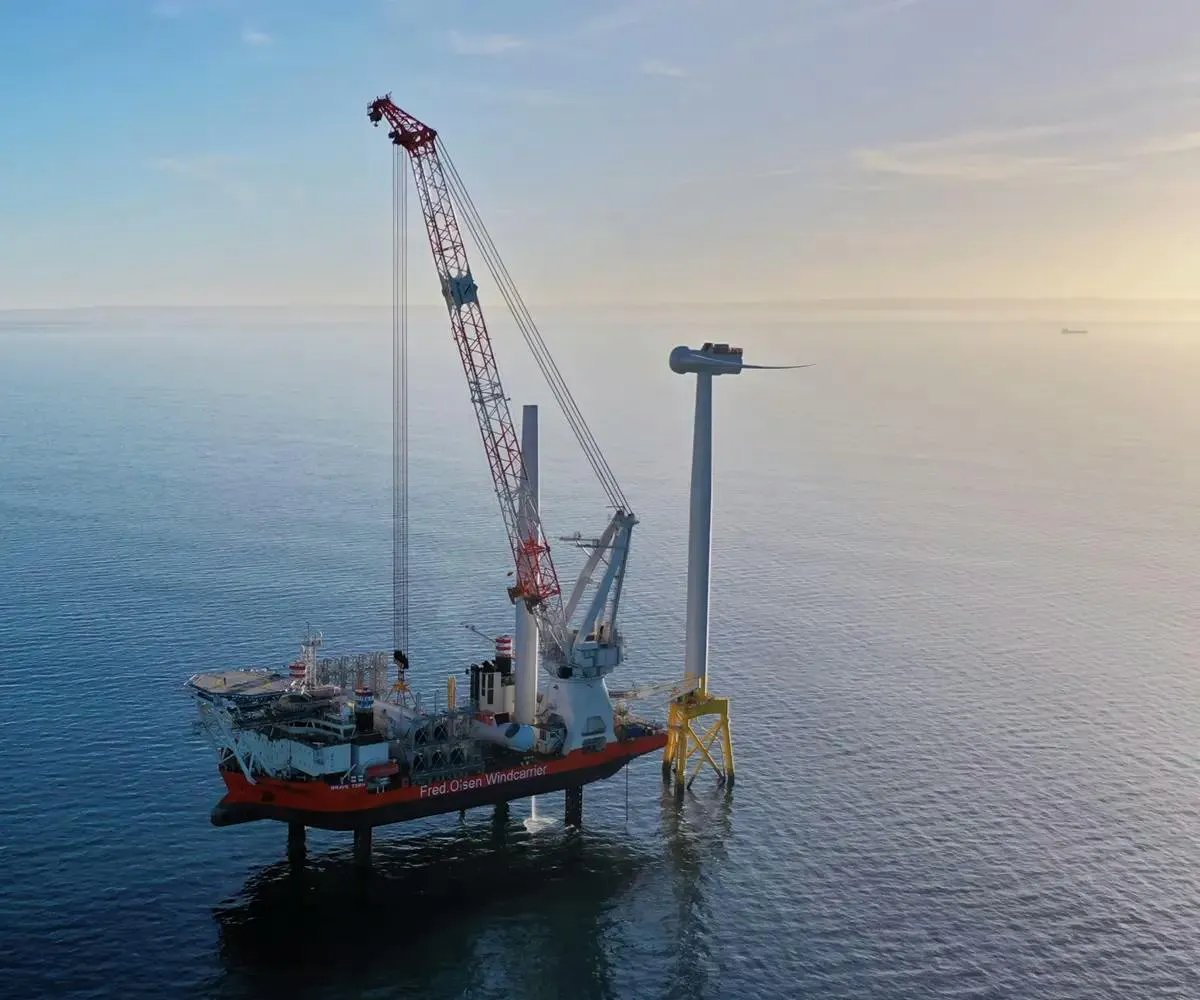
In May 2025, the G+ issued new guidance, prepared jointly with IMCA’s Marine division, on sharing and promoting good practice in offshore wind lifting operations. The guidance can be incorporated into company standards, procedures and practices. It can also be included in contract specifications or used in the development of golden rules for frontline personnel, such as the right/duty to cease work if a dangerous situation arises.
As offshore wind components expand in size and weight, this too is presenting issues for lifting and rigging. The updated IMCA LR006 guidelines for lifting operations feature a section on lifting offshore wind turbine components (nacelles, blades and tower sections), and the risks associated with repetitive lifts at height. The guidance also addresses the use of specialist lifting tools and details some of the rigging arrangements for monopiles and transition pieces.
“Aside from the increasing scale of the equipment being installed,” Grainger said, “IMCA has noted the limited pool of specialist offshore construction vessels capable of safely handling the largest offshore wind foundations, turbine components and high-voltage direct current (HVDC) converter stations. The next generation of 2-GW converter stations can weigh up to 30,000 metric tons."
He pointed to TenneT as an example, which has entered long-term arrangements with Heerema Marine Contractors and Allseas for the transport and installation of its 2-GW offshore platforms. "This illustrates the demand for the relatively small number of vessels capable of undertaking installations on this scale," he said. "The scale of foundations is increasing too, with the latest XXL monopiles for the largest turbines reaching weights of around 2,000-2,800 metric tons, and lengths of more than 100 m."
He also emphasized the importance of consistent marine assurance. "Vessel suitability cannot be judged by crane capacity, deck strength or class notation alone," he continued. "Assurance needs to consider the complete operation, including vessel configuration, environmental limits, crew competence, lifting and seafastening arrangements, port interfaces, simultaneous operations and credible failure scenarios.”
 platform specialist uses a tablet to monitor real-time production data and performance metrics
Marine incidents and congestion
Two recent collisions at ports in northwest Europe further underline the need for constant marine assurance, improved operational planning and situational awareness for specialist offshore wind transportation and installation vessels and the cargoes they handle.
In July, Cadeler’s jackup installation vessel Wind Orca collided with a berthed container ship as it was leaving its dock at the port of Tyne, northeast England. A gantry crane on the quayside was also damaged, with the injured operator taken to hospital. The vessel had been installing monopile foundations for Orsted’s Hornsea 3 wind farm in the UK southern North Sea.
In June, Fred. Olsen Windcarrier’s Brave Tern wind turbine installation vessel was involved in two successive crashes at the Port of Esbjerg in western Denmark. It was reportedly transporting Siemens Gamesa turbine blades for RWE’s Thor wind farm development in the Danish North Sea. While exiting the harbor, the blades hit Cadeler’s Wind Keeper vessel, and Brave Tern then collided with the quayside, inflicting further damage on the blades. The cause was said to be insufficient situational awareness on the vessel’s bridge during piloting.
Last March, the UK’s Health & Safety Executive highlighted a rise in incidents of service vessels colliding with both offshore oil and gas and renewable energy structures in UK waters. It cited recurring issues such as distraction from non-navigational tasks and poor communication among bridge team members. The HSE suggested operators should consider sailing audits in their marine assurance.
IMCA has noted the increasing concentration of offshore wind infrastructure and associated vessel activity across the southern part of the entire North Sea, highlighting the need for more effective operational planning, situation awareness and crew competence initiatives.
The coming wave of floating offshore wind projects will likely exacerbate marine operational complexity, the association adds, in terms of tow-outs, mooring installations hookup, dynamic cables and offshore maintenance.
Dynamic positioning (DP) of vessels operating close to floating wind facilities may also present a hazard; after examining (unrelated) incidents involving DP vessels working close to mobile assets, IMCA’s DP Committee raised concerns over the selection and use of position reference systems, notably the risks arising from combining relative and absolute reference systems. These same causes, the guidance noted, could impact floating wind structures in the future.
“As floating wind develops,” Grainger added, “IMCA can also bring marine contractors, vessel operators, developers and equipment providers together to establish practical guidance and consistent assurance expectations as these operations move toward commercial scale."
Cable installation and undersea risk
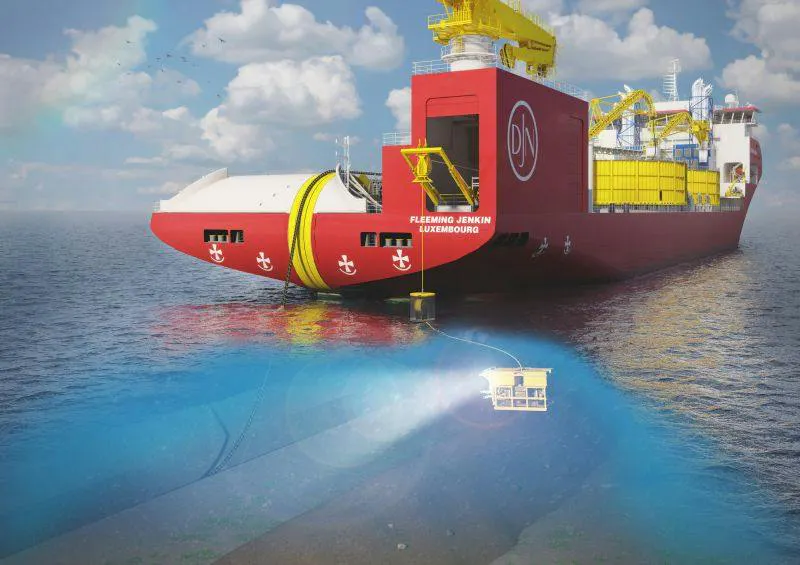
Developers are seeking to expand offshore wind subsea power transmission networks. Marine contractors are responding by commissioning new vessels that can transport and lay much longer cable lengths for offshore grid connections.
Boskalis is investing in a new 24,000-mt cable-lay ship with two 12,000-mt carousels to take on long-distance interconnector and offshore wind projects. Jan De Nul is building two 28,000-mt cable-lay vessels, Fleeming Jenkin and William Thomson, which the company describes as the largest vessels of their kind.
But as IMCA points out, aside from the capability to install fast-expanding networks of offshore power cables, other specialist vessels, personnel and equipment are needed to repair this critical subsea power infrastructure when damage occurs. Maritime Intelligence group Windward’s latest Undersea Cables Risk report highlighted the growing levels of vessel activity around critical subsea routes.
Grainger said, “As we become more dependent on these energy links, our response and recovery frameworks must evolve to match the scale of the infrastructure.”
IMCA is calling for a coordinated government and industry response, including:
-
Targeted support for repair capability and sector-specific solutions for power cable repairs;
-
Policy reform and regulator alignment with fast-track permitting, supported by harmonized processes across jurisdictions; and
- National programs to train and retain specialist cable/jointing engineers, marine engineers and deck officers.
Future fuels
Following the European Commission’s call for evidence concerning EU rules governing alternative fuels infrastructure, IMCA responded that policy makers should adopt a "practical and flexible" approach more in line with the realities of offshore marine contracting operations, rather than imposing a one-size-fits-all decarbonization target on offshore fleets. IMCA pointed out that the onus to install the estimated 30,000 new offshore wind turbines and subsea infrastructure needed to meet the EU’s long-term offshore wind capacity target will fall on specialized offshore vessels. These ships may operate across 20- to 30-year lifecycles performing specialist roles.
The association called for increased focus on offshore and onshore recharging to support vessel electrification, and greater availability of alternative fuels at ports supporting offshore energy operations.
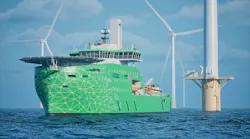 Bibby Marine eCSOV
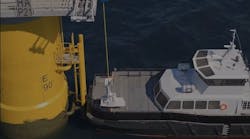 offshore charging
Floating LiDAR buoys
Another development on IMCA’s radar is the deployment and recovery of floating LiDAR (FLiDAR) buoys, used for offshore wind site surveys both pre-development and during commercial operations. Industry discussions have identified concerns over risk management, safe design and the respective responsibilities of manufacturers, operators and developers. IMCA is continuing talks with the G+ and the Workboat Association on the most appropriate way forward.
Emerging offshore wind arenas
Offshore wind activity is expanding rapidly throughout Southeast Asia.
“But for some countries that have not previously had the same scale of offshore oil and gas activity, such as Taiwan, Japan and South Korea, the regulatory framework, specialist vessel capacity and pool of personnel with experience of complex offshore construction operations may still be developing," Grainger said. “Local content and cabotage requirements can add to this challenge, particularly when projects require local vessels and crews, or when international vessels must be re-flagged and crewed locally."
As offshore wind activity increases, Grainger explained that training, competence and operational experience need to develop at the same pace. For this, he said IMCA offers competence frameworks, technical guidance and works with members, helping companies build the skills and operating practices required to undertake increasingly complex marine operations safely.
“Japan is a good example of how the association’s presence is growing alongside offshore wind," he continued. "Over the past three years, IMCA has gone from one Japanese member to 15. In South Korea, local membership has increased from three to five companies since the beginning of this year.”
About the Author
 Jeremy Beckman
Jeremy Beckman
Staff Writer / Editor, Europe
Jeremy Beckman has been Editor Europe, Offshore since 1992. Prior to joining Offshore he was a freelance journalist for eight years, working for a variety of electronics, computing and scientific journals in the UK. He regularly writes news columns on trends and events both in the NW Europe offshore region and globally. He also writes features on developments and technology in exploration and production.