Assurance at the front end strengthens investor confidence in offshore projects
Key highlights:
- Project assurance delivers the greatest value during pre-FID stages, strengthening investor confidence before capital is committed.
- Standardization in design and execution drives more confidence than the introduction of new technologies.
- Shifting risk to contractors often increases costs and undermines project bankability.
- Incomplete execution planning at FID remains a leading red flag for financiers.

This article published in the Financing Offshore Oil and Gas Projects Special Report 2026.
Independent assurance is playing an increasingly critical role in how offshore oil and gas projects are evaluated before reaching final investment decision (FID).
In this exclusive interview with John Yates, global advisory lead of energy projects and assets for Lloyd’s Register, he explains how early-stage assurance, disciplined risk management and realistic execution planning can strengthen investor confidence and influence financing outcomes.
Offshore: What role do independent assurance and classification bodies play in de-risking projects during the early concept and FEED stages, and how does this influence financing decisions?
Yates: Certainty of project execution is key for project financing, specifically having confidence in schedule and costs. Yet even with sophisticated planning and cost-estimation tools, extensive historical data and mature risk-management methods, why do so many projects still run late and over-budget?
One reason is that assurance is often underused during the pre-FEED or FEED phases.
However, we are seeing greater levels of interest in assurance during the front-end stages of a project. Experienced providers have a wealth of knowledge and experience that can be applied to the value creation stages, to help avoid compliance issues later in the project when it can be more costly to address them.
This early concept assurance often gets extended into more of a consultative role, whereby the assurance provider can act as a trusted adviser to the project developer in their front-end decision making. This may include reviewing technical feasibility, technology and concept selection, or assessing the maturity of pre-FEED and the readiness to progress to FEED. Assurance at these key decision points can provide project financers greater confidence in their investment decisions.
Project risk management can play a big part of this assurance. Identifying and assessing risks across the full project lifecycle before the end of FEED allows mitigation measures to be built into the execution plan from the outset. By the time the final investment decision is made, decision-makers should have a clear view of project risks and confidence that preventive and mitigative actions have been anticipated and costed.
Offshore: With increasing scrutiny on project execution and cost control, how are assurance processes evolving across the lifecycle, from design through installation and operations?
Yates: Assurance processes during project execution are relatively mature. However, it often focuses more on quality control than on holistic assurance. So, assurance processes are not really evolving from design through to installation... But the real issue is the timing of assurance.
What is changing is the increasing use of assurance during the pre-FID phases. With a growing focus on the front-end, value creation, phases of capital projects, and in particular an increasing level of definition produced in FEED, the execute phase for many projects is getting shorter and simpler.
This makes assurance of pre-FEED and FEED more important and more valuable to investors, as that is where the key decisions are made that influence the project outcome—the philosophy being to identify potential issues before they become problems.
The offshore wind sector offers a useful model: its project certification process is structured and modular, with some elements, such as site condition assessment and design basis review, completed during the front-end stages.
When done properly, assurance can move beyond the traditional technical compliance check against industry standards and work as a trusted advisory function that helps improve project outcomes.
Offshore: To what extent are emerging technologies, such as digital twins, advanced data analytics and remote inspection, improving transparency and confidence for financial stakeholders?
Yates: The emergence of new technologies in the offshore industry has been gradual rather than revolutionary. As a result, they have not significantly changed financial stakeholders’ confidence. Digital engineering is helping to optimize some aspects of design, but technologies such as digital twins and remote inspection are having a greater impact on offshore operations than on project delivery, particularly by reducing offshore manning.
Rather than considering the impact of emerging technologies, standardization (which could be seen as an opposite of technological advances) arguably has a greater effect on financial stakeholder confidence. Repeatable design and supply-chain processes create a stronger perception of lower risk and greater predictability in cost and schedule. Not introducing new technologies can be reassuring, as few projects set out to be the first to test a new approach.

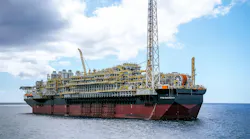 FPSO Bacalhau
Offshore: How are financiers balancing traditional project risks with newer considerations, such as supply chain uncertainty, cybersecurity and operational resilience offshore?
Yates: A well-developed project risk register should cover a wide range of topics. Geopolitical risks certainly feature heavily for current projects, but they can change quickly and can rarely be influenced by project developers; such risks can be very difficult to mitigate.
Offshore projects appear to be taking project risk management more seriously than in the past, when it was often superficial, poorly integrated with project activities and rarely used to drive project decisions.
What is probably changing on offshore projects more than types of risk is the allocation of risk, the balance between the risk that the project developers and their contractors take on. More mature project developers have realized that what used to be the standard model of passing risk on to contractors rarely works. It often leads to higher costs, adversarial relationships and a claims-culture during execution, or even reluctance of contractors to tender in the first place.
Risk does not always have to be a bad thing, those that understand risk better can thrive, and their projects are more likely to be successful.
Offshore: In your experience, what are the most common gaps or red flags that can delay financial close for offshore oil and gas projects, and how can operators address them earlier in the process?
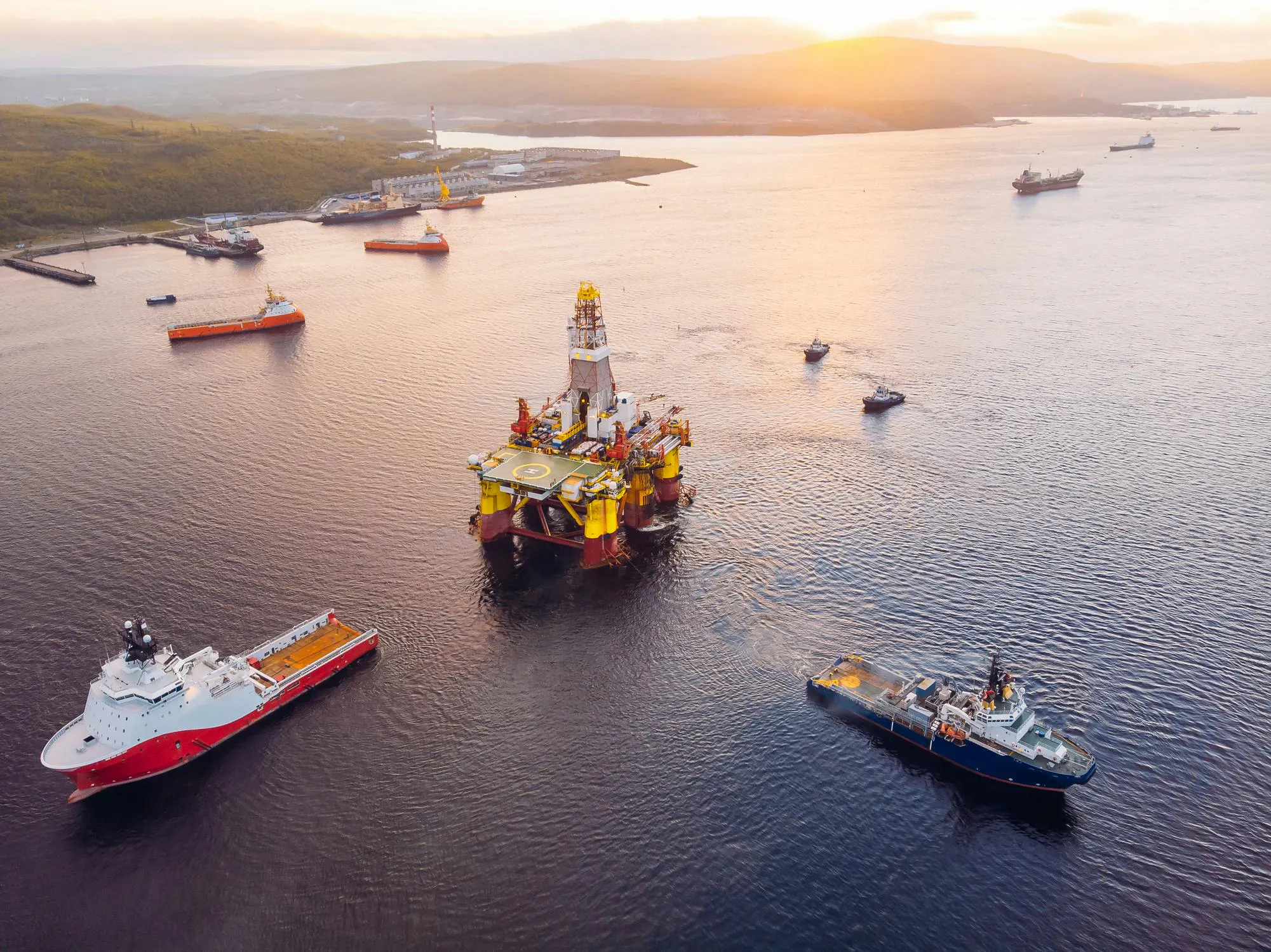
Yates: The following three are perhaps the most common:
- Uncertainties about the business model, particularly relating to offtake/sales agreements, oil price, etc;
- Cost estimates growing between the initial business case and the final investment decision; and
- Uncertainties in the execution planning, especially around cost, schedule and contracting strategy.
Economic analysis—market sizing, pricing, competition and diversification—can go some way to offset the uncertainties of the first category, though recent geopolitical events have perhaps shown that this is the hardest one to manage.
Capex growth during the front-end stage can be more complex ... similar to scope creep, usually reflecting poor management of these stages. The only way to address this is through disciplined application of a structured governance process from the initial project framing onward, strict adherence to the project’s objectives and value engineering to ensure the project value is optimized relative to its cost.
Execution-planning uncertainty is the easiest of the three issues to address. The execution plan should be detailed, comprehensive and robust, with risk-assessed cost and schedule inputs, before the investment decision is made.
Yet many projects leave this work until execution begins. Execution certainty is fundamental to the final investment decision.
Offshore: As energy transition pressures grow, are you seeing changes in how capital providers assess offshore oil and gas projects versus lower-carbon or hybrid developments?
Yates: The extent to which project capital providers consider sustainability and lower carbon solutions varies. However, we are seeing a gradual increase in this respect. Projects that adopt decarbonization objectives and technologies into their design choices are more likely to attract sustainability-backed investment.
Key takeaway:
Early-stage assurance and disciplined execution planning—not new technologies—are the primary drivers of investor confidence and successful financial close in offshore projects.
About the Author
 Ariana Hurtado
Ariana Hurtado
Editor-in-Chief
With more than a decade of copy editing, project management and journalism experience, Ariana Hurtado is a seasoned managing editor born and raised in the energy capital of the world—Houston, Texas. She currently serves as editor-in-chief of Offshore, overseeing the editorial team, its content and the brand's growth from a digital perspective.
Utilizing her editorial expertise, she manages digital media for the Offshore team. She also helps create and oversee new special industry reports and revolutionizes existing supplements, while also contributing content to Offshore's magazine, newsletters and website as a copy editor and writer.
Prior to her current role, she served as Offshore's editor and director of special reports from April 2022 to December 2024. Before joining Offshore, she served as senior managing editor of publications with Hart Energy. Prior to her nearly nine years with Hart, she worked on the copy desk as a news editor at the Houston Chronicle.
She graduated magna cum laude with a bachelor's degree in journalism from the University of Houston.