Brownfield activity ramps up in the US Gulf of Mexico
Key highlights:
-
The US Gulf of Mexico has become predominantly a brownfield-oriented region in terms of development strategy, project style, and the way incremental production is delivered.
-
The Gulf’s development strategy now emphasizes infrastructure-led growth, prioritizing maximizing existing assets rather than building new floating production units.
-
Proven, modular technologies developed or refined in brownfield settings are now transferring to new projects, improving efficiency and reducing risk across both categories.
By Bruce Beaubouef, Managing Editor
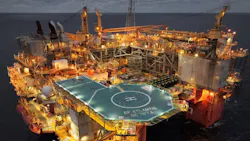
The US Gulf of Mexico remains one of the world’s most prolific offshore hydrocarbon provinces, yet it is a mature basin where many major hubs have produced for 15–20 years or more.
In this environment, brownfield activity—projects that leverage existing platforms, pipelines, and subsea infrastructure rather than greenfield developments—has become the dominant strategy for sustaining and growing production.
Over the past two years, Gulf operators have accelerated capital-efficient interventions including subsea tiebacks, platform life-extension programs, subsea multiphase boosting, water and gas injection for enhanced oil recovery (EOR) or improved oil recovery (IOR), and related facility upgrades. These approaches lower unit costs, shorten cycle times, reduce emissions intensity relative to new platforms, and unlock incremental barrels that would otherwise remain stranded.
Gulf operators have long employed secondary recovery techniques. Waterflooding (water injection for pressure maintenance and sweep) and gas injection date back decades in shallower waters and were adapted to deepwater as fields matured. Early subsea developments in the 1990s, such as Shell’s Mensa project with its long-distance tieback, demonstrated the viability of connecting satellite wells to existing hosts.
Over time, advances in flow assurance, subsea processing, and materials enabled longer offsets and more complex architectures. Platform life-extension practices evolved alongside integrity management programs addressing hulls, moorings, risers, and topsides corrosion. By the 2010s–2020s, infrastructure-led growth (ILG) emerged as the prevailing philosophy: fill spare capacity at established hubs with near-field discoveries and brownfield expansions rather than repeatedly building costly new floating production systems.
Subsea tiebacks
Subsea tiebacks have dominated recent activity in the Gulf. By connecting new or previously undeveloped wells via flowlines, umbilicals, and risers to existing floating production units, operators avoid the multi-billion-dollar cost and multi-year timeline of a new host facility. Industry observers note that a large share of 2025–2026 field start-ups in the region are subsea tiebacks.
bp has been particularly active on this front. In August 2025, the company started production from the Argos Southwest Extension, a three-well subsea tieback roughly five miles from the Argos platform (part of the broader Mad Dog complex). Delivered seven months ahead of schedule, it added approximately 20,000 barrels of oil equivalent per day (boe/d) of gross peak annualized average production. Later that year, in December 2025, bp brought the Atlantis Drill Center 1 expansion online two months early. This two-well subsea tieback to the Atlantis platform (operating in more than 7,000 feet of water) contributed around 15,000 boe/d at peak.
Chevron’s Ballymore project achieved first oil in April 2025. Three wells in the Norphlet trend, located about three miles from the existing Blind Faith facility in roughly 6,600–7,000 feet of water, were tied back without a new platform. The $1.6-billion development is expected to produce up to 75,000 gross barrels of oil per day and holds estimated recoverable resources of about 150 million barrels of oil equivalent. The project was completed on time and on budget, illustrating the cost and schedule advantages of the tieback model.
Other operators have advanced similar projects. Beacon Offshore Energy’s Monument field (Wilcox discovery in Walker Ridge) is progressing as a subsea tieback to the Shenandoah floating production system, with development drilling underway and first oil targeted for late 2026 at rates of 20,000–30,000 boe/d gross. Murphy Oil awarded Subsea7 an EPCI contract for the String Music development, a production flowline and associated infrastructure tied back to the Delta House facility in Mississippi Canyon. Kosmos Energy has worked on low-cost single-well tiebacks such as Gettysburg to Shell’s Appomattox and evaluated options for Tiberius near the Lucius spar. These projects underscore a broader industry preference for utilizing available host capacity.
Platform life extension
Extending the productive life of floating platforms is essential for hosting these tiebacks and continuing operations. Many deepwater facilities approach or exceed their original design service lives. In August 2024, the Bureau of Safety and Environmental Enforcement (BSEE) issued Notice to Lessees and Operators (NTL) No. 2024-G03 providing guidance on life-extension (LEx) requests for floating platforms. Operators must submit structural integrity assessments, often including updated analyses of hulls, moorings, and foundations, preferably at least five years before the end of the approved service life.
Shell has standardized life-extension processes across its Gulf portfolio, combining integrity management data with engineering assessments of topsides, hulls, moorings, risers, and foundations. Retrofit cathodic protection systems for spars and other structures are also common to combat corrosion. Audubon Companies secured an exclusive engineering and procurement contract from Shell in 2026 for brownfield topsides projects across its deepwater assets, focusing on operations, maintenance, and upgrades to improve production and extend asset life. These efforts ensure that hubs remain viable hosts for decades longer than originally planned.
Subsea boosting
Subsea multiphase pumps (boosting systems) installed on the seafloor lower wellhead pressure, increase drawdown, and improve recovery without drilling new wells. In May, bp and ExxonMobil sanctioned a new subsea boosting system for the Thunder Horse PDQ—the largest moored semisubmersible production platform in the world—with first oil expected in 2028 and peak addition of around 15,000 boe/d gross. The production uplift is considered comparable to that from drilling up to two new wells while extending field life.
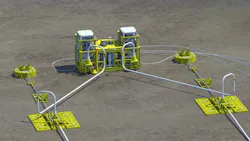
In June 2026, bp awarded SLB OneSubsea an engineering, procurement, and construction contract for a standardized high-pressure boosting system. bp awarded the same supplier-led standardized solution for its upcoming greenfield Kaskida and Tiber developments, as a means of enabling faster delivery and efficiency gains. Subsea boosting is particularly valuable for brownfields because it can sustain rates as natural pressure declines and support longer tiebacks.
While Kaskida and Tiber are pure greenfield developments (new Paleogene hubs with dedicated floating production facilities), they are referenced here because the same standardized subsea boosting system first applied on the mature Thunder Horse asset is being deployed on them. This illustrates how proven, modular technologies developed or refined in brownfield settings are now transferring to new projects, improving efficiency and reducing risk across both categories.
EOR strategies
Water injection remains the most widely applied secondary recovery method in the Gulf. bp’s Atlantis Major Facility Expansion, which started up at the end of July 2026, is a textbook recent example. Delivered ahead of schedule and under budget, the project added two new subsea water injection wells, new subsea trees, and topsides water injection pumps to the Atlantis platform (discovered 1998, producing for nearly 20 years, operating in 7,074 feet of water). The expansion increases reservoir pressure in targeted intervals, unlocking additional barrels and extending asset life while adding approximately 10,000 boe/d of gross peak annualized average production (about 5,000 boe/d net to bp). It also enables future water-injection capability. bp operates Atlantis with 56% interest; Woodside Energy holds 44%.
Shell took FID in August 2024 on a waterflood project at its Vito floating production unit (first oil 2023). Water injection, expected to begin in 2027, is projected to increase recoverable resources by 60 million boe by sweeping oil to producers and maintaining pressure. Subsea7 was awarded a sizeable EPCI contract for the water-injection flowline, hull piping, and associated subsea infrastructure. Reports also indicate Shell advancing waterflooding concepts at other assets, such as Kaikias, to prolong platform life.
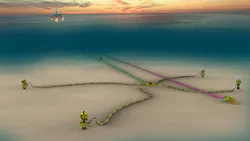
Chevron also advanced waterflooding at mature deepwater hubs. In September 2024, the company started water injection at Tahiti, converting producer wells to injectors and installing a new water-injection manifold plus about 20,000 feet of flexible injection flowline. Tahiti, which began production in 2009 in roughly 4,100 feet of water about 190 miles south of New Orleans, has already surpassed 500 million barrels of oil equivalent of cumulative production; the injection program is intended to sustain output and extend field life (Chevron has indicated production could continue into the mid-2040s).
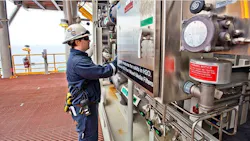
The same campaign included first water injection at St. Malo — Chevron’s first waterflood in the deepwater Wilcox trend — expected to add about 175 million boe to that field’s gross ultimate recovery. Both projects illustrate the same infrastructure-led recovery strategy seen at Atlantis and Vito: using existing platforms and modest new subsea kit to raise recovery from long-producing assets.
Gas injection (hydrocarbon gas, CO2, or nitrogen) and water-alternating-gas (WAG) schemes have historical application for miscible or immiscible displacement and pressure support, though waterfloods currently predominate in deepwater brownfields due to logistics and reservoir characteristics. Broader EOR research continues, including studies of CO2-WAG in Gulf carbonate reservoirs, but commercial deepwater implementation remains selective because of the capital intensity of offshore injection systems.
Other production strategies
Complementary activities include facility debottlenecking, chemical injection (e.g., demulsifiers for emulsion management), near-field exploration feeding existing hubs, and standardized subsea equipment to reduce costs. Operators such as bp are simultaneously advancing larger Paleogene hubs (Kaskida, Tiber-Guadalupe) while systematically filling capacity at Atlantis, Argos, Thunder Horse, Mad Dog, and Na Kika through brownfield work. Production from the region has been supported by this wave of projects even as natural decline continues on older wells.
Looking ahead, brownfield techniques will remain central. Available host capacity, proven technologies for longer and more complex tiebacks, standardized boosting systems, and regulatory frameworks for life extension create a favorable environment for continued investment. Water and gas injection will further raise recovery factors, while integrity management ensures that platforms can safely host these additions for decades. In a capital-disciplined industry focused on returns and lower emissions intensity, the US Gulf of Mexico’s mature infrastructure has become a strategic advantage rather than a liability. Projects such as bp’s Atlantis expansions, Chevron’s Ballymore, Shell’s Vito waterflood, and Thunder Horse boosting illustrate how operators are extracting maximum value from existing assets and positioning the basin for sustained contribution to US energy supply through the late 2020s and beyond.
A brownfield region
One could contend that the US Gulf of Mexico has become predominantly a brownfield-oriented region in terms of development strategy, project style, and the way incremental production is delivered—though the picture is nuanced when looking at absolute volumes.
Federal offshore Gulf crude production has held relatively steady or grown modestly in recent years, averaging roughly 1.8–1.9 million barrels per day (MMb/d) in 2023–2025 and projected to approach or exceed 2.0 MMb/d in parts of 2026 in some forecasts. This stability occurs despite natural decline on mature fields. Without new contributions, output would fall.
Deepwater accounts for the large majority of oil production (~94% in recent assessments), with the shallow-water shelf long past its peak and focused more on residual gas and decommissioning.
Greenfield vs. brownfield activity
By project count and development approach, brownfield-style activity clearly dominates. US EIA data for 2025–2026 anticipates roughly a dozen new fields starting production. The majority (around eight) are subsea tiebacks or underwater extensions to existing floating production units (FPUs). Only a smaller number involve new FPUs – about four new hosts handling five fields, including Salamanca, which notably refurbished a previously decommissioned facility rather than building entirely from scratch.
Rystad Energy described 2025’s growth as driven by three new floater-based projects (Whale, Shenandoah, Salamanca) plus five subsea tiebacks. These collectively are expected to reach aggregate peak rates around 370,000 boe/d later in the decade—the strongest vintage of start-ups in years. Looking forward, Rystad and others note a likely shift further toward tiebacks and secondary recovery (waterfloods, boosting, facility upgrades) as the pipeline of large new floaters thins.
Examples of pure or near-pure greenfield (new host platforms) include Shell’s Whale, Beacon’s Shenandoah, LLOG/Harbour’s Salamanca, Chevron’s earlier Anchor, and BP’s upcoming Kaskida and Tiber-Guadalupe hubs (late 2020s). These deliver large, high-profile increments.
In contrast, the bulk of recent and near-term projects by number are infrastructure-led: BP’s Argos Southwest Extension and Atlantis Drill Center 1/Major Facility Expansion (water injection plus wells on the long-producing Atlantis hub); Chevron’s Ballymore (tieback to Blind Faith); various single- or multi-well tiebacks (Dover, Monument, String Music, etc.); Shell’s Vito waterflood; and the Thunder Horse subsea boosting program. These leverage existing platforms, pipelines, and processing capacity.
Quantifying production
Exact splits of total current production into the separate categories of “greenfield” versus “brownfield expansions” are not typically published in available tabular data. But the incremental picture is clearer: new fields (mix of new FPUs and tiebacks) are forecast to contribute on the order of ~85,000 b/d in 2025, rising to 300,000-plus b/d in 2026 as they ramp up. This is the primary offset to decline and the source of net growth.oilfieldtechnology.com
Mature hubs still form the production base. Brownfield work on them (tiebacks filling spare capacity, water/gas injection, boosting, life extension, and topsides upgrades) sustains rates and adds meaningful volumes at lower capital intensity and faster cycle times than standalone greenfield projects.
Gulf production strategies
Industry commentary from consultants and conference panels consistently frames the Gulf’s strategy as infrastructure-led growth: keep existing hosts full via near-field discoveries and enhancements rather than repeatedly building new multi-billion-dollar platforms. Subsea tiebacks are expected to grow in relative importance globally and remain central in the Gulf.
In short, most of the activity and a large share of the incremental barrels over the past two years (and the near-term pipeline) come from brownfield or brownfield-leveraging projects. Pure greenfield hubs still matter for large step-changes and unlocking frontier plays (e.g., high-pressure Paleogene), but they are fewer, larger, and spaced further apart.
The region’s economics, existing infrastructure density, and capital discipline strongly favor maximizing what is already there. This is classic mature-basin behavior: the Gulf has transitioned from a frontier greenfield province (especially in deepwater during the 1990s–2010s) to one where brownfield optimization, life extension, and infrastructure-led additions are the everyday reality—and the main way production is defended and modestly grown. New hubs continue, but the center of gravity has shifted.
Analysts increasingly highlight the growing dominance of infrastructure-led and brownfield strategies in the US Gulf of Mexico. Thomas Liles, SVP of Upstream Research at Rystad Energy, has noted that “the dearth of new FPU candidates signals a likely pullback in sanctioned greenfield spending over the next few years, with subsea tiebacks and secondary recovery projects taking the lead.” This view aligns with earlier McKinsey analysis observing that operators have had success focusing on incremental tiebacks and near-field opportunities, leveraging existing infrastructure to shorten cycle times and improve economics. Together, these perspectives underscore how the basin continues to extract additional value from mature assets and spare host capacity rather than relying solely on new standalone developments.
Exclusive content:
 The Gulf of Mexico's orphaned well challenge can be solved through responsible late-life stewardship
 Noble BlackLion drillship
About the Author
 Bruce Beaubouef
Bruce Beaubouef
Senior Lead Reporter / Managing Editor
Bruce Beaubouef is Managing Editor for Offshore magazine. In that capacity, he plans and oversees content for the magazine; writes features on technologies and trends for the magazine; writes news updates for the website; creates and moderates topical webinars; and creates videos that focus on offshore oil and gas and renewable energies. Beaubouef has been in the oil and gas trade media for 25 years, starting out as Editor of Hart’s Pipeline Digest in 1998. From there, he went on to serve as Associate Editor for Pipe Line and Gas Industry for Gulf Publishing for four years before rejoining Hart Publications as Editor of PipeLine and Gas Technology in 2003. He joined Offshore magazine as Managing Editor in 2010, at that time owned by PennWell Corp. Beaubouef earned his Ph.D. at the University of Houston in 1997, and his dissertation was published in book form by Texas A&M University Press in September 2007 as The Strategic Petroleum Reserve: U.S. Energy Security and Oil Politics, 1975-2005.
Related
