Exec Q&A: The Gulf’s orphaned well challenge can be solved through responsible late-life stewardship
Key Highlights
- The backlog of idle, delinquent (overdue for decommissioning), and potentially orphaned wells and platforms in the US Gulf of Mexico (primarily federal waters) is substantial and has been growing.
- Decommissioning costs are rising due to technical complexities like well integrity issues and logistical challenges such as vessel availability, necessitating proactive planning and innovative solutions.
- AI technology can be leveraged to optimize abandonment strategies, reduce offshore intervention, and improve safety and cost-efficiency in decommissioning projects.
- Systemic reforms, such as early decommissioning planning and expanded authorization for reefing, are essential to lowering costs, protecting the environment, and unlocking new opportunities in the late-life offshore segment.
By Bruce Beaubouef, Managing Editor
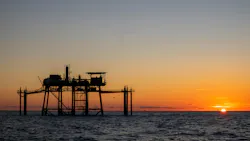
As the backlog of aging infrastructure in the Gulf of Mexico grows, orphaned wells and platforms continue to pose environmental, navigational, and financial risks—often ending up as taxpayer-funded liabilities after successive operators go bankrupt or dissolve.
Aditya Singh, Founder & CEO of Promethean Energy, has made it his company’s mission to step into the most challenging late-life window: acquiring mature assets, executing disciplined plug-and-abandonment (P&A) and removal programs, and delivering responsible exits that protect the environment while creating value.
In this interview with Offshore, Singh breaks down how wells truly become orphaned, the limitations of joint-and-several liability once all parties in the chain of title are insolvent, the evolving role of decommissioning escrows and trusts, BOEM’s changing supplemental bonding policies, and the biggest technical and logistical bottlenecks in today’s Gulf market.
He also outlines Promethean’s innovative use of AI for abandonment optimization and makes a strong case for systemic changes—including earlier planning for asset retirement and expanded authorization for artificial reefing—to reduce costs and environmental impact while unlocking opportunities in the late-life segment.
 promethean_ceo_video_thumbnail
Offshore: Promethean has successfully executed several orphaned well decommissioning projects in the Gulf of Mexico. In your experience, what are the most common reasons wells and platforms end up truly “orphaned”?
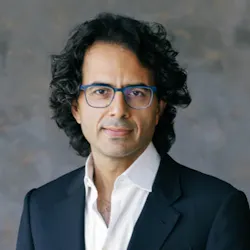
Singh: Wells and offshore platforms become “orphaned” when every company in the chain of title, including the original leaseholder, subsequent owners, and any successors or assigns, no longer exists or lacks the financial ability to fulfill decommissioning obligations, most commonly as a result of bankruptcy proceedings.
In these circumstances, there is no remaining private-party entity against which the federal government can enforce decommissioning liability. As a result, responsibility for the asset ultimately reverts to the federal government through the regulatory framework administered by the Bureau of Ocean Energy Management (BOEM). Once leases are relinquished and no viable obligor remains, the infrastructure is added to the federal orphaned asset inventory, and asset decommissioning proceeds through government-funded efforts.
A few weeks ago, we had the opportunity to chair this year’s D&A 2026 GOA conference in Houston, Texas. Operators and service companies emphasized the growing backlog of aging Gulf infrastructure and the need to collaborate on ways to solve the problem together. The industry is moving from isolated abandonment projects toward long-term, portfolio-scale decommissioning programs.
Offshore: When the Bureau of Safety and Environmental Enforcement (BSEE) pursues decommissioning on orphaned infrastructure, how does the liability chain actually play out in practice?
Singh: Joint and several liability is a cornerstone of offshore decommissioning regulation, but it only works when there’s still a financially viable party left in the chain of title. In other words, an asset is only considered orphaned once all prior owners and responsible parties are either insolvent, dissolved, or otherwise incapable of assuming liability.
Until federal intervention occurs, the infrastructure generally remains in its abandoned state and continues to deteriorate due to corrosion, storms, hurricanes, and environmental exposure. Decommissioning activity only proceeds once federal funding is allocated and obligated, which can take years depending on appropriations, project prioritization, and contractor availability.
During that interim period, orphaned infrastructure continues to deteriorate, leaking methane, threatening marine ecosystems, creating navigational hazards for fishing and shipping communities, and compounding environmental liability.
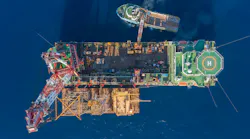 offshore decommissioning
Offshore: How frequently are platform/asset deals structured to “ring-fence” decommissioning costs—that is, requiring buyers to fund a dedicated escrow/trust account at closing for P&A/ removal costs?
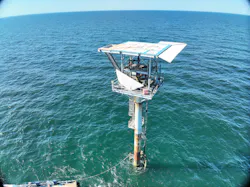
Singh: Sellers of mature offshore shelf assets know that decommissioning liability does not go away after a deal closes. Under the Outer Continental Shelf (OCS) framework, prior owners can still be on the hook if a future operator defaults because liability follows the chain of title indefinitely. To manage this risk, buyers and sellers have traditionally relied on private indemnities or third-party surety bonds outside BOEM’s formal bonding structure. But the collapse of operators like Fieldwood Energy and Cox Operating exposed the surety market to massive losses.
Today, surety providers focus heavily on underwriting the buyer’s balance sheet strength rather than the underlying asset value, making bonding difficult or prohibitively expensive for smaller independent operators acquiring late-life assets. In this environment, decommissioning escrow or Trust account structures have emerged as a more practical alternative. These accounts can be structured as dual-obligee arrangements that benefit both BOEM and the seller and may be funded through upfront cash deposits, production payments, or a combination of both. Importantly, BOEM has demonstrated a willingness to accept trust account-based financial assurance structures where appropriately funded and documented.
Offshore: Would it be a good idea for the federal government to make mandatory seller-funded or price-adjusted decommissioning escrows, to prevent orphan risks?
Singh: The US offshore OCS leasing system works very differently from the Production Sharing Agreements (PSAs) we see in Latin America, West Africa, or Southeast Asia. In many of these regimes, operators are required to set up decommissioning escrows before first oil, funded continuously from cash flow throughout the life of the field. By the time an asset reaches the end of life, the money is already there.
The American system doesn't work that way. Here, BOEM relies on operator creditworthiness and supplemental bonding rather than mandatory lifecycle escrows. And during the high-production years, this approach keeps financial burdens low and project economics strong.
Problems with this model show up later. When assets transfer to smaller, weaker-capitalized operators in their late-life phase, the math starts to break down. In the final five to seven years before the cessation of production (COP), declining cash flow, combined with rising abandonment obligations, can create severe financial stress and materially increase default risk.
Our company, Promethean Energy, steps in at this exact window to provide the discipline, structure, and expertise to manage assets to a responsible exit, aligning operators’ financial, environmental, and operational goals.
Offshore: The Bureau of Ocean Energy Management’s supplemental bonding rules have swung back and forth over the past 5-10 years. How has this impacted the decommissioning market?
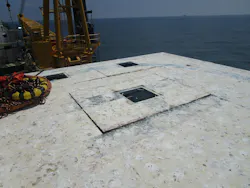
Singh: BOEM’s supplemental bonding requirements have gone back and forth for years, driven by political priorities, commodity prices, bankruptcy cycles, and broader industry conditions. Stricter periods are often followed by relaxation, and the result is that the federal government can end up with insufficient coverage relative to the true cost of decommissioning liabilities.
When an operator defaults without sufficient posted assurance, whether the government avoids being saddled with an orphaned asset comes down to one question: Is there a financially viable predecessor still in the chain of title?
The latest DOI/BOEM Notice of Proposed Rulemaking (NOPR), published on March 9, 2026 in response to Executive Order 14154, actually loosens supplemental bonding requirements. This proposal could reduce the total financial assurance burden on OCS lessees by returning to the practice of considering the financial strength of jointly liable predecessors when determining bonding requirements. This is a meaningful shift because, if a creditworthy predecessor remains in the chain, the current operator's supplemental bonding obligation decreases or is eliminated.
In addition, the NOPR would revise the list of acceptable supplemental financial assurance instruments to explicitly include dual-obligee Trust Accounts.
Large operators are likely to push back on some of this, as many want finality after divestiture. But the practical effect should be positive for the industry overall: fewer orphaned assets going forward, because creditworthy predecessors stay financially accountable. It could also support a more active late-life transaction market, with decommissioning escrows and instruments such as overage insurance becoming standard risk-allocation tools for buyers and sellers.
 Oil States LIWP
Offshore: What are the biggest technical hurdles and cost drivers in P&A and platform removal in the Gulf of Mexico today?
Singh: Asset retirement obligations (ARO) and abandonment expenditures (ABEX) in the Gulf of America present substantial technical and logistical challenges, but these challenges can be materially reduced through disciplined execution strategies.
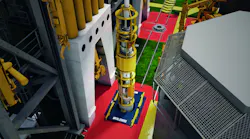
On the technical side, well complexity is a major factor. Deviated wells, aging casing integrity, unknown downhole conditions, and decades-old completions all add time and cost to P&A operations. Platform structural deterioration can turn a straightforward removal into a high-risk engineering exercise. Subsea infrastructure adds another layer of complexity: pipeline abandonments, conductor removals, and mudline assessments each carry their own variables.
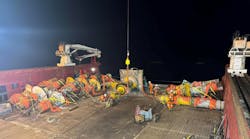
From a logistical perspective, the availability of heavy-lift vessels remains a major bottleneck in the Gulf. Limited fleet capacity, long booking windows, and high day rates mean that vessel scheduling often drives the entire project timeline.
Operators can significantly reduce the complexity, spend, and risk involved in P&A and platform removal by planning ahead proactively and consistently, leveraging fit-for-purpose contracting models, campaign-based P&A execution, and proactive coordination of logistics and vessel chartering. Promethean’s business model applies each of these levers for progress, alongside innovative engineering solutions that reduce offshore intervention and minimize lift requirements.
Integrating artificial intelligence is also carving out opportunities for process efficiencies and safer, more cost-effective offshore strategies. In June, Promethean introduced the offshore industry’s first AI road map at the NOIA/OOC Offshore CCS & New Frontiers Symposium. We highlighted the technology and processes that analyze large volumes of historical data to identify integrity and optimize abandonment strategies before anyone goes offshore. Next-generation artificial intelligence automates monitoring, flags anomalies earlier, identifies avenues for real-time improvement, and shifts reactive troubleshooting to proactive decision-making.
Offshore: If you could recommend one systemic change to address the Gulf’s decommissioning market, what would it be?
Singh: Of course, the biggest systemic change I'd advocate for is raising the bar for how the industry manages late-life assets and carries out decommissioning. We are having this conversation because too many operators run mature assets on autopilot until the economics force their hand. And by then, the planning window has closed, costs have ballooned, and the risk of default or abandonment is real.
What needs to change is the starting point. If operators plan for decommissioning from the moment an asset enters late life – optimizing production, building financial structures to fund the exit, and executing with disciplined project management – the outcomes are dramatically better for everyone.
But the opportunity does not end after wells are properly plugged and abandoned. I would also advocate for broader authorization to reef in place under legislation like the Marine Fisheries Habitat Protection Act (HR 5745). Under current requirements, full platform removal drives some of the highest costs in decommissioning. Allowing certain structures to remain as artificial reef systems, where environmental and navigational standards are met, would dramatically reduce abandonment obligations while creating real marine habitat and fisheries benefits. Lower liabilities could reshape the economics of mature assets, converting certain “upside-down” properties into viable acquisition targets and opening the door for companies like ours to step in as responsible stewards.
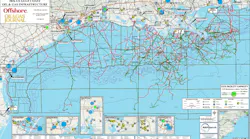 2026 US gulf Coast Oil & Gas Infrastructure Map
About the Author
 Bruce Beaubouef
Bruce Beaubouef
Senior Lead Reporter / Managing Editor
Bruce Beaubouef is Managing Editor for Offshore magazine. In that capacity, he plans and oversees content for the magazine; writes features on technologies and trends for the magazine; writes news updates for the website; creates and moderates topical webinars; and creates videos that focus on offshore oil and gas and renewable energies. Beaubouef has been in the oil and gas trade media for 25 years, starting out as Editor of Hart’s Pipeline Digest in 1998. From there, he went on to serve as Associate Editor for Pipe Line and Gas Industry for Gulf Publishing for four years before rejoining Hart Publications as Editor of PipeLine and Gas Technology in 2003. He joined Offshore magazine as Managing Editor in 2010, at that time owned by PennWell Corp. Beaubouef earned his Ph.D. at the University of Houston in 1997, and his dissertation was published in book form by Texas A&M University Press in September 2007 as The Strategic Petroleum Reserve: U.S. Energy Security and Oil Politics, 1975-2005.