How Gulf of Mexico drilling contractors extend rig life in a mature basin
By Mark Daniel, Noble Corp.
Across the US Gulf, offshore drilling contractors are operating in a mature basin where long‑term performance increasingly depends on how effectively existing assets are maintained, upgraded and deployed across both shelf and deepwater environments. With limited newbuild activity on the horizon, extending the safe and productive service life of modern offshore rigs has become a central operational consideration throughout the region.
Offshore drilling units are typically designed for an expected service life of approximately 20 years. In practice, experience across the US Gulf has demonstrated that with disciplined preventive maintenance, well‑structured life‑extension programs and selective technology upgrades, rigs operating on both the shelf and in deep water can remain safe, reliable and commercially viable well into the 30‑year range.
Many assets in the region have progressed well beyond their initial life-cycle milestones. Without sustained maintenance and modernization, however, aging rigs can face increasing challenges related to reliability, safety and operational consistency.
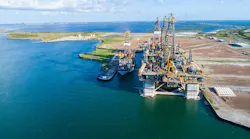 Declining Gulf rig counts mask rising efficiency
Daily execution drives long‑term asset integrity
In the US Gulf, asset condition is shaped less by periodic classification events and more by day‑to‑day execution between those milestones. While special periodic surveys remain important structural and regulatory checkpoints, daily inspections, proactive maintenance and consistent adherence to maintenance standards are what ultimately preserve long‑term asset integrity.
On the shelf, where rigs often experience frequent mobilizations and varied operating profiles, this discipline helps manage cumulative wear and corrosion exposure.
In deep water, where drilling campaigns tend to be longer and more technically complex, sustained equipment reliability is essential to maintaining uptime across extended programs.
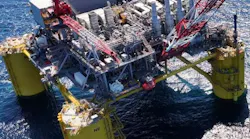 Shell's Whale platform
Operational assurance as an integrated performance function
Operational assurance functions play a significant role in supporting these outcomes. Across the region, teams responsible for inspection, maintenance execution and performance monitoring increasingly operate as integrated contributors to asset performance rather than discrete support functions.
By applying standardized maintenance principles, driving continuous improvement and coordinating closely between onshore and offshore teams, contractors can improve consistency and reliability across both shelf and deepwater fleets while controlling life-cycle costs.
Automation supports consistency and life-cycle value
Technology modernization has become an equally important element of maintaining competitiveness in the US Gulf. As rigs age, automation and control system enhancements offer practical pathways to reduce equipment stress, improve repeatability and limit human‑factor exposure. These benefits are relevant for shelf units with high activity levels as well as for deepwater rigs where precision and consistency are critical.
At Noble, ongoing upgrades to NOVOS and multi‑machine control (MMC) systems illustrate how automation is being applied in this context. NOVOS is a process‑based automation platform that integrates drilling intelligence into control systems, enabling coordinated operation across multiple machines and subsystems. By supporting process‑level control rather than isolated machine automation, the system reduces dependence on manual inputs and allows drillers to concentrate on higher‑level oversight and exception handling. This approach is particularly well suited to US Gulf deepwater operations, where complex well designs place a premium on execution consistency.
MMC systems further support both shelf and deepwater activities by synchronizing equipment actions according to the active phase of the operation. Automating repetitive and interdependent tasks during drilling and tripping helps reduce variability in execution and limits the potential for human‑factor‑related equipment wear. When even short periods of unplanned downtime can carry significant cost implications, these systems contribute directly to more predictable performance over extended asset life.
Disciplined stewardship and long‑term implications
As the US Gulf continues to mature, the ability to sustain and extend the performance of existing assets across both shelf and deepwater environments has become an important differentiator. Maintaining rigs beyond their original design life while selectively enhancing them with proven, performance‑driven technologies supports safer operations, improved reliability and long‑term asset value.
In mature offshore basins, disciplined asset stewardship and targeted modernization are increasingly viewed not as stopgap measures, but as fundamental components of sustained operational excellence.
This article is part of Offshore's 2026 Gulf of Mexico Regional Report.
About the Author
 Mark Daniel
Mark Daniel
Mark Daniel is a senior operations and asset management executive with more than 20 years of experience leading high-value offshore energy assets across global markets. He currently serves as Noble Corp.'s assistant rig manager of the Noble BlackLion drillship.
He has held leadership roles at Noble and Diamond Offshore, overseeing complex deepwater operations, managing multimillion dollar budgets, and improving safety, reliability and operational performance. He has managed advanced 6th and 7th generation drillships, led large CAPEX and MAJEX programs, and delivered significant cost savings through strategic sourcing and life-cycle optimization. He is recognized for pairing deep technical expertise with strong organizational leadership to build high--performing offshore and onshore teams.
He holds an MBA in energy from the University of Oklahoma and a BS in marine engineering technology from Texas A&M University at Galveston.