ROG.e 2026: Strohm CEO says TCP is ready for full deployment offshore Brazil
Key highlights:
-
Petrobras qualification and field trials clear the way for wider TCP adoption.
-
Strohm targets growth in Brazil's presalt and post-salt markets.
-
TCP offers cost, integrity and emissions advantages over conventional pipe systems, according to Strohm.
Recent milestones with Petrobras have moved Strohm's thermoplastic composite pipe (TCP) technology from years of testing and qualification toward commercial deployment in Brazil's offshore sector.
In the past few days, the company announced a contract award from Petrobras to supply TCP for deepwater developments in the country's post-salt province, followed by the successful completion of a qualification and field trial program with Petrobras and Shell for ultradeepwater TCP flowlines. According to Strohm, the technology is now fully qualified by Petrobras and has demonstrated compatibility with the operator's existing offshore installation fleet, potentially opening the door for broader deployment across Brazil's offshore portfolio.
During ROG.e 2026, Offshore spoke with Strohm CEO Martin van Onna and VP Brazil Renato Bastos about the significance of the Petrobras contract, lessons learned from offshore field trials, and the role TCP could play in addressing integrity, cost and emissions challenges in Brazil's presalt and post-salt developments.
Offshore: Petrobras has now moved from evaluating TCP technology to awarding a contract for commercial deployment. What do you see as the biggest technical or commercial milestone that still needs to be achieved before TCP becomes a mainstream solution across Brazil's offshore portfolio?

van Onna: The solution is ready for full deployment at this stage. Our products are fully qualified by Petrobras and the field installation trials have been executed successfully. This means that Petrobras can buy our products and install them with the existing fleet of vessels with no need for additional modifications. We are pleased to be in a position where we are ready to engage on normal future tenders and deliver our products to Petrobras.
Offshore: Strohm and Petrobras completed field trials offshore Brazil last year. What were the most important lessons learned from those trials, and how have they shaped the scope of this latest project?

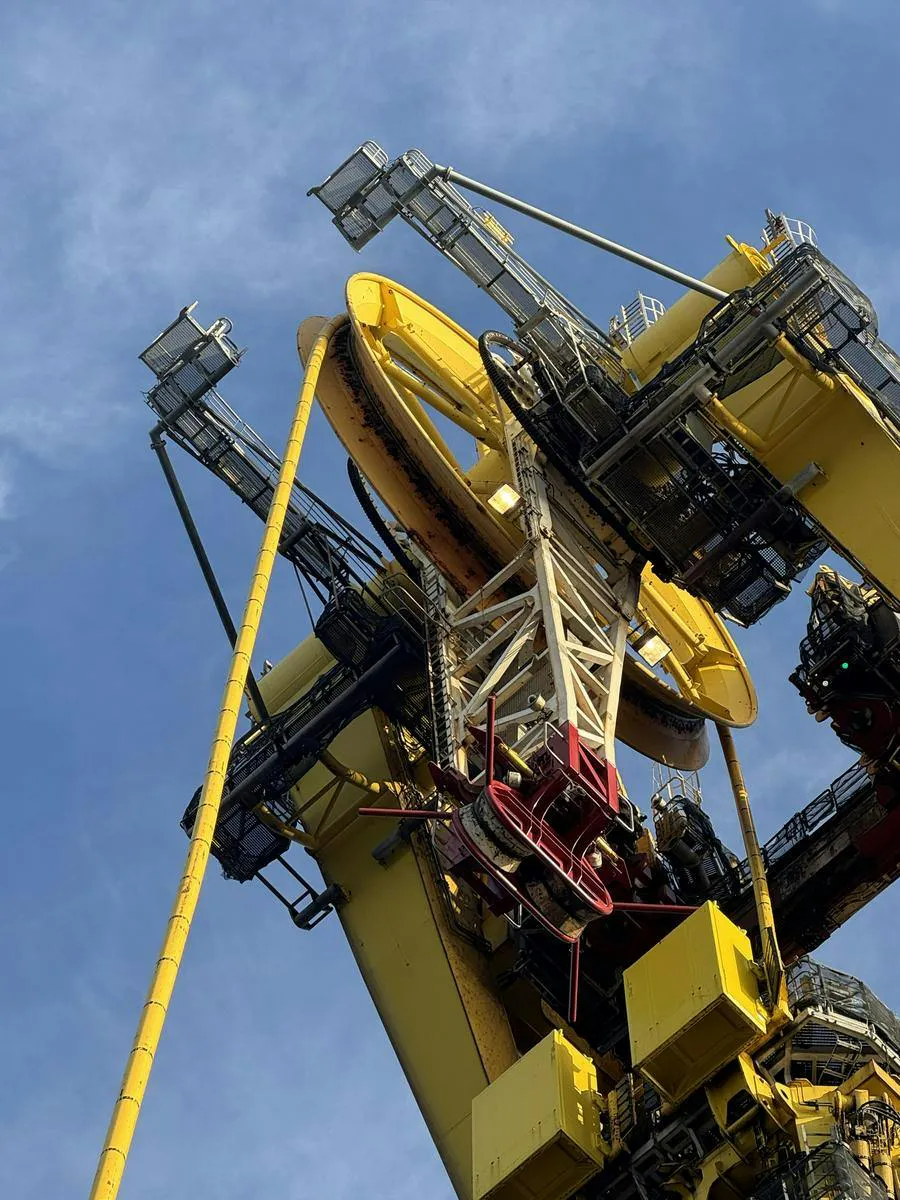
Bastos: Petrobras developed a successful operating model whereby the company controls a fleet of pipelay vessels that have been installing conventional flexible pipes offshore Brazil for decades. Therefore, in bringing TCP to Petrobras’ portfolio, a relevant milestone was to prove that our product could be installed by any of those existing pipelay vessels without any modifications to the asset itself or to Petrobras’ customary pipe logistics.
The successful completion of the offshore field trials was the final evidence that TCP can easily be installed by any of those vessels.
The next step is to enable Petrobras to capture further value from Strohm’s TCP technology by deploying smaller, more cost-effective vessels. Thanks to its lightweight design, TCP can be installed using simple pipelay equipment, significantly reducing the total installed cost of the solution.
Offshore: You've described this contract as a major endorsement from Petrobras. What aspects of Strohm's technology or local execution capabilities do you think were most important in earning Petrobras' confidence?
van Onna: We set up Strohm Brasil to have strong engineering and testing capabilities. Throughout the collaboration with Petrobras, our colleagues in Brazil developed very high-end competence in TCP design, including finite element analysis on the most complex plastic behavior of polymers. Additionally, the most onerous tests were executed in country under the management of our Brazilian staff.
Bastos: The collaboration between Petrobras and Strohm started back in 2010, and we have been building upon it ever since. Throughout the years, the two companies have worked together on various TCP development and qualification programs such as the JIP [joint industry program], together with Shell, focused on the most onerous applications in the presalt province offshore Brazil, as well as other applications in the Brazilian post-salt cluster.
Our close relationship was further strengthened with the establishment of a local Strohm presence in Brazil in 2021. This paved the way for Petrobras to build an in-depth understanding and confidence in TCP’s capabilities over time.
Offshore: As operators face increasing pressure to reduce costs and emissions, where do you believe TCP delivers the strongest value proposition today?
van Onna: The pressure on reducing costs mainly focuses on capex and total installed cost, areas where our product can make a significant difference.
In addition to this direct cost advantage, the total lack of maintenance and the product’s longer lifetime of more than 30 years provide further benefits and savings that can ultimately be passed on to the end user.
The carbon footprint is 50% lower compared to steel, and this is something being recognized by operators, although it is not yet translating into tangible results for vendor selection.
Offshore: Regarding this week's announcement, what industry challenge is the upcoming JIP designed to address, and what would success look like for Petrobras and Strohm five years from now?
Bastos: Due to the characteristics of the presalt fluid with high content of CO2, the convention flexible pipes containing metallic layers in their composition suffer from a phenomenon called stress corrosion cracking induced by CO2. This is a major integrity issue, which can lead to pipe failure and fluid leaks.
The first time this failure mechanism was observed in conventional flexibles operating in the presalt was in 2016 when a safety alert was issued by the national oil and gas regulator in Brazil, ANP, to the whole industry. Ever since, all presalt operators, and particularly Petrobras, have been working closely with the industry to find what they call the 'definitive solution' to mitigate this issue.
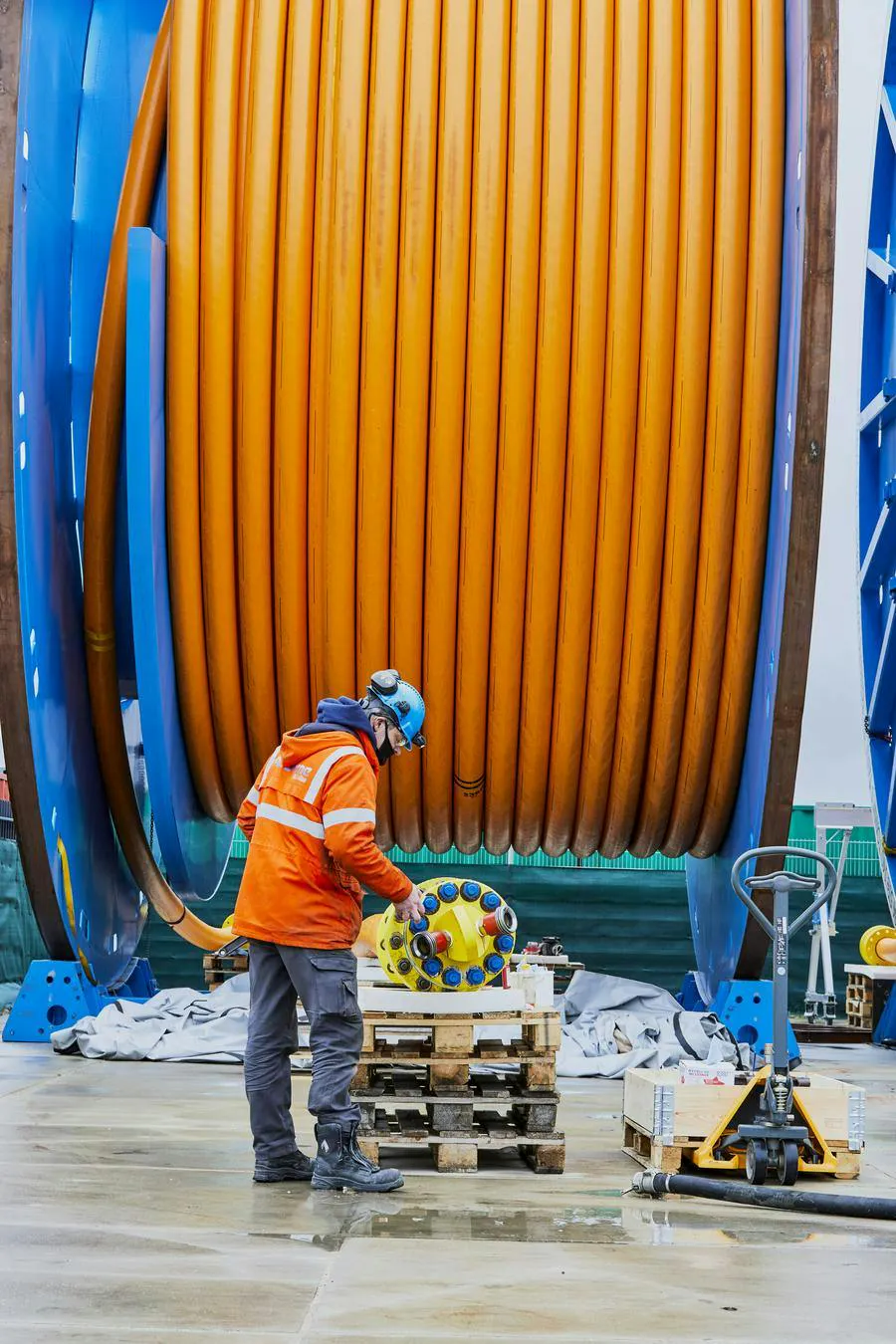
This is exactly where TCP plays a decisive role. Manufactured from a fiber (carbon or glass) and a polymer (polyethylene or polyamide), TCP is a reliable, robust structure that is immune to corrosion.
Now, following the completion of the full-scale tests in the context of the JIP with Petrobras and Shell, Strohm is ready to scale up in Brazil, preparing for the next phase, which is to supply large volumes to Petrobras for their onerous presalt applications.
ROG.e 2026:
Offshore is an official media partner of ROG.e 2026 (formerly Rio Oil & Gas), taking place Sept. 21-24 in Rio de Janeiro, Brazil.
For more information on the topics discussed in this article, visit Strohm in Pavilion 4 at booth U03. Both CEO Martin van Onna and VP Brasil Renato Bastos will be attending ROG.e this week.
Related content:
ROG.e 2026: ABS sees larger, more complex FPSOs reshaping Brazil's offshore future
ROG.e 2026: MODEC executives discuss AI, FPSO decarbonization and project delivery challenges
ROG.e 2026: TGS CEO discusses the prospects and challenges facing Brazil's frontier basins
ROG.e 2026: CoreMarine CEO says execution is becoming Brazil's next offshore challenge
About the Author
 Ariana Hurtado
Ariana Hurtado
Editor-in-Chief
With more than a decade of copy editing, project management and journalism experience, Ariana Hurtado is a seasoned managing editor born and raised in the energy capital of the world—Houston, Texas. She currently serves as editor-in-chief of Offshore, overseeing the editorial team, its content and the brand's growth from a digital perspective.
Utilizing her editorial expertise, she manages digital media for the Offshore team. She also helps create and oversee new special industry reports and revolutionizes existing supplements, while also contributing content to Offshore's magazine, newsletters and website as a copy editor and writer.
Prior to her current role, she served as Offshore's editor and director of special reports from April 2022 to December 2024. Before joining Offshore, she served as senior managing editor of publications with Hart Energy. Prior to her nearly nine years with Hart, she worked on the copy desk as a news editor at the Houston Chronicle.
She graduated magna cum laude with a bachelor's degree in journalism from the University of Houston.