Preparations underway for Argentina’s first two FLNG installations
Key highlights:
- The projects involve installing two FLNG vessels with a combined capacity of 5.95 MT/year, targeting startup in 2027 and 2028.
- Golar LNG is utilizing integrated logistics and experienced contractors for installation and hookup operations.
- The use of advanced submerged yoke mooring systems reduces fatigue and enhances long-term stability of the FLNGs in challenging offshore conditions.
By Jeremy Beckman, Editor-Europe
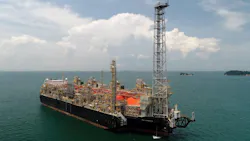
Argentina is advancing two FLNG projects that will provide new export routes for the country’s onshore gas resources. One of the developments, Southern Energy, involves the installation in successive years of two FLNG vessels supplied by Golar LNG in the Golfo de San Matĺas off the coast of Rio Negro province.
The joint venture partners, Harbour Energy, Pampa Energia, Pan American Energy, YPF and Golar LNG, are targeting startup of the first FLNG, Hilli Episeyo, around the end of 2027, followed by the MK II at a nearby location a year later. In operation, the two vessels will have a combined nameplate capacity of 5.95 MT/year.
Integrated installation strategy and contractor roles
Golar LNG contracted CoreMarine and Jumbo Offshore to handle transportation, installation and hookup of both vessels on an integrated execution basis. Project management and engineering started in January this year.
Jumbo will transport and install the NOV-supplied Submerged Swivel and Yoke (SSY) mooring systems, using the Fairplayer DP2 heavy-lift construction vessel. Lead contractor CoreMarine will then perform follow-up diving and construction activities, including spool installation, ballasting, riser hookup, pre-commissioning, positioning and hookup of both FLNGs.
“The two companies joined forces early on in the tendering of this project,” said CoreMarine CEO Ben Fitzgerald. “Several factors proved decisive in securing the award. One was Jumbo Offshore’s proven track record in yoke mooring installations, including its work on the previous deployment of the Hilli Episeyo offshore Cameroon, which helped strengthen its relationship with Golar LNG.”
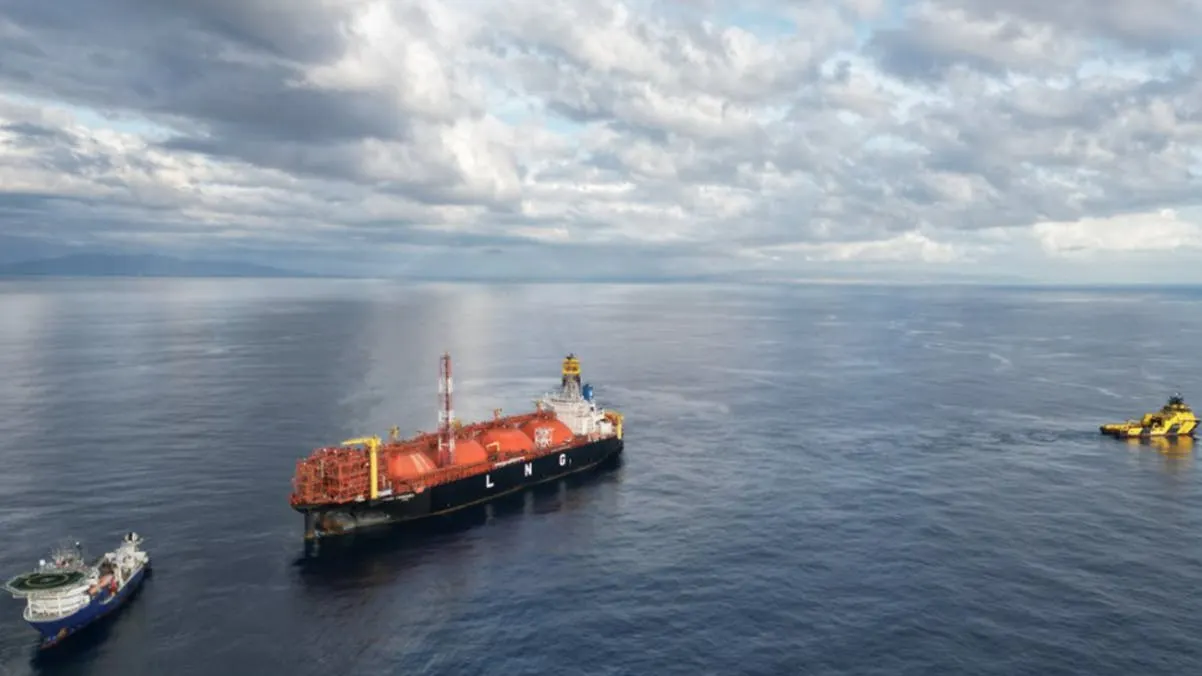
CoreMarine has prior experience supporting the installations of the Toscana FSRU offshore western Italy and the FPSO Firenze for Eni’s deepwater Baleine project offshore Côte d’Ivoire. But while those campaigns demonstrated the company’s ability to manage critical mooring scopes, Fitzgerald noted, “the Hilli Episeyo and MK II projects in Argentina represent a step change in complexity and scale. It has us handling everything from project management and engineering to final pre-commissioning inclusive of complex diving and pipe spool scopes."
 Gasgrid Finland
Frontier logistics, SIMOPS and execution challenges
Fitzgerald said the complexity of this project lies across two critical domains: frontier logistics and supply chain.
"We are operating far from global logistical bases in a region with limited offshore history," he said. "Our mission extends beyond installing a mooring system to building a local ecosystem of capability to support multiple projects. We are leveraging our experience in project execution to establish a supply chain that supports not just the first campaign, but becomes a proven model for Argentina’s future energy ambitions.”
Brian Boutkan, commercial director of Jumbo Offshore, added, “Another technical demanding feature of the project is the scale and continuity of the SIMOPS program. Coordinating heavy lift, piling, riser installation and saturation diving across multiple campaigns and multiple vessels is a massive undertaking in an area without a ready vessel market. The 2027 (Hilli Episeyo) and 2028 (MK II) schedule also demands logistical continuity and the need to both capture and quickly implement lessons learned from the first campaign into the second, enabling us to deliver a progressively more efficient execution."
He continued, “Project support will be anchored at two key logistics bases:
- Rotterdam, which will serve as the primary European base for planning, procurement and equipment coordination; and
- Puerto San Antonio Este on the Argentine coast, which will function as the principal local operations and logistics hub for the offshore installation campaign.”
 FLNG designs evolve to meet market needs
SSY mooring design and installation approach
While the broad concepts for the two FLNGs are the same, there are some differences that might impact the installation/hookup process. The Hilli Episeyo is a redeployment of an existing, but since modified FLNG, while the MKII is a new-conversion vessel designed specifically for this project.
“In terms of the soft yoke mooring systems,” Boutkan explained, “the configuration is largely consistent across both vessels, with the primary variation being an additional approximately 400 metric tons of ballast on the MKII.”
NOV’s generic submerged yoke system is designed for long-term, unattended service offshore. The SSY base, anchored to the seafloor, integrates the PLEM and a mooring yoke with a chain connection to the vessel at its bow. The configuration is said to provide for reduced bending moments on the structure compared with a traditional jacket soft yoke, and it is therefore claimed to be less susceptible to fatigue issues. During offshore installation, the yoke is controlled by a chain jack winch, with the chains load-free while the connection takes place. The SSY for this project is an evolution of the basic design.
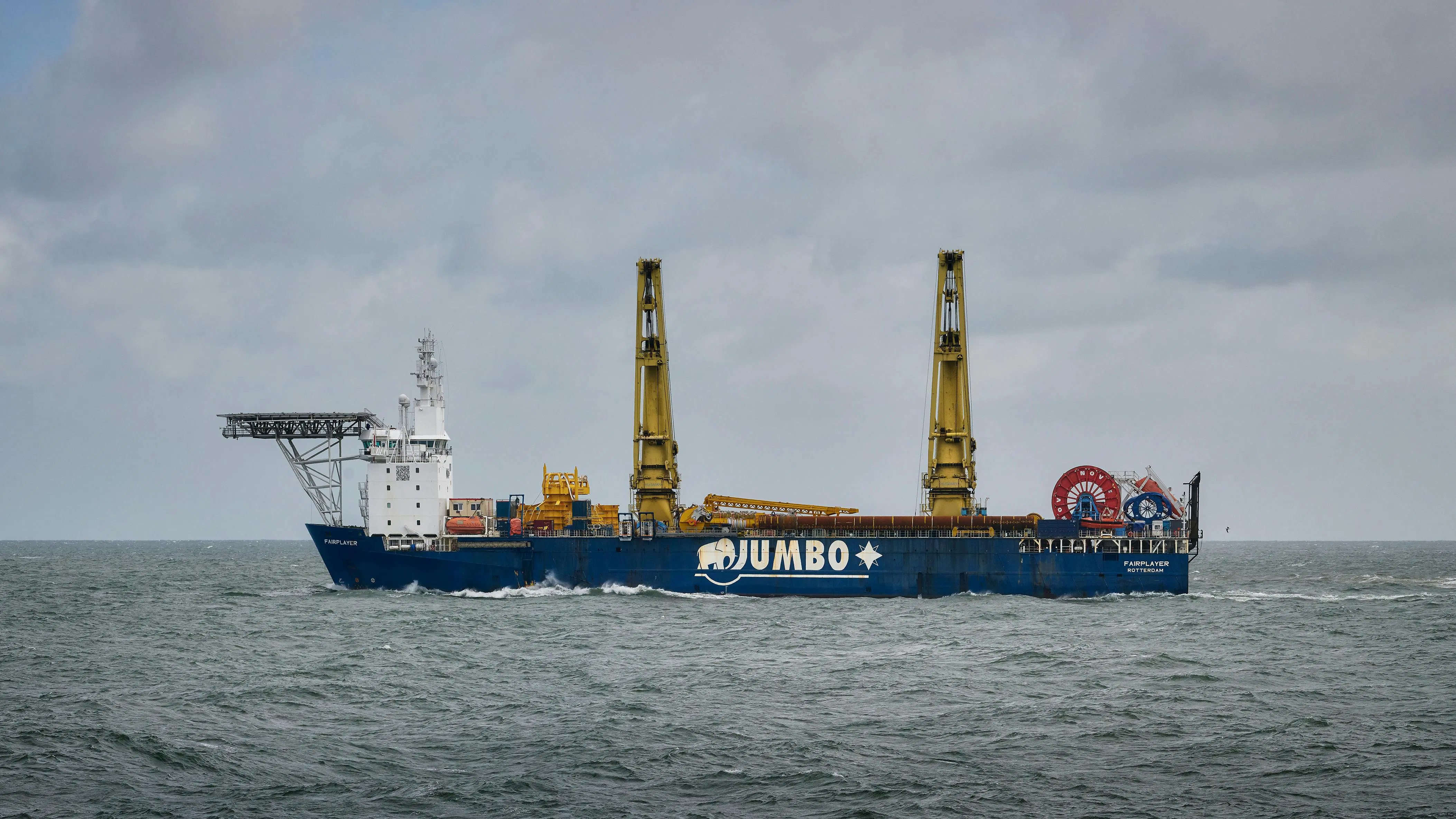
The Fairplayer vessel will load the entire SSY system and the project equipment required for installation in Europe as well as transport all that to Argentina in a single trip.
"In Argentina, the same vessel will directly install the SSY system," Boutkan said. "The system for both the FLNGs, which will allow them to freely rotate to the dominant weather conditions, is similar to NOV’s previous SSY designs that have been successfully deployed on projects worldwide. However, it has been adapted for the specific details of this site and vessel requirements as well as general improvements fed into the design from our installation team.
"Unlike other mooring systems, the SSY uses a large ballasted yoke to provide restoring force for the station keeping of the FLNG. This requires a heavy-lift vessel for the lift of the yoke and careful management of ballasting operations to obtain the target design weight of the yoke once installed.”
Hookup execution and digital twin support
The subsequent hookup of the Hilli Episeyo to the SSY system should not be fundamentally different in principle from other complex floating production hookup operations, including FPSOs, Fitzgerald added.
“The risks for CoreMarine remain vessel positioning, station keeping, tug coordination, heavy line handling, subsea support, weather windows and SIMOPS," he added. "The key difference is the specific FLNG/SSY connection geometry. During pull-in and hookup, the operation requires tight control of the relative position and heading of the FLNG with respect to the submerged swivel and yoke system, as well as continuous attention to yoke alignment, clearances, and the interface with the DSV and support vessels."
The company is also planning to deploy its digital twin capability to support the installation operation.
"The digital twin is being used as an operational support and monitoring tool, focused on asset positioning and motions to ensure a safe and successful operation," Fitzgerald said. "Its role is to improve situational awareness during critical phases of the hookup and pull-in sequence, complementing the conventional engineering analyses, marine procedures, and assurance process.”
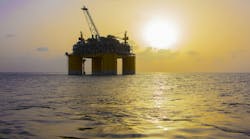 FPS sentiments survey market to stay active through 2028
Engineering progress and project schedule
Preparatory engineering for the Hilli Episeyo project has been advancing on multiple fronts, Fitzgerald added.
“Lift engineering is well underway, with detailed analyses progressing for the heavy-lift operations required to install the SSY," he said. "Dive planning is similarly progressing, with procedures being scoped out in detail and saturation diving plans taking shape."
This year he said the company will focus on completing detailed engineering, finalizing procurement and mobilizing for the first offshore campaigns.
"Through 2027, the focus will shift to Hilli Episeyo offshore execution and MKII engineering," he concluded. "The Hilli Episeyo FLNG is scheduled for installation in 2027, with first gas targeted for the end of that year. This will be followed by the installation of the MKII FLNG in 2028, marking a significant industry milestone as the first application of SSY technology in Argentine waters and a major step forward in the country's deepwater gas development ambitions.”
Offloading of LNG cargoes to tankers will be via standard ship-to-ship transfer technology.
About the Author
 Jeremy Beckman
Jeremy Beckman
Staff Writer / Editor, Europe
Jeremy Beckman has been Editor Europe, Offshore since 1992. Prior to joining Offshore he was a freelance journalist for eight years, working for a variety of electronics, computing and scientific journals in the UK. He regularly writes news columns on trends and events both in the NW Europe offshore region and globally. He also writes features on developments and technology in exploration and production.