How asset integrity is becoming a bigger priority for offshore drilling fleets
Why this matters:
-
Many offshore drillships delivered during the 2010-2014 newbuild cycle are now entering a phase where integrity management is becoming increasingly critical.
-
Unplanned downtime can significantly affect contract economics, making on-station maintenance increasingly attractive.
-
Remote and diverless intervention technologies could help operators extend asset life without sacrificing operational availability.
By Danny Constantinis, EM&I – Malta
The offshore drilling industry is entering a period in which asset integrity management is becoming increasingly important to commercial performance. Geopolitical uncertainty, changing investment cycles and pressure on capital expenditure are encouraging drilling contractors to retain and operate assets for longer rather than routinely replacing older units with newbuilds.
This shift has significant implications. A drilling unit that remains productive for longer must maintain hull integrity, propulsion, subsea and marine systems throughout an extended operating life.
The challenge is to carry out essential inspection, maintenance and repair without unnecessarily removing the unit from service or increasing personnel safety exposure.
Why uptime is becoming a competitive advantage
Historically, activities such as underwater inspection, sea-valve replacement, hull repairs, sacrificial anode replacement and tank inspection have often involved divers, sheltered-water operations or periods of significant downtime.
For a drilling contractor, however, taking a unit off station can carry a substantial commercial and financial penalty. Therefore, the industry faces a fundamental question: how can increasingly rigorous integrity requirements be managed while a drilling unit remains operational and chargeable?
Rethinking conventional intervention
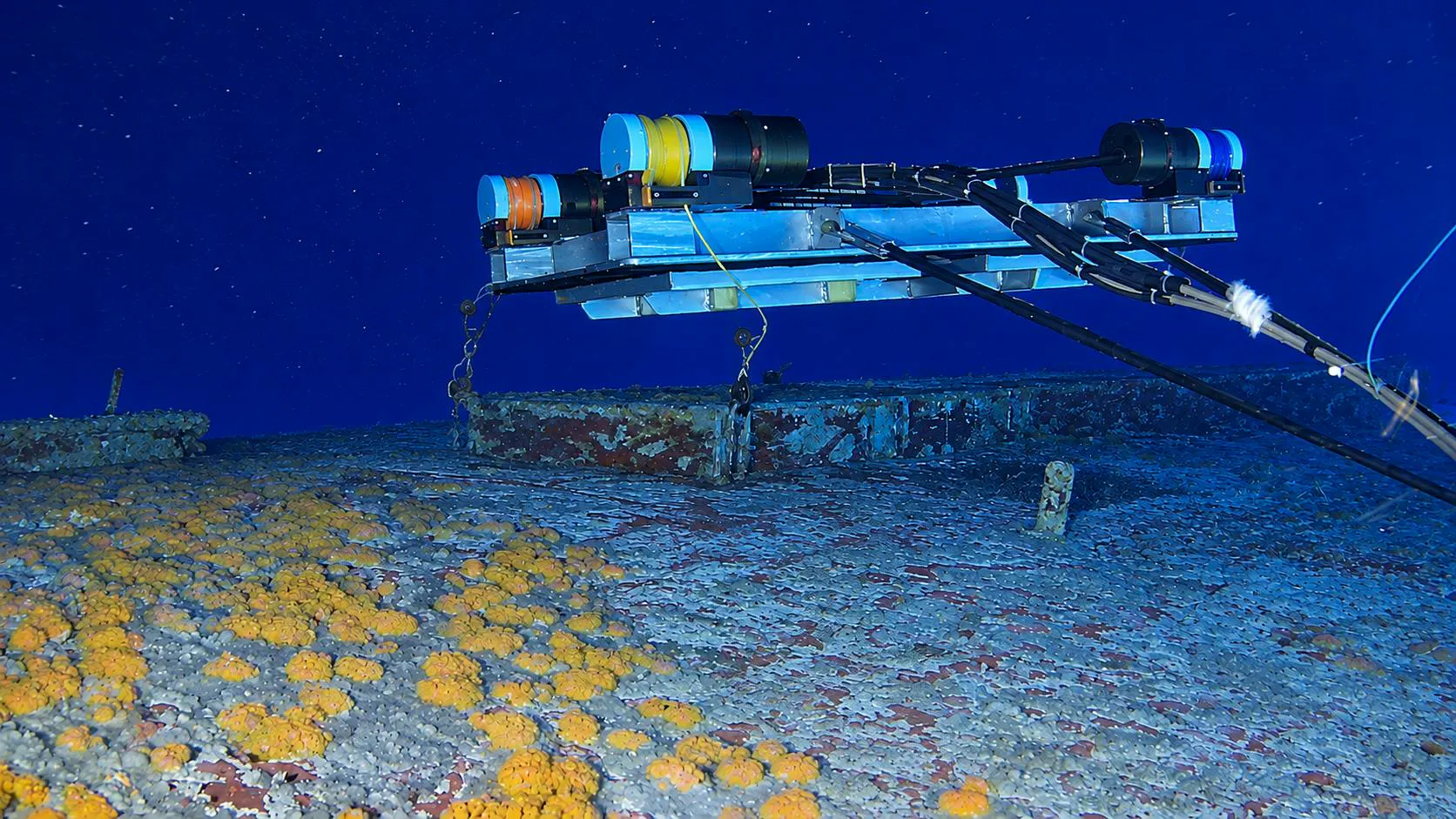
One response has been the progressive adoption of remotely operated and remotely applied techniques. The objective is not simply to replace one intervention method with another but to reconsider how integrity work is planned and executed.
Specialized remotely operated vehicles (ROVs)—for example, deck-launched, integrity class ROVs—can install temporary isolation systems over sea chests or discharge lines allowing sea valves and sea chest maintenance work to be undertaken without divers and while the asset is deployed on chargeable work.
Diverless cofferdams can enable major underwater hull repairs, while specialist tooling mounted on ROVs can undertake tasks such as sacrificial anode replacement.
These systems enable work to be undertaken while the rig is on station and chargeable rather than requiring a return to sheltered waters or drydock. They can also reduce weather downtime and safety risk to divers while making it easier to integrate compliance activities with the drilling unit's operating schedule.
The technical challenge is ensuring that equipment can operate reliably in more extreme metocean conditions, while mobilization, launch and recovery arrangements remain compatible with the drilling unit's configuration and ongoing operations.
Case study of an ultradeepwater drillship
A recent project illustrated this approach. The subject was a 2014 DSME 12,000 ultradeepwater drillship operating offshore the US. The scope involved replacing depleted sacrificial anodes associated with Thrusters 4 and 5.
Thirty-seven anodes were cleaned and replaced using two integrity class ROVs. One undertook cleaning operations while the second operated the anode replacement tooling. This division of tasks enabled cleaning and replacement activities to progress efficiently rather than relying on a single vehicle to perform both functions sequentially.
The overall project took eight days, including mobilization, induction, onboard preparation, equipment setup, cleaning, anode replacement, relocation of the launch position, pack-up and demobilization. The offshore team comprised six personnel.
The significance of the project lies less in the number of anodes replaced than in the operating methodology. It demonstrated that appropriately configured ROV systems can undertake marine maintenance while a drilling unit remains offshore, operating and avoiding the need for conventional diver intervention.
Lessons for the longer-life fleet
Several broader lessons emerge:
- First, asset integrity and operational availability should increasingly be planned together. Maintenance strategies designed around periodic downtime may be less appropriate for drilling units expected to remain productive over extended periods.
- Second, remote intervention should be considered during planning, rather than introduced only when conventional methods become impractical. Deck launch arrangements, tooling interfaces, weather limitations, personnel requirements and data capture can all influence offshore execution.
- Third, flexibility has increasing value. Recent projects have demonstrated the potential benefits of operating two ROVs simultaneously, with one undertaking the primary task while another performs oversight, inspection or cleaning. A smaller ROV may also undertake water ballast tank inspections during periods when external operations are restricted by weather, converting otherwise unproductive time into useful maintenance activity.
- Finally, digital inspection records are becoming an increasingly important part of the integrity process. The objective is not simply to complete a maintenance task, but to generate reliable evidence of asset condition that can support engineering, regulatory and future maintenance decisions.
Future of drilling-unit integrity management
For an industry seeking to extend asset life while maintaining safety and commercial uptime, the future of drilling-unit integrity management is unlikely to depend on a single technology. It will depend on combining remote systems, skilled personnel, effective planning and reliable data into an integrated approach that allows more inspection and maintenance to be performed safely while assets remain productive offshore.
Related content:
 Noble Sam Croft drillship
 Momentum electric ROV
 ROV teamwork
About the Author
 Danny Constantinis
Danny Constantinis has more than 50 years of experience in asset integrity management, largely in the offshore energy production sector. Forty years ago, he founded EM&I, a global organization providing asset integrity management, inspection and specialized repair and maintenance services to the oil, gas and renewable energy industries. Constantinis has a formidable track record of introducing technology and techniques through disruptive innovation focused on enhancing safety, bringing increased efficiency and value to clients and latterly supporting the energy transition.
Related
 offshore drone inspection

