OTC 2026: Electric work class ROV targets extended subsea residency
Key highlights:
- Electric propulsion enables extended subsea residency by reducing maintenance drivers and allowing fault isolation without immediate recovery.
- Fleet-scale operational data and endurance testing directly informed the ROV’s architecture, layout and reliability strategy.
- Backward compatibility with Millennium Plus infrastructure allows operators to adopt electric capability incrementally without disrupting existing systems.
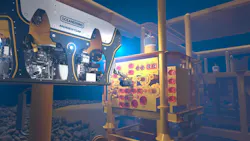
As offshore projects extend into deeper water and longer-duration campaigns, reliability and maintenance predictability are increasingly shaping ROV system design.
Oceaneering International recently released its new Momentum electric work class ROV at Offshore's Subsea Tieback event in March. This ROV is designed for extended subsea residency while remaining compatible with existing work class infrastructure.
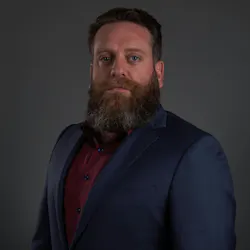
According to Nick Rouge, subsea robotics product manager with Oceaneering, the shift toward electric propulsion was driven less by a desire to replace hydraulics outright and more by operational realities seen across long campaigns.
“Operational data and customer feedback consistently showed that hydraulic subsystems are a primary driver of routine maintenance and unplanned intervention during long campaigns,” Rouge told Offshore in a pre-OTC interview. "Clients were not asking for hydraulics to disappear, but they were increasingly focused on improving predictability, reducing recovery frequency and maintaining performance over weeks rather than days.”
The Momentum ROV is designed for continuous subsea operation of up to 30 days, which he says is a significant contrast to conventional approaches.
“The reliability‑based design of the Momentum electric work class ROV is designed to deliver up to 30 days of subsea residency without the need to recover for maintenance,” Rouge continued, noting that “typical hydraulic work class systems are recovered to surface when not in use and see repair and maintenance every 24 to 72 hours.”
Electrification also changes how failures are managed subsea.
Rather than a single issue creating system‑wide risk, Rouge explained that electric systems enable isolation of any failed components, and instead of a hydraulic leak that impacts the entire system, a given component can be isolated, allowing the subsea operation to continue or enable safe recovery of ROV to surface for repair.
"Electrification enables a fully digital, IP-based architecture that supports enhanced situational awareness, real-time data streaming and remote condition monitoring," he said. "These capabilities support condition-based maintenance, predictive diagnostics and more effective remote support, whether the ROV is deployed from a traditional vessel or future uncrewed or lightly crewed platforms. In that sense, electric work class ROVs expand the range of viable operating strategies available to operators as offshore operations continue to evolve."
Fleet-scale operational data played a defining role in shaping the platform.
With “more than 250 work class ROVs operating with more than 400,000 dive hours per year,” Rouge said the company was able to identify recurring failure mechanisms and validate design decisions through accelerated endurance testing and hands-on trials. Practical experience during test operations also influenced physical design, as “that feedback directly informed the redesign of the production vehicle’s frame and component arrangement, reducing intervention time while retaining proven subsystems.”
 remote operations concept
“Backward compatibility was prioritized because it directly affects how quickly and efficiently operators can mobilize new capability offshore,” Rouge said.
By integrating with existing tethers, launch and recovery systems, and topside controls, he noted that electric ROVs can be deployed incrementally and alongside hydraulic systems where each makes the most operational sense.
Rouge will present additional technical detail on the Momentum ROV during an OTC technical session, as part of the “Engineering the Deep: Innovation at the Frontiers of Subsea Integrity and Operations” program, from 2-4 p.m. on Tuesday, May 5, in room 610.
Offshore is an official media partner of OTC 2026.
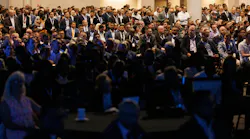 OTC 2026 Opening Ceremony
About the Author
 Ariana Hurtado
Ariana Hurtado
Editor-in-Chief
With more than a decade of copy editing, project management and journalism experience, Ariana Hurtado is a seasoned managing editor born and raised in the energy capital of the world—Houston, Texas. She currently serves as editor-in-chief of Offshore, overseeing the editorial team, its content and the brand's growth from a digital perspective.
Utilizing her editorial expertise, she manages digital media for the Offshore team. She also helps create and oversee new special industry reports and revolutionizes existing supplements, while also contributing content to Offshore's magazine, newsletters and website as a copy editor and writer.
Prior to her current role, she served as Offshore's editor and director of special reports from April 2022 to December 2024. Before joining Offshore, she served as senior managing editor of publications with Hart Energy. Prior to her nearly nine years with Hart, she worked on the copy desk as a news editor at the Houston Chronicle.
She graduated magna cum laude with a bachelor's degree in journalism from the University of Houston.