Integrated drillships are redefining offshore drilling efficiency
Key takeaways:
- Integrated drillship operations in Guyana demonstrate how fleet coordination, specialization and continuous improvement can reduce well delivery times.
- Extended BOP deployment, riser-enabled moves and MPD are delivering measurable reductions in flat time and nonproductive time.
- Increasing automation and condition-based maintenance are improving consistency, safety and uptime across modern deepwater drillship fleets.
By Robert Van Kuilenburg and Kelby Ladner, Noble Corp.
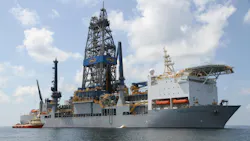
In less than a decade, drilling units have evolved from individual drilling vessels into fully integrated machines operating seamlessly within a broader drilling ecosystem. This evolution has delivered unprecedented gains in both operational efficiency and safety. Wells are no longer viewed in isolation, but rather as elements of a much larger, connected process.
Guyana case study: Specialized rig deployment model
A prime example of this evolution can be seen in current drilling operations in Guyana. Drilling efficiency has reached levels where, according to Noble CEO Robert Eifler, “Noble is not drilling itself out of work but instead is drilling itself into more work.”
There is no single “magic bullet.” These efficiency gains are the result of continuously identifying improvement opportunities at every stage of the drilling process, testing them on individual units and deploying them at scale when successful. This approach has resulted in an impressive 50% reduction in the time from spud to handover of the well to production teams.
The four Noble rigs supporting operations in Guyana are evenly split to serve specific functions. Two rigs are dedicated to tophole and intermediate hole sections, while two rigs focus on completions. This specialization allows each rig to concentrate on a defined scope of work and to develop a high level of proficiency in those activities.
Reducing BOP-related downtime through well hopping
Early efforts focused on minimizing BOP-related inefficiencies. Maintaining BOPs on the surface is time-consuming, typically requiring 10 to 12 days, and is not always necessary.
In close cooperation with the client, the drilling program has implemented extensive well hopping, keeping the BOP submerged while moving between wells. The longest single BOP deployment has reached 420 days, significantly reducing flat time attributed to BOP operations.
Faster rig moves with riser monitoring and shuttle tools
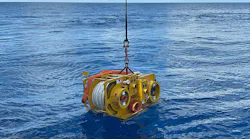
Relocating rigs with the riser deployed proved to be another major time saver. Initially, low transit speeds limited the full benefit of this approach. Drilling risers are now equipped with sensors that enable real-time monitoring of system integrity, allowing transit speeds to increase from 0.3 to 0.5 knots. This improvement saves between 20 and 40 days of transit time per rig each year. For short well hops, a riser shuttle tool was also developed, enabling a stack hop to be completed in less than two hours for wells in close proximity.
Deploying MPD and expanding rig floor automation
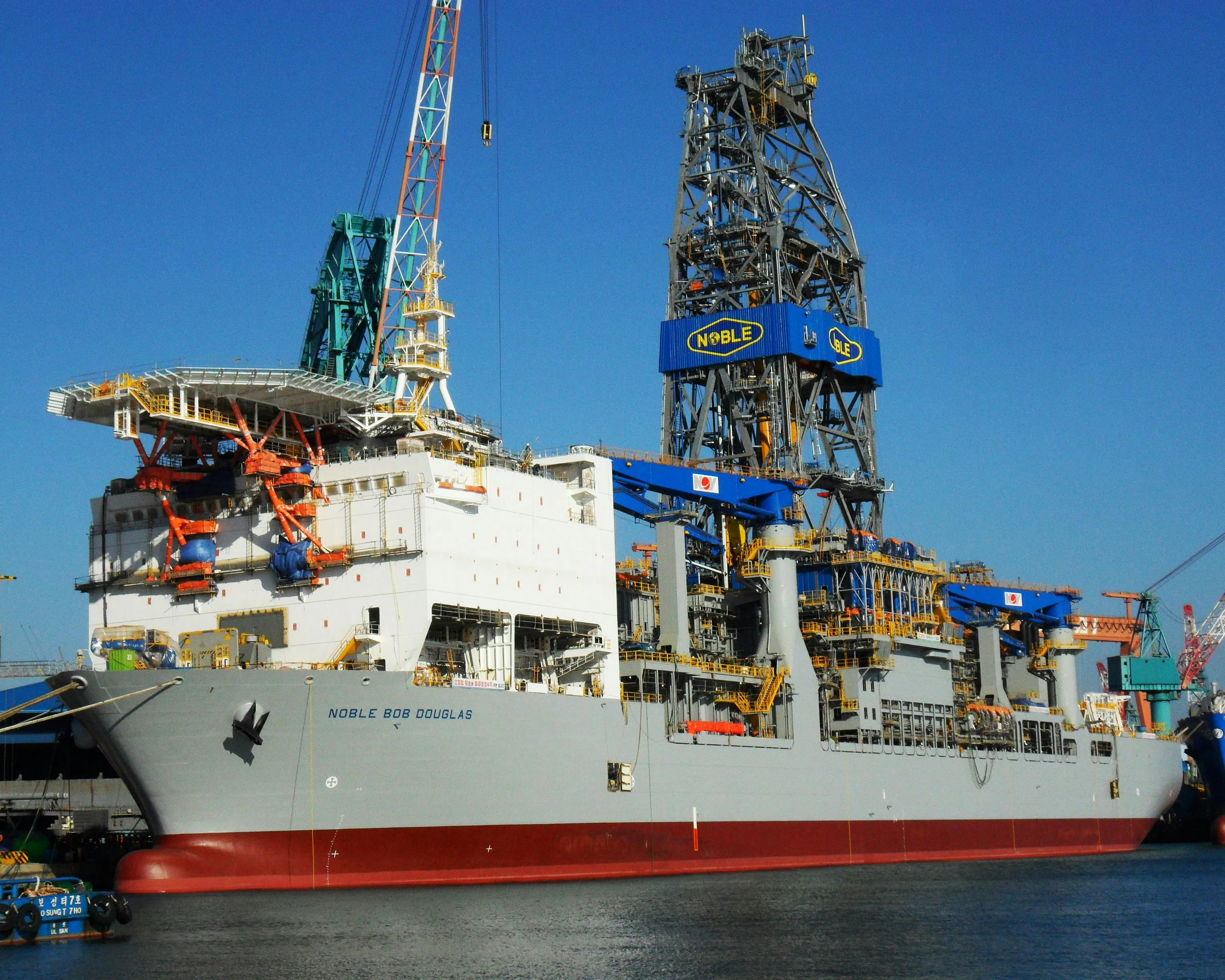
Over time, several additional technologies have been integrated across the fleet. Two rigs, primarily assigned to drilling, have been equipped with MPD systems, which save an average of 14 days when wells encounter challenges.
Three rigs have been upgraded to full rig floor automation using MMC and NOVOS, with the fourth scheduled for upgrade in early 2027.
The benefits of automation extend beyond removing personnel from the drill floor. Automation also improves operational consistency across crews, which is a critical prerequisite for continuous improvement. Connection times have now been reduced to 2 minutes and 45 seconds and continue to trend downward.
Maintenance strategies supporting high uptime
At Noble, maintenance activities are planned aggressively around operational windows, with condition-based and preventive schedules aligned to two-week opportunity windows to minimize impact. This approach has resulted in the highest uptime across the Noble fleet for HHI vessels.
Looking ahead
While these units may appear similar to those of several years ago, they are fundamentally different machines internally and are operated in very different ways. There is no doubt that several years from now these rigs will once again look very different from today, because continuous improvement never stops.
About the Author
 Robert van Kuilenburg
 Robert van Kuilenburg
Robert van Kuilenburg graduated in 1996 from the Technical University of Delft with a degree in mechanical engineering, where his studies focused on the use of neural networks for condition monitoring. He joined Huisman Equipment in 2001 as a concept engineer and progressed to vice president of projects by 2012.
He joined Noble in 2012 as part of the startup team for the company's newbuild drilling rigs in Korea, relocating to Houston in 2014. He was closely involved in the development of Noble’s eBOP and MPD systems and is currently senior manager of technical marketing.
As former chairman of the IADC ART Committee, he was and remains involved in numerous IADC guideline documents, including the new IADC Drill Bit Standards. He is also a member of the DWIS leadership team, contributing to interoperability standards for the drilling industry.
 Kelby Ladner
 Kelby Ladner
Kelby Ladner has more than 23 years of experience with Noble, having served in a wide range of roles across projects, engineering and operations.
His career includes assignments in Asia, Brazil and the US Gulf, supporting both asset-level and regional operations. Since March 2018, he has been part of Noble’s Guyana operations, providing operational support for multiple assets and the broader regional portfolio. He currently serves as operations manager for the Guyana region.
Related
