bp reportedly initiates sale of minority interests in Kaskida, Tiber projects

bp has launched a formal process to sell minority stakes in two of its flagship projects in the US Gulf of Mexico, the Kaskida and Tiber (Tiber-Guadalupe) projects, according to multiple sources familiar with the matter.
The move, described as one of the first major strategic actions under new CEO Meg O’Neill, aims to bring in partners to share development costs and risks while allowing bp to retain operatorship and significant exposure to future production. Each project is estimated to be worth billions of dollars to bp, with the company having considered sales of up to 50% stakes in earlier discussions.
Some of the project highlights include:
- Kaskida: bp took final investment decision (FID) in July 2024 on this 100%-owned project. It features a new floating production unit with capacity for 80,000 barrels of oil per day from an initial six wells. First production is targeted for 2029, with discovered recoverable resources estimated at around 275 million barrels of oil equivalent in the first phase (potential for additional phases). It represents bp’s sixth operated hub in the region and unlocks broader Paleogene potential.
- Tiber-Guadalupe: bp sanctioned this 100%-owned project in September 2025 with an approximately $5 billion investment. It will be the company’s seventh operated hub, utilizing a new floating production platform with 80,000 barrels of oil per day capacity (six wells in Tiber plus a two-well tieback from Guadalupe). First oil is expected in 2030, with initial recoverable resources of around 350 million barrels of oil equivalent. The design leverages standardization with Kaskida for efficiency.
Together, the two projects form a core part of bp’s plan to invest around $10 billion in its US Gulf Paleogene developments and help drive the company’s Gulf production toward over 400,000 boe/d by 2030.
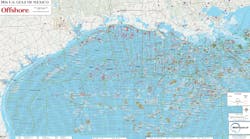 Gulf of Mexico map 2026
Strategic context
bp remains one of the largest operators in the Gulf of Mexico. The potential divestments align with its renewed emphasis on oil and gas growth amid a broader industry focus on high-return upstream assets. Marketing of the stakes is underway, though details on exact percentages offered and potential buyers have not been disclosed.
This process follows more than a year of internal evaluation and comes as bp advances these technically challenging ultra-deepwater Paleogene plays, which require high-pressure, high-temperature (HP/HT) capabilities.
No official comment from bp was immediately available in initial reports, but the company has previously highlighted the projects’ importance to its US portfolio and long-term energy supply strategy.
Exclusive content:
 Tim Mitchell Anchor Project Fab Yard A
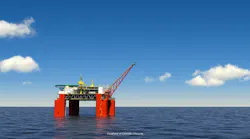 Kaskida rendering
 Shell's Whale platform
About the Author
 Bruce Beaubouef
Bruce Beaubouef
Senior Lead Reporter / Managing Editor
Bruce Beaubouef is Managing Editor for Offshore magazine. In that capacity, he plans and oversees content for the magazine; writes features on technologies and trends for the magazine; writes news updates for the website; creates and moderates topical webinars; and creates videos that focus on offshore oil and gas and renewable energies. Beaubouef has been in the oil and gas trade media for 25 years, starting out as Editor of Hart’s Pipeline Digest in 1998. From there, he went on to serve as Associate Editor for Pipe Line and Gas Industry for Gulf Publishing for four years before rejoining Hart Publications as Editor of PipeLine and Gas Technology in 2003. He joined Offshore magazine as Managing Editor in 2010, at that time owned by PennWell Corp. Beaubouef earned his Ph.D. at the University of Houston in 1997, and his dissertation was published in book form by Texas A&M University Press in September 2007 as The Strategic Petroleum Reserve: U.S. Energy Security and Oil Politics, 1975-2005.