OTC 2026: Four decades of floating production shape OTC panel on the Gulf’s future
By Ariana Hurtado, Editor-in-Chief
Over the past 40 years, key players in the US Gulf of Mexico have pushed the boundaries of floating production platforms by testing new concepts, increasing water depth and continually resetting design priorities in response to markets, regulation and risk.
That evolution is the focus of a technical panel organized by Richard D’Souza, president of Richard B Offshore and one of Offshore's 2026 Editorial Advisory Board members, at next week’s Offshore Technology Conference (OTC). The session brings together six industry veterans to reflect on how floating production matured in the Gulf, and which lessons continue to shape today’s projects.
Panelists will include:
- Ram Gopalkrishnan, Advisor, Shell International
- R. Don Vardeman, Retired (Anadarko Petroleum)
- Richard D'Souza, President, Richard B Offshore
- Ricky Thethi, Global Director, 2H Offshore
- Larry Cutburth, Midstream Project Manager, Wood Plc
- David Barton, Advisor, KBR
Attendees will hear very different philosophies shaped by experience, D’Souza said.
“Shell has traditionally had a ‘horses for courses’ approach to floating platform selection, having installed one of each major platform type (TLP, semisubmersible, spar, FPSO)," he added. "Anadarko, with eight sanctioned floating platforms, is a deepwater pioneer as well, having introduced the classic spar and its variants, the truss and cell spars to the industry."
Three inflection points that reshaped floating production
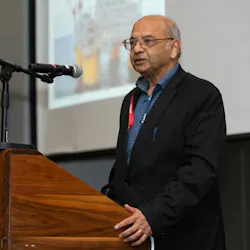
From D’Souza’s perspective, three inflection points stand out.
The first came in 1994, when Shell’s Auger tension-leg platform (TLP) began producing in deep water.
“It demonstrated that the deepwater Miocene reservoirs delivered high rate, high ultimate recovery wells, a fundamental driver of deepwater development economics, ushering in the era of deepwater platforms in the Gulf,” he said.
The second followed the oil price surge that began in 2000, a period that saw rapid expansion in platform concepts, water-depth records and project scale.
“A total of 40 floating platforms were sanctioned in this period including spar, semisubmersible, TLP and FPSO platforms,” D’Souza said, noting that technical limits continued to be pushed, culminating in Shell’s Stones FPSO in nearly 3,000 m of water.
The third inflection point arrived after the 2014 oil price collapse, when delivery certainty and capital discipline became defining constraints.
“Operators focused on capital discipline, leading to leaner, standardized platforms,” D’Souza said. Since then, only a dozen platforms have been sanctioned in the Gulf—all semisubmersibles with more modest production and displacement targets.
Regulation, risk and the move toward deeper water
External shocks also reshaped platform design. Hurricanes Katrina and Rita drove a reassessment of metocean design criteria, while the 2010 Macondo incident led to sweeping regulatory changes.
“Not a single drilling or dry tree platform was sanctioned in the aftermath,” D’Souza said.
As development moved into deeper water, floating platforms became central to Gulf production. Today, deepwater accounts for roughly 95% of total output, he added.
The panel will explore how early debates, particularly dry-tree versus wet-tree concepts, gave way to subsea tiebacks as water depths exceeded commercial limits for dry-tree designs.
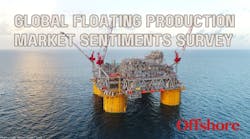 Shell's Appomattox platform in the Gulf of Mexico
What attendees can expect from the OTC panel
Attendees can expect candid operator and contractor perspectives.
“The attendees are in for a treat hearing from the combined 250 years of experience and perspectives that the panelists bring to the session,” D’Souza said, adding that the discussion will reflect lessons learned across hulls, topsides, station‑keeping and riser systems.
Looking ahead, one theme is likely to dominate: standardization.
“It appears at this point that the ‘right approach’ to floating production platforms going forward for majors and independents is a standardized, 100‑kbopd production semisubmersible,” he said, underscoring how experience in a mature basin continues to reshape offshore decision‑making.
As a result, “affordability and predictability” have joined availability, reliability and cost control as core performance metrics for floating platforms in the Gulf today, D’Souza added.
He said the next phase of offshore floating production will also be shaped by advances beyond hardware alone.
“I would be remiss if I did not mention the untapped possibilities that AI and data analytics will bring,” D’Souza said. “Operators are investing in unlocking the full potency of this powerful, transformative technology, which can only further brighten the outlook for future deepwater floating platforms.”
"The Forty Year Evolution of Deepwater Floating Production Platforms in the Gulf of America" OTC panel is scheduled to take place 9:30 a.m. to noon on Wednesday, May 6, in room 306.
Offshore is an official media partner of OTC 2026.
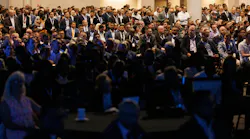 OTC 2026 Opening Ceremony
About the Author
 Ariana Hurtado
Ariana Hurtado
Editor-in-Chief
With more than a decade of copy editing, project management and journalism experience, Ariana Hurtado is a seasoned managing editor born and raised in the energy capital of the world—Houston, Texas. She currently serves as editor-in-chief of Offshore, overseeing the editorial team, its content and the brand's growth from a digital perspective.
Utilizing her editorial expertise, she manages digital media for the Offshore team. She also helps create and oversee new special industry reports and revolutionizes existing supplements, while also contributing content to Offshore's magazine, newsletters and website as a copy editor and writer.
Prior to her current role, she served as Offshore's editor and director of special reports from April 2022 to December 2024. Before joining Offshore, she served as senior managing editor of publications with Hart Energy. Prior to her nearly nine years with Hart, she worked on the copy desk as a news editor at the Houston Chronicle.
She graduated magna cum laude with a bachelor's degree in journalism from the University of Houston.