Why HP/HT is no longer the Gulf of Mexico’s outlier
Key takeaway:
By Ariana Hurtado, Editor-in-Chief, Offshore
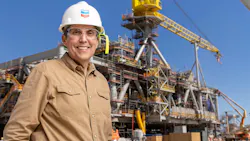
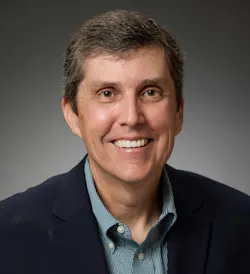
Few people have had a front‑row seat to the Gulf of Mexico’s (GoM) evolution quite like Tim Mitchell. Over a four‑decade Chevron career that culminated with leading the company’s landmark Anchor project, Mitchell worked through multiple cycles of deepwater innovation—from early subsalt exploration to today’s high‑pressure, high‑temperature (HP/HT) developments.
Now retired, and a member of Offshore's 2026 Editorial Advisory Board, he reflects on how technology, risk tolerance and execution culture have reshaped the basin, why HP/HT is no longer the outlier it once was, and what continues to make the GoM strategically relevant in a more volatile global energy landscape.
Offshore: You worked through multiple eras of Gulf of Mexico development. From your perspective, what are the biggest differences between the GoM of the early 2000s and today in terms of exploration philosophy, risk tolerance and project execution culture?
Mitchell: It’s been exciting to be a part of the rapid evolution in deep water over the past few decades, driven largely by technology and an oil price environment that encouraged investment and rewarded risk taking.
Deepwater technology has evolved significantly since the early 2000s to drive major improvements in seismic imaging, drilling and completions, and the design of subsea and floating production systems.
For example, ocean-bottom node (OBN) seismic acquisition technology has evolved to dramatically improve reservoir imaging, which is important for deep subsalt reservoirs. This helps reduce subsurface risk in terms of estimated ultimate recovery (EUR) and optimizes appraisal and development drilling well programs.
Drilling and completion technology has also evolved and enabled industry to safely and efficiently drill the deepest and most complex reservoirs in the world. Examples are dual-activity drillships using advanced robotics, managed pressure drilling (MPD) and the evolution of well completions from stacked frac packs to single trip multi-zone (STMZ) frac pacs.
From a deepwater facilities perspective, the technology for subsea systems, riser systems, floating systems and contractor capabilities has evolved significantly. These technologies were born out of the need to manage technical risk, execute safely, compete for capital investment and reliably deliver value for all stakeholders.
In the early days of deep water, the evolution of technology was on a steep curve, which was a unique challenge for long-cycle deepwater developments. From 2000 to 2008, there was an oil price super-cycle where oil prices went straight up from $20/bbl to $100/bbl. This price environment encouraged investment in deepwater opportunities and helped drive the technology to where it is today.
Since the great financial crisis in 2008, there has been significant volatility in oil prices, which has led to a need for a sharper focus on cost competitiveness, especially with the growth of shale and tight and other lower cost onshore asset classes.
What I see now is that the learning curve is flattening, and offshore deepwater technology has been commoditized to a degree that standardization, supplier-led solutions and industry know-how are enabling deepwater Gulf of America (GoA) and other offshore basins to compete for capital and remain relevant in the energy mix for the US and the world.
Offshore: HP/HT has become a defining characteristic of the next wave of GoM development. What does HP/HT mean today from a technical and organizational standpoint, and what are the biggest misconceptions about its challenges or its competitiveness?
Mitchell: HP/HT technology has now moved up the steep part of the technology development curve and is becoming commoditized across several deepwater developments in the GoA. The evolution of HP/HT technology builds on the legacy of the GoA as a leader in deepwater technology and unlocks significant reserves that were previously inaccessible.
I’d say that the biggest misconception has been around what it takes to deliver new technology like high-pressure (20K) technology. To advance 20K technology, the industry had to make big bets and take significant technical and financial risks. It’s sort of a 'chicken and egg' situation. Advancing safe and enabling 20K technology required major capital commitments by industry without knowing whether the technology would, or could, be delivered successfully.
The first step was for an operator(s) to find a resource big enough to justify the investment in 20K technology and to characterize the inherent risk. The next step was to align all stakeholders on the values and risks and then plan and execute with excellence. Developing, qualifying and moving 20K technology from prototype to production carried a significant amount of technical risk.
This type of technology development program layered on top of an uncertain oil price environment and the typical challenges of planning and executing a deepwater development is akin to designing a spaceship while launching it to the moon. Throw in a global pandemic, oil price volatility and major supply chain impacts and it really gets interesting!
Continuous engagement and alignment of all stakeholders is critical to successfully navigate through this type of endeavor, including investors, regulators, contractors, suppliers and other business partners.
Offshore: Ocean‑bottom node (OBN) seismic and other high‑resolution imaging tools have transformed subsurface decision‑making. What are the most meaningful advances you’ve seen in OBN technology, and how has better data changed the way operators approach both exploration and brownfield decisions?
Mitchell: OBN technology and seismic processing has significantly improved our ability to see the reservoir with greater fidelity. It’s like going from black and white analog TV to ultra 4K digital TV.
Combined with the emergence of AI technology, there’s significant potential for advancements in characterizing the resource and managing subsurface risk, opportunity and uncertainty. This technology will lead to improvements in the probability of success for exploration wells and help optimize bottom-hole well placement for development drilling programs.
This then translates to lower unit costs for finding and developing deepwater assets and makes them more competitive with other asset classes. This is significant because of the scale of the typical deepwater resource (units of production) and the cost of exploration and development drilling (cost of finding and developing).
OBN technology is scalable from a single well tieback to a large greenfield development and is a game changer to make better investment decisions, manage risk and enhance value for offshore deepwater developments.
An example of better decision-making is when OBN seismic data is used to not drill an exploration well at a fraction of the cost of drilling a dry hole. Another example is using OBN seismic data to optimize bottom-hole placement to maximize recovery per well. Producing the same number of barrels with just one less well on a multi-well development translates to hundreds of millions of dollars, which can dramatically improve project economics.
Offshore: You’ve previously mentioned subsea water injection and waterflooding as game‑changing technologies. How have subsea injection strategies evolved, and what role do you see them playing in maximizing recovery and life‑of‑field performance in the region?
Mitchell: Waterflood is a proven method of enhancing recovery and maximizing value for deepwater developments. Secondary recovery can be a fantastic way to continue to extract value from the large foundation investments that are made for deepwater hubs in the offshore environment.
The first challenge is to verify the reservoir characteristics and water quality requirements are well-understood to support the investment. Timing of waterflood is also a key consideration because there is typically a narrow window of opportunity to execute, driven by reservoir response and drilling depletion risk. From there, it is a matter of delivering a cost-competitive solution that enhances the value of the asset.
For deepwater floating systems, space, payload, riser/umbilical slots and power are at a premium. Life extension costs for the floating facility are also a key consideration. With a trend towards smaller floating facilities with limited space, payload and power, the introduction of subsea water injection technology can significantly mitigate facility constraints by placing the water injection equipment on the seafloor. It also mitigates impacts to production of producing assets during brownfield execution.
Subsea pumping is a proven technology.
A bigger challenge for waterflood is to deliver the water quality requirements needed to ensure an effective, reliable waterflood solution and avoid reservoir souring.
Installing water filtration and deoxygenation equipment on the seafloor can be more challenging, but there’s a big prize if successful.
Electrical power availability on the host platform is another potential constraint. Subsea water injection is more attractive for assets that are no longer operating at peak power requirements and/or have spare power capacity.
Offshore: What characteristics continue to make the Gulf of Mexico an attractive exploration basin today, and what might the industry be undervaluing about it?
Mitchell: The GoA has several attributes that still make it relevant and investable, not only for the GoA but for the entire offshore industry. The history and track record of the GoA is one of continuous learning and evolution of technology, which continues to unlock affordable energy for the world.
The GoA has historically been a leader in offshore technology. For decades, the GoA has exported both technology and know-how around the world to safely develop and deliver offshore projects.
Fiscal terms, geopolitical stability, the regulatory environment and the ever-growing need for energy security are other key enablers that continue to make the GoA investable.
In addition, the prospectivity of the GoA continues to remain relevant as demonstrated by recent lease sales.
At the same time, investment in onshore unconventional and other asset classes around the globe seem to be plateauing while exploration in offshore basins seem to be on the rise.
By virtue of its track record, technology and capabilities, in my opinion, the GoA will remain strategically important for global offshore developments for a long time to come.
Offshore: Looking across your career, where do you believe AI and data analytics offer the most realistic value to offshore operators today?
Mitchell: I am excited by the prospects of AI for our industry, and I believe the opportunities are endless. I think there will be some major discrete opportunities, like interpretation of seismic data that will lead to significant step changes in value for offshore developments.
Knowledge transfer is another area of untapped potential in AI. Finding ways to apply AI with a combination of Big Data and human know-how (read that as experience and gray matter) could help preserve knowledge and enhance the capabilities of the future talent pool for the offshore industry. I am hopeful that AI will lead to improvements in safety, which would be a great starting point for any organization.
There are also major opportunities for project engineering, designs and execution in the offshore industry to reduce costs and manage risk.
Robotics and drone technology in combination with AI is another solution set that will enhance all the above. Of course, broad adoption of AI is table stakes for any organization.
I can remember early in my career when personal computers did not exist in the office space; then later the internet and cellphones were introduced. We had the same conversations about PCs, phones and internet access in the office that we are having today about AI.
I think AI has exponentially greater potential than PCs, cellphones and the internet combined. I think a key to success is to focus on both a broad adoption strategy for business processes and workflows, and a more targeted strategy that high-grades specific opportunities based on value and ease of implementation.
Offshore: Given today’s geopolitical instability, how should US offshore production be viewed in the context of national energy security? What is the strategic importance of maintaining a strong GoM industry?
Mitchell: US offshore production is extremely vital to national energy security. The balance of energy in the world has shifted significantly in recent years with the war in Ukraine and more recently with the capture of Maduro in Venezuela and the war in Iran.
The GoA is a key contributor to US energy independence, which strengthens the US ability to navigate these geopolitical events. Maintaining a strong US capability for the GoA and the entire offshore industry helps underpin energy security for the US and the world.
It also helps support diversification in global energy supply through the export of offshore technology, know-how and capabilities to other countries. Having a diverse offshore energy supply for the world helps mitigate geopolitical risks and helps ensure safe, responsible and affordable energy supply to the world. The GoA has had a unique role in the US and for the global offshore industry for decades, and so it’s strategically important to the US and the entire world for that matter.
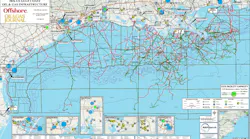 2026 US gulf Coast Oil & Gas Infrastructure Map
Offshore: How do fluctuations in leasing policy affect an operator's portfolio strategy, talent planning and long‑term investment confidence?
Mitchell: I think it’s fair to say that leasing policy decisions most certainly have an impact on long-term investments in offshore oil and gas. Fluctuations in leasing policies contribute to what is already an uncertain environment for major capital investments in deepwater developments. By their very nature, deepwater offshore developments typically carry a significant risk profile and require a high level of investment over a long period of time before the first barrel of oil is produced.
Regulatory uncertainty, including leasing policies and fiscal terms, creates another layer of risk, which can either support or undermine the operator’s confidence in making an investment decision. More reliable and predictable regulatory policy reduces investment risk and supports quality investment decisions when an operator is deciding where to invest its limited capital.
From the perspective of talent planning, volatility in any form undermines the industry’s ability to maintain a strong and capable workforce, which has far-reaching implications for our industry.
I also think it’s important for industry to continue to first lead offshore development activities from a position of responsibility and find common ground with regulators to drive a more predictable regulatory environment.
We should also maintain a commitment to reduce our carbon footprint and help steward the path for a responsible energy transition, which is a key factor in energy policy decisions.
Offshore: After four decades in the offshore sector, what advice would you give to the next generation of engineers and leaders building careers in the Gulf?
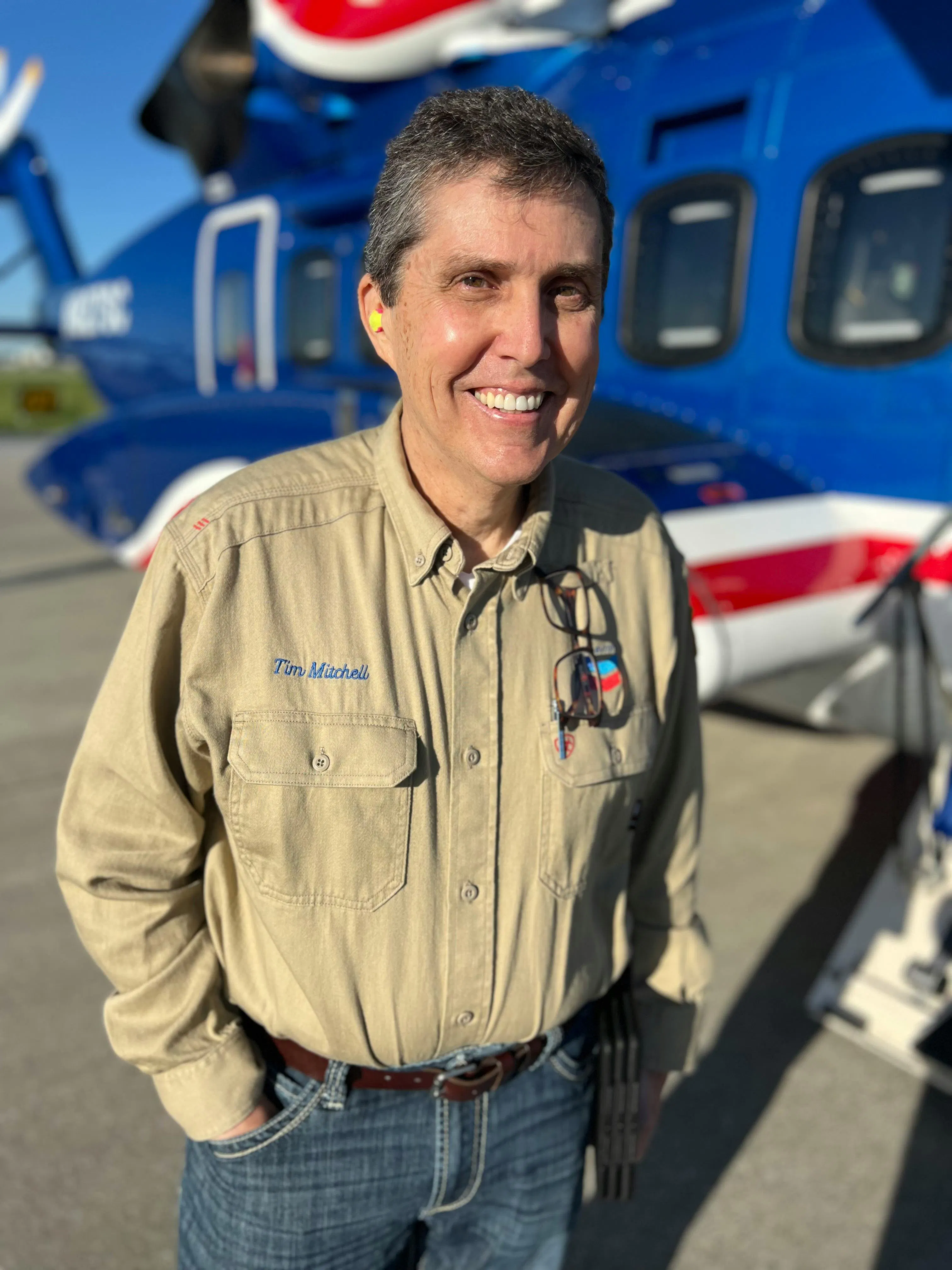
Mitchell: The world is never standing still and that’s half the fun. The Gulf of America remains a critical contributor to deliver safe, reliable and affordable energy to the world.
Most people have no idea what we do, and that’s ok. We aren’t in it for the glory. If you love working on talented teams and enjoy solving some of the most complex and technologically challenging problems in the world, then this is the place for you. Working in offshore is an exciting, diverse experience, it’s entrepreneurial and always full of surprises.
The Gulf of America is a great place to both start and end a rewarding and meaningful career in the offshore sector, and I’m living proof of that.
I would also encourage the next generation of engineers and leaders to open their aperture outside of the Gulf where the challenges are the same, and there are endless opportunities to learn, experience the world and different cultures, work with many talented people, and make an impact for yourself, your family, your company and the world.
This article is part of Offshore's 2026 Gulf of Mexico Regional Report.
About the Author
 Ariana Hurtado
Ariana Hurtado
Editor-in-Chief
With more than a decade of copy editing, project management and journalism experience, Ariana Hurtado is a seasoned managing editor born and raised in the energy capital of the world—Houston, Texas. She currently serves as editor-in-chief of Offshore, overseeing the editorial team, its content and the brand's growth from a digital perspective.
Utilizing her editorial expertise, she manages digital media for the Offshore team. She also helps create and oversee new special industry reports and revolutionizes existing supplements, while also contributing content to Offshore's magazine, newsletters and website as a copy editor and writer.
Prior to her current role, she served as Offshore's editor and director of special reports from April 2022 to December 2024. Before joining Offshore, she served as senior managing editor of publications with Hart Energy. Prior to her nearly nine years with Hart, she worked on the copy desk as a news editor at the Houston Chronicle.
She graduated magna cum laude with a bachelor's degree in journalism from the University of Houston.