Editorial Advisory Board members discuss how to improve offshore wind economics
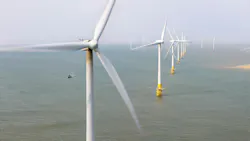
Long-term growth in offshore wind will depend not only on technological advances, but also on the industry's ability to lower costs, reduce risk and create more predictable investment environments.
As projects become larger and more complex, developers, suppliers, vessel operators and investors are all seeking ways to improve economics while maintaining reliable project execution.
Offshore asked members of its 2026 Editorial Advisory Board to identify the single change that would have the greatest impact on making offshore wind projects more economically competitive over the next five years. Their responses highlight a range of priorities, from standardization and permitting reform to investment certainty, predictable project pipelines and improved execution.
What single change would have the greatest impact on making offshore wind projects more economically competitive over the next five years?

“The single biggest change would be meaningful permitting reform that provides greater regulatory certainty. Offshore energy projects require enormous upfront investment and years of planning, and uncertainty adds costs at every stage.
Developers, manufacturers, vessel operators, ports and other supply chain companies need confidence that projects receiving leases and permits can move forward on predictable timelines. Permitting reform that establishes clear rules, improves coordination among agencies and provides durability for final decisions would reduce risk, lower costs and support long-term investment.
That need extends beyond offshore wind; America needs a modern permitting system that provides the certainty necessary for all forms of domestic energy and infrastructure to attract investment, compete and get built.”
—Erik Milito, President, National Ocean Industries Association (NOIA)

“The economics have to change. The projects consistently come in over budget. The costs of turbines, the cost of installation and the timelines all need to fall and compress. The projects must be able to compete with other unsubsidized energy sources, and right now they don't.”
—James West, Managing Director & Head of Energy and Power Research, Melius Research

“The single change that would have the greatest impact on offshore wind competitiveness is the adoption of standardized project design and execution at scale. Today, many offshore wind developments remain effectively bespoke, driving higher engineering costs, procurement complexity, and execution risk.
Standardization of turbine foundations, substations, installation methodologies, and contractual frameworks would shorten development cycles, improve contractor productivity, and provide greater confidence for suppliers to invest in capacity.
We have seen this model work in the offshore oil and gas sector, where repeatable FPSO designs and execution strategies have reduced costs, compressed schedules, and improved delivery certainty. Greater standardization offers the fastest route to lower capital costs, more investable projects, and ultimately more affordable energy.”
—David Boggs, Founder and Director, Energy Maritime Associates

"The industry's greatest opportunity is to drive greater investment certainty over the next five years. Offshore wind remains highly capital-intensive, and today's elevated financing costs and market uncertainty have made investment decisions increasingly difficult.
Creating long-term, predictable revenue frameworks such as contracts for difference (CFDs) can significantly reduce risk and attract the investment needed to accelerate development. Although early site characterization and disciplined project execution can improve efficiency and competitiveness, those gains materialize only once a sound investment framework is in place.
As the sector matures, the winners will be the markets that offer the most predictable environment for developers and investors. Greater certainty ultimately translates into lower risk and a more competitive offshore wind market."
—Céline Gerson, President and Group Director, Americas, Fugro

“The single biggest change would be greater long-term visibility across auctions, permitting and project schedules. Offshore wind already has the technology, expertise and capital needed for growth, but uncertainty around project timing continues to increase costs throughout the value chain.
Developers, vessel owners, manufacturers and investors make decisions years in advance, and unpredictable pipelines lead to delayed investment, underutilized capacity and higher risk premiums. Clear long-term roadmaps and more predictable market frameworks would reduce uncertainty, support investment decisions and ultimately improve project economics.”
—Sofia Forestieri, SVP Offshore (Rigs & Wind), Esgian
COMING SOON:
Check out Offshore's 2026 Offshore Wind Special Report in the September/October issue, publishing in early October.
Want a sneak peek? Some of the exclusive articles have already been published online:
Want more industry insights? Visit the 2026 Editorial Advisory Board page to learn more about all 15 board members and the perspectives they are sharing throughout the year.
About the Author
 Ariana Hurtado
Ariana Hurtado
Editor-in-Chief
With more than a decade of copy editing, project management and journalism experience, Ariana Hurtado is a seasoned managing editor born and raised in the energy capital of the world—Houston, Texas. She currently serves as editor-in-chief of Offshore, overseeing the editorial team, its content and the brand's growth from a digital perspective.
Utilizing her editorial expertise, she manages digital media for the Offshore team. She also helps create and oversee new special industry reports and revolutionizes existing supplements, while also contributing content to Offshore's magazine, newsletters and website as a copy editor and writer.
Prior to her current role, she served as Offshore's editor and director of special reports from April 2022 to December 2024. Before joining Offshore, she served as senior managing editor of publications with Hart Energy. Prior to her nearly nine years with Hart, she worked on the copy desk as a news editor at the Houston Chronicle.
She graduated magna cum laude with a bachelor's degree in journalism from the University of Houston.