Ocean Winds CEO: Execution and investment confidence will shape offshore wind's future
Key highlights:
-
Ocean Winds says project success is largely determined before final investment decision through disciplined planning, engineering and risk management.
-
Supply chain constraints remain most pronounced in HVDC equipment, turbine manufacturing and installation vessel availability.
-
Floating wind's next challenge is not proving the technology works, but commercializing projects at industrial scale through investment in ports, manufacturing and supportive regulatory frameworks.
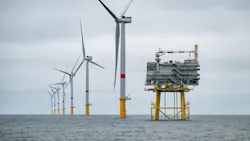
Offshore recently spoke with Ocean Winds CEO Craig Windram about the lessons developers are learning from project execution, where supply chain constraints remain most acute, what floating wind needs to achieve commercial scale, and the conditions required to sustain offshore wind growth through 2035.
Offshore: As offshore wind projects move into larger-scale deployment globally, what are the biggest lessons Ocean Winds has learned about executing projects on schedule and controlling costs in today's market?
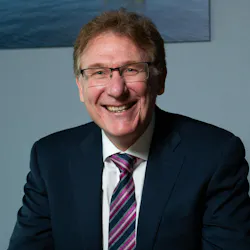
Windram: One of the clearest lessons is probably how important discipline is from the early stages of a project.
Successful projects will be determined well before a project reaches FID or starts the construction phase. The quality of early surveys, engineering, permitting or procurement strategy is what ultimately determines whether a project can be delivered on time and on budget.
Offshore wind developments are extremely complex industrial programs that will take years and require highly complex planning, bringing together turbines, foundations, cables, vessels, ports, grid connections, suppliers, teams and authorities.
Standardization, realistic contingencies, and a clear vision of the risks are all essential and will be critical to ensure cost control. And at the same time, flexibility in areas like vessels, logistics will help also with the preferred business case.
Ultimately, what makes the difference is high-quality preparation, discipline and the ability to work with partners early enough in a long-term strategy to reduce or remove a risk before it becomes a cost or delay.
Early decisions, strong governance and risk management will create the conditions for success years later, because scale is important but scale on its own will not deliver successful projects itself.
Offshore: Many markets are pursuing ambitious offshore wind targets simultaneously. Where do you see the greatest supply chain bottlenecks today, and which parts of the supply chain appear best positioned to support growth over the next decade?
Windram: The tightest constraints today are probably HVDC equipment and turbine manufacturing both now competing for capacity with grid operators, interconnectors and data centers, not just offshore wind.
Installation vessels are equally scarce; building one takes years of confidence in future demand, and that confidence has been inconsistent.
The positive side is real: new suppliers are entering foundations, cables and offshore services, and governments are starting to consider offshore wind as an industrial opportunity rather than just an energy target.
The next decade will belong to the parts of the supply chain that industrialize, moving from bespoke projects to repeatable, scalable delivery. That's where the winners will be found.
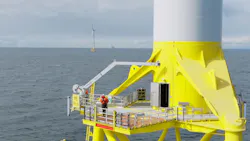
Offshore: Floating offshore wind is widely viewed as the next major growth opportunity. What technical, commercial or regulatory milestones still need to be achieved before floating wind can scale beyond pilot and demonstration projects?
Windram: Floating wind already works, and our projects, WindFloat Atlantic and EFGL, have already proved that.
The question now is commercialization at scale: industrialized manufacturing, port infrastructure able to handle thousands of tons of steel per foundation, and predictable demand to justify new factories.
Like fixed-bottom wind before it, floating wind needs well-designed support mechanisms with a clear route to market and [the] fastest leasing and permitting path to unlock economies of scale and reduce LCOE [levelized cost of energy].
This will be decided by the whole ecosystem (ports, suppliers, governments, developers) scaling together; it is not just an engineering challenge.
Regulation also has an important role to play. We need visibility on leasing rounds, permitting processes and clear revenue frameworks. Floating projects typically involve larger upfront investments and longer preparation periods, making regulatory certainty even more important to ensure bankability.
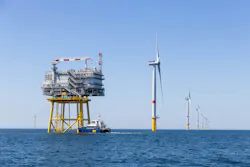
Offshore: Looking ahead to 2035, what will be the defining factors that determine whether the offshore wind industry achieves its global growth ambitions?
Windram: The industry doesn't have an ambition problem. It will be ready to deliver with the right conditions. In many ways, offshore wind's greatest challenge today is not a lack of technology or ambition. It is creating enough confidence for everyone involved to invest ahead of demand.
That means governments need to go beyond targets and support schemes. They need to provide clear, long-term visibility and ring-fenced budgets, giving industry the confidence to invest in the supply chain, ports, grids and infrastructure needed to deliver secure and affordable offshore energy. This is particularly important in Europe.
What will decide whether that happens is probably execution:
- Can supply chains scale fast enough?
- Can permitting keep pace?
- And can governments and industry align on long-term planning?
One point often missed: the sector's future depends as much on infrastructure, networks, ports, or cables and logistics as on turbines themselves. Get that right, and offshore wind will be transformative for global decarbonization. If we don't, growth will be limited by execution, not ambition.
For the next decade, the countries that provide that confidence will be the countries that capture the economic, industrial and energy benefits of the offshore wind transition.
About the Author
 Ariana Hurtado
Ariana Hurtado
Editor-in-Chief
With more than a decade of copy editing, project management and journalism experience, Ariana Hurtado is a seasoned managing editor born and raised in the energy capital of the world—Houston, Texas. She currently serves as editor-in-chief of Offshore, overseeing the editorial team, its content and the brand's growth from a digital perspective.
Utilizing her editorial expertise, she manages digital media for the Offshore team. She also helps create and oversee new special industry reports and revolutionizes existing supplements, while also contributing content to Offshore's magazine, newsletters and website as a copy editor and writer.
Prior to her current role, she served as Offshore's editor and director of special reports from April 2022 to December 2024. Before joining Offshore, she served as senior managing editor of publications with Hart Energy. Prior to her nearly nine years with Hart, she worked on the copy desk as a news editor at the Houston Chronicle.
She graduated magna cum laude with a bachelor's degree in journalism from the University of Houston.
Related
