RWE Offshore Wind COO: Future of offshore wind O&M is predictive, not reactive
Key highlights:
-
Offshore wind operators are increasingly managing assets across entire portfolios rather than individual projects.
-
Standardized vessel operations and dedicated service teams are improving maintenance efficiency across offshore wind fleets.
-
AI, condition monitoring and drone technologies are helping operators reduce downtime and optimize maintenance planning.
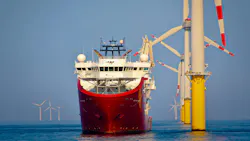
Offshore wind O&M trends operators are prioritizing:
-
Predictive maintenance
-
AI-assisted condition monitoring
-
Drone-based inspections
-
Autonomous logistics
-
Fleet-wide maintenance planning
-
Asset life extension strategies
As offshore wind portfolios expand and the industry's earliest projects move beyond their first decade of operation, operators are increasingly focused on maximizing asset availability, extending equipment life and improving maintenance efficiency. Advances in digital monitoring, predictive maintenance and vessel logistics are helping reshape how offshore assets are managed throughout their lifecycle.
Offshore spoke with Thomas Michel, COO of RWE Offshore Wind, about how operations and maintenance (O&M) strategies have evolved, lessons learned from managing a growing offshore wind portfolio and the technologies shaping the future of offshore asset management.
Offshore: How has RWE's approach to operations and maintenance evolved as offshore wind farms move from early-life operation into long-term asset management?

Michel: RWE’s approach has evolved from a focus on project-specific maintenance activities for our offshore wind farms to a fleet-wide, long-term asset management model.
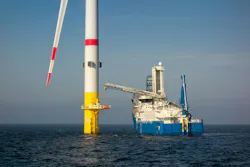
Maintenance campaigns offshore are increasingly delivered through standardized vessel operations, dedicated service operation vessels (SOVs), and specialized service teams—long gone are the days of relying on ad hoc solutions.
At the same time, maintenance strategies have shifted from reactive interventions to preventive and predictive approaches focusing on the full lifetime of the offshore wind asset, where it is at in the asset lifecycle and commercial optimization, for example based on the current revenue scheme.
By leveraging operational experience and campaign data, RWE is increasingly able to anticipate potential issues before they affect asset availability or performance, thereby enhancing reliability and optimizing asset-related decisions for the optimal asset life.
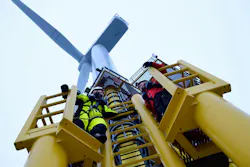
Offshore: RWE operates offshore wind projects across multiple generations of turbine technologies and markets. How have the lessons learned from managing this diverse portfolio influenced your approach to asset reliability, maintenance planning and life-cycle optimization?
Michel: As RWE’s offshore capacity continues to grow, O&M have become key drivers of portfolio performance. Vessels, crews and onshore teams now coordinate activities across a steadily growing number of sites and assets. While technicians often spend extended periods offshore, onshore teams ensure that logistics run smoothly, maintenance strategies are synchronized across the portfolio of comparable turbine types, and that the highest safety standards are maintained.
Managing a diverse offshore wind portfolio has highlighted the importance of standardization, strategic partnerships and fleet-wide planning. Lessons learned across different turbine technologies and markets have helped RWE develop more efficient and cost-effective maintenance concepts, improve response times and optimize major component replacements. As a result, the focus has shifted from solely site-specific execution to a coordinated portfolio strategy that enhances reliability, operational efficiency and asset integrity throughout the entire asset lifecycle.
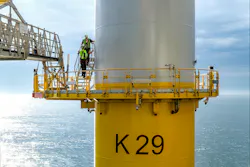
Offshore: What role do digital tools, predictive maintenance, condition monitoring and data analytics play in improving asset performance and reducing downtime?
Michel: Digital tools are playing an increasingly important role in maximizing asset performance and reducing downtime.
Furthermore drone-assisted inspections can improve both efficiency and safety. Inspections that previously required technicians to climb turbines and inspect every meter manually can now be supported by drones, significantly reducing time and risk. In addition, cargo drones can complement traditional logistics by increasing turbine uptime, improving safety, and reducing costs and emissions. At RWE, for example, we have successfully pioneered in a pilot project long-range autonomous cargo drone flights at two of our German offshore wind farms.
Condition monitoring systems and advanced data analytics, increasingly supported by artificial intelligence, provide valuable insights into asset health and maintenance requirements, and are core to optimizing our maintenance strategy. This allows us to take a more proactive approach to anticipating future failures, reducing unplanned downtimes and ensuring that individual works can be bundled together into coordinated campaigns that can be executed more efficiently.
Exclusive content:
 Underwater cables on the ocean floor in the Mediterranean Sea
About the Author
 Ariana Hurtado
Ariana Hurtado
Editor-in-Chief
With more than a decade of copy editing, project management and journalism experience, Ariana Hurtado is a seasoned managing editor born and raised in the energy capital of the world—Houston, Texas. She currently serves as editor-in-chief of Offshore, overseeing the editorial team, its content and the brand's growth from a digital perspective.
Utilizing her editorial expertise, she manages digital media for the Offshore team. She also helps create and oversee new special industry reports and revolutionizes existing supplements, while also contributing content to Offshore's magazine, newsletters and website as a copy editor and writer.
Prior to her current role, she served as Offshore's editor and director of special reports from April 2022 to December 2024. Before joining Offshore, she served as senior managing editor of publications with Hart Energy. Prior to her nearly nine years with Hart, she worked on the copy desk as a news editor at the Houston Chronicle.
She graduated magna cum laude with a bachelor's degree in journalism from the University of Houston.
Related
