DEME secures Zeevonk wind farm foundation installation contract
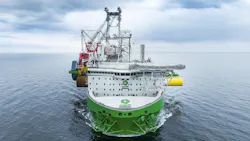
Vattenfall and Copenhagen Infrastructure Partners (CIP) have contracted DEME for transportation and installation (T&I) of the 69 monopile foundations for Phase 1 of the Zeevonk offshore wind farm development in the Dutch North Sea.
DEME’s other responsibilities are intermediate transport of monopiles, providing marshalling services for primary and secondary steel, and installing a filter layer for scour protection of the foundations.
DEME reported that the contract is worth between between 150 million and 300 million euros (US$171 million and $342 million).
The company will deploy its Orion vessel for monopile installations, a jackup T&I vessel for secondary steel, and a fallpipe rock vessel for the scour protection.
Zeevonk, spanning 650 sq km, will be located 63-84 km from the coastal town of Bergen aan Zee.
Phase 1, currently subject to a final investment decision, is due to start offshore construction in 2028, and it should be capable of generating 1 GW of offshore wind power by 2029.
Phase 2, due to follow in 2032, will add a further 1 GW of wind and 500 MW of system integration capacity, including an electrolyzer in the Port of Rotterdam to support green hydrogen production.
Why this news matters:
- Foundation installation is one of the most critical and capacity-constrained segments of the offshore wind supply chain. Major awards such as this provide an early indicator of future demand for installation vessels, port infrastructure and offshore construction services.
- The contract suggests continued developer confidence in large-scale North Sea wind projects despite ongoing industry pressures related to costs, supply-chain constraints and project financing.
- Securing installation contractors years ahead of offshore construction has become increasingly important as developers compete for a limited pool of specialized vessels capable of handling next-generation monopile foundations.
- Zeevonk's planned integration of offshore wind and green hydrogen reflects a broader industry shift toward linking renewable generation with industrial decarbonization and energy-storage opportunities rather than relying solely on electricity sales.
Exclusive content:
 Subsea Micropiles installed first drilled-and-grouted micropile anchor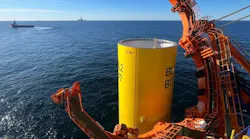
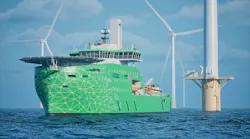 Bibby Marine eCSOV
About the Author
 Jeremy Beckman
Jeremy Beckman
Staff Writer / Editor, Europe
Jeremy Beckman has been Editor Europe, Offshore since 1992. Prior to joining Offshore he was a freelance journalist for eight years, working for a variety of electronics, computing and scientific journals in the UK. He regularly writes news columns on trends and events both in the NW Europe offshore region and globally. He also writes features on developments and technology in exploration and production.
Related
