Remote‑first substation design streamlines commissioning and cuts costs at Dogger Bank
Key Highlights
- ABB provided engineering services, control systems, integrated telecom systems and networks, cybersecurity and electrical packages for all three phases of the Dogger Bank project.
- The project marks the first use of HVDC technology in a UK offshore wind farm, enabling efficient power transmission to shore.
- Remote operation capabilities reduce offshore personnel requirements, enhancing safety and lowering operational costs.
By Simon Wynne, ABB
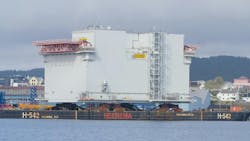
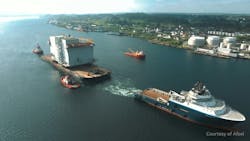
Dogger Bank is a large-scale offshore wind development located in the central North Sea, more than 130 km off the coast of Yorkshire in the UK. The project, which is a joint venture by SSE Renewables, Equinor and Vårgrønn, comprises three phases: Dogger Bank A, B and C. It has a combined installed capacity of 3.6 GW. Last year’s float-out of the offshore substation for Dogger Bank C marked a major offshore installation milestone.
In 2019, in collaboration with Norwegian contractor Aibel, ABB was selected to provide auxiliary control systems, overall OT security, IT infrastructure, condition monitoring, telecommunications, and low-voltage power distribution for the offshore HVDC substation platform. ABB also delivered the telecommunications equipment to both the offshore and onshore substations on all three phases.
Together, these systems support remote operation of the offshore substations, reducing the need for routine offshore access. Given the distance from shore and exposure to harsh offshore conditions in the North Sea, a key requirement for the substations was to largely operate unattended.
Technical approach and execution
High-voltage direct current (HVDC) power transmission systems connect power from Dogger Bank’s offshore substations and transmit it to shore for the UK grid. This project marks the first-time use of HVDC technology on a UK offshore wind farm.
Electrical, automation and control systems were developed from the earliest design stage to support day-to-day operation, fault response and maintenance planning without permanent offshore staffing or reliance on weather-dependent access.
Each offshore substation brings together power conversion, protection and automation systems to support centralized monitoring and control. From onshore control centers, operators can monitor electrical performance, equipment condition and alarms in real time, and carry out switching and recovery actions remotely when required.
A consistent approach was applied across all three project phases. This meant replicable system architectures, interfaces and operating methodologies could be deployed, reducing complexity and applying lessons learned from previous phases.
Results and impact
Designing the offshore substations for remote operation delivered clear benefits during both commissioning and operational readiness.
During commissioning, remote visibility reduced delays associated with offshore troubleshooting and limited the need for repeat site visits during narrow weather windows. Tasks that would otherwise have required offshore presence, such as system verification, fault investigation and operational checks, were completed or supported from shore, helping maintain installation schedules.
From an operational perspective, the largely unattended model shifts routine activities from offshore intervention to shore-based management. This reduces personnel exposure to offshore safety risks, lowers vessel use and improves the predictability of operating costs. Continuous monitoring also supports earlier identification of abnormal conditions, allowing maintenance activities to be planned rather than reactive.
Secure communications help maintain system availability and remote control during faults or connection interruptions. Cybersecurity was incorporated into the system design to protect remote access to essential electrical infrastructure.
Lessons learned
As offshore wind projects continue to grow in scale and be installed farther from shore, remote operation is a necessity rather than an enhancement.
Designing systems for remote operation from the outset avoided the complexity and cost associated with retrofitting capabilities later in the project. Consistent designs and operating practices reduced risk, simplified commissioning and supported effective knowledge transfer between project teams.
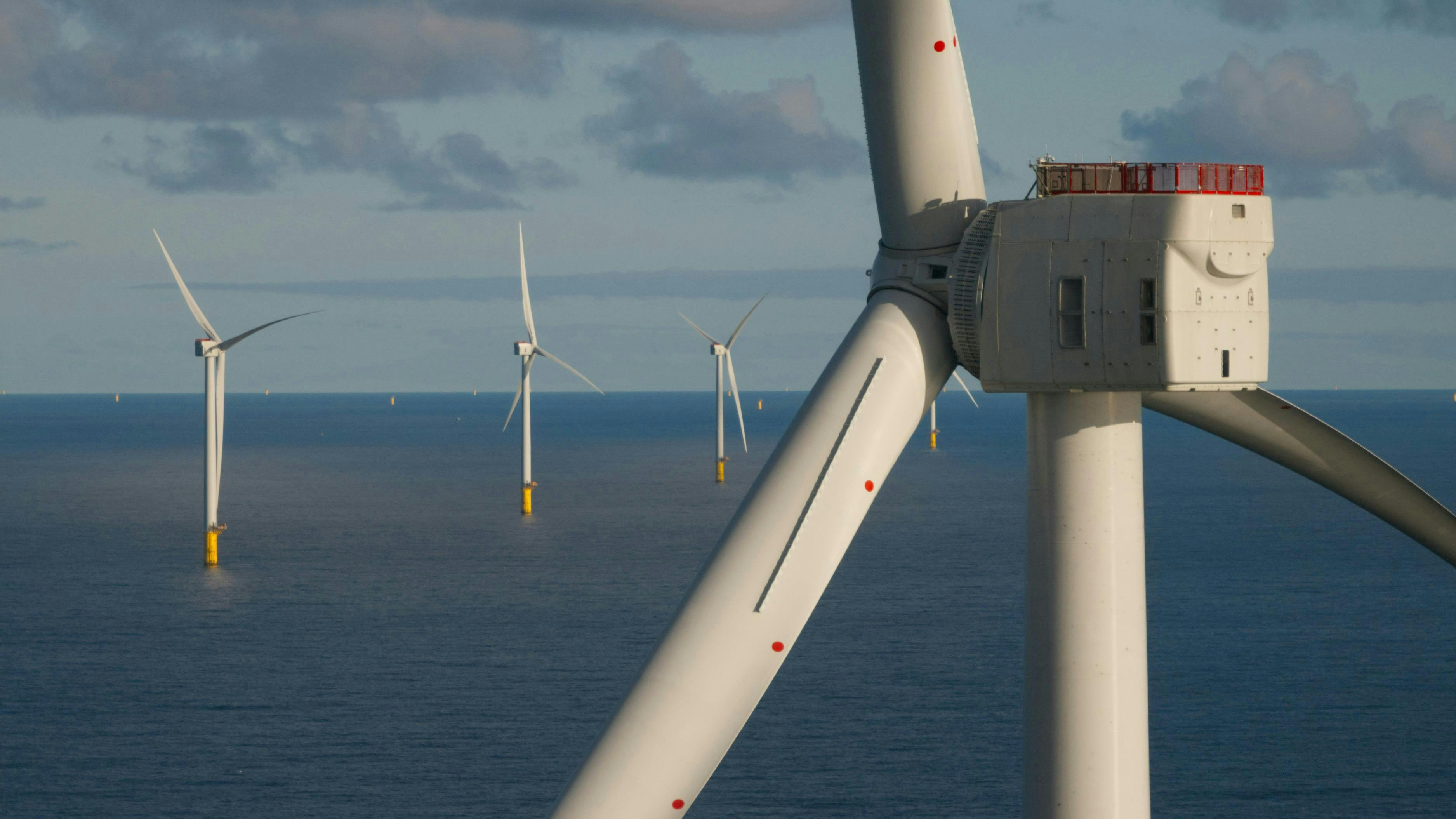
The Dogger Bank project demonstrates how offshore electrical infrastructure can be designed to support this shift while maintaining safety, reliability and operational efficiency.
ABB’s technology and engineering solutions act as a central gateway that unlocks the offshore wind process, allowing the electricity generated by wind turbines to flow through to the national grid and into peoples’ homes. When the turbines at Dogger Bank produce power, offshore substations allow the alternating current (AC) to be converted to direct current (DC) so the electricity can be transported to onshore substations, where it is inverted back to AC.
Over 40,000 wind turbines around the world use ABB components. ABB is currently involved in 14 global offshore wind projects which collectively represent 20 GW of power capacity, with experience gained from Dogger Bank helping to inform how remote operations are applied across future developments.
Want to learn more?
About the Author
 Simon Wynne
 Simon Wynne
As head of ABB’s Energy Industries division for UK, Ireland & Azerbaijan, Simon Wynne is responsible for the delivery of the company's range of integrated automation, electrification and digitalization solutions in the region, including support for complex offshore infrastructure projects. With a background in finance and economics and more than 25 years of experience at ABB, Wynne has been working across multiple business units and geographies to deliver solutions, products and services to the energy, power, process industries and utilities markets.