Commentary: Political will required to advance European offshore wind energy
Key Highlights
- Investment in European renewables increased by 8% in 2025, but offshore wind deployment slowed, highlighting infrastructure and permitting challenges.
- Over 500 GW of European wind capacity is waiting for grid connection permits, with an estimated €584 billion needed for upgrades by 2030.
- The January 2026 North Seas Investment Pact aims to install 15 GW annually from 2031 to 2040, backed by $1.2 trillion, but results are yet to materialize.

By Dimitry Adamyan, Fluix
The gap between capital commitment and operational delivery is widening across European wind energy. While investment is at record levels, deployment, particularly in offshore wind, is slowing. Two IEA reports released this spring support the pattern.
The Global Energy Review 2026, published in May, reports that European Union offshore wind additions (newly installed capacity commissioned during the year) fell to 1 GW in 2025, down from 1.7 GW in 2024. Only France and Germany installed any new offshore wind capacity during the year.
The World Energy Investment 2026, published in the same month, reports that European renewables investment – the aggregate across solar PV, wind, hydropower, and other renewables – grew 8% in 2025 to US $135 billion. It is expected to reach US $143 billion in 2026. Low emissions investment across the region rose 7%, driven “primarily” by wind energy.
If both figures are accurate, why the gap? Because they measure different things.
Investment counts capital commitments. Deployment counts operational capacity, which is what’s lagging. While capital can be committed in months, infrastructure – supply chain development, grid connections, vessel manufacturing, skilled workforce – takes years to build. The investment reported in 2025 is largely for projects that will not operate until 2030 at the earliest.
And under a close look, one can see that the aggregate investment figure hides differences across categories. Within the US $135 billion, the largest categories are solar PV and onshore wind. Offshore wind is a smaller share, and it is where the deployment gap is widest.
An example, a Danish offshore wind tender in 2024 received no bids, and the World Energy Investment report notes that wind costs outside China “remain elevated.” This factor has contributed to auction under-subscription and project delays across major offshore markets, including the pause of new US offshore wind investment decisions in 2025.
The underlying cause is typically grid infrastructure. And it is not news to be completely honest.
In December 2025, when the European Commission unveiled its EU Grids Package, WindEurope, the leading trade association representing the wind energy industry in Europe, reported that around 500 GW of European wind capacity was already waiting for grid connection permits. The organization estimated the required investment at €584 billion by 2030 to upgrade Europe’s grid infrastructure.
Seven months later, the queue had not cleared. On June 30, 2026, WindEurope reported that more than 500 GW of European wind capacity remained stuck waiting for grid connection approval. The organization criticized member states for weakening permitting provisions in the EU Grids Package negotiations. In seven months of policy announcements, packages, and pacts, the connection queue did not measurably clear.
Vessel supply faces the same timing mismatch. The Westwood Global Energy Group’s Offshore Vessels Special Report, published this quarter, records a global orderbook of only five wind turbine installation vessels and seven heavy-lift vessels – against a forecast requirement to install roughly 236 GW of cumulative offshore wind capacity by 2030. Vessel construction has its own procurement, manufacturing, and regulatory timelines. And capital alone does not shorten them.
One factor that can move the needle faster is political will, and it does exist. The January 2026 Investment Pact for the North Seas, in which nine European governments committed to install 15 GW of offshore wind capacity per year between 2031 and 2040, backed by US $1.2 trillion in mobilized finance, is a statement of intent at the scale the problem requires. Yet, results are still to be demonstrated. The 500 GW connection queue was already sitting at that level when the pact was signed, and remains there six months later.
Early signs of what political alignment can deliver at the national level so far can be found in onshore wind rather than offshore. Germany permitted 21 GW of new onshore wind in 2025 by making fuller use of the “overriding public interest” principle — a legal designation that streamlines planning approvals. The subsequent German onshore auction was heavily oversubscribed, with the average price of awarded bids at €51/MWh.
Onshore wind faces different constraints from offshore – no vessels, less complex grid interconnection, more established permitting pathways – but the principle transfers: where the political framework is aligned, permitting and installation move at compatible speeds.
So while headline investment growth is being read as a signal that European wind is on track, the connection queue does not support that reading. Capital alone cannot resolve infrastructure challenges and shortages. Political will, coordinated policy, and cross-border pacts are needed to move the needle faster.
The responsibility for closing the gap does not sit with developers alone. The next decade of European wind will be shaped less by how much capital is committed and more by how many permits are granted, how many grids are built, and how many vessels are ordered.
Exclusive content:
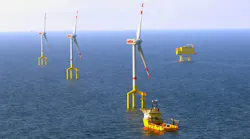 HVDC use on DolWin1 offshore wind farm near Germany
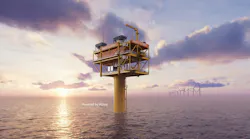 H2DO Demonstrator 30-50 MW
 Subsea Micropiles installed first drilled-and-grouted micropile anchor
 CCS lander on the seabed
About the Author
 Dimitry Adamyan
Dimitry Adamyan
Dimitry Adamyan is Principal Account Executive, Renewable Energy at Fluix. With more than seven years of experience in the energy sector, he partners with operators across Europe and North America to eliminate paper-based processes, streamline inspections, and strengthen compliance documentation. In his current role, Dimitry focuses on driving adoption of digital workflows that reduce downtime, lower costs, and deliver real-time clarity to field teams.