Green hydrogen back in the North Sea energy mix
Key takeaways:
-
Dutch offshore hydrogen development remains active despite the suspension of Demo-1.
-
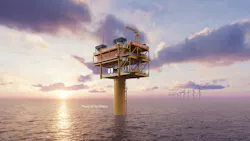
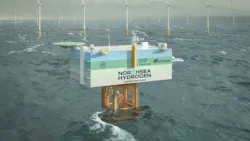
H2DO is studying a 30-50 MW offshore hydrogen facility linked to North Sea wind generation.
-
UK and German programs are examining platform reuse, demonstration facilities and pathways toward gigawatt-scale deployment.
-
Developers increasingly view offshore hydrogen as a complement to offshore wind rather than a standalone energy solution.
Why this story matters:
Offshore green hydrogen has yet to achieve the commercial momentum once envisioned in the North Sea. But despite delays to several flagship projects, new studies in the Netherlands, the UK and Germany are keeping development efforts alive as governments and industry reassess how hydrogen could fit into future offshore energy systems.
By Jeremy Beckman, Editor-Europe
Over the past decade, the Netherlands has been one of the standard-bearers for R&D of green hydrogen production offshore. Various feasibility projects have drawn support from the Dutch government involving industry and academic institutions, with proposed connections to nearby wind farms in the Dutch North Sea.
The combination offers the potential for a more stable and efficient energy system, according to the Netherlands’ gas transport infrastructure manager Gasunie.
Green hydrogen development stalls—but not stops
However, the pace of development of offshore hydrogen has been slower than the government anticipated, due to a downward revision of offshore power generation capacity requirements going forward.
In 2025, this led the Ministry of Climate Policy and Green Growth to suspend preparations for Demo-1, an offshore hydrogen demonstration project, until 2030, with Gasunie accordingly scaling back development of associated Dutch North Sea infrastructure.
Nevertheless, the government does intend to publish this year a new version of its National Energies System plan, which will address the longer-term requirements for green hydrogen development in the Netherlands as part of the broader energy mix.
The government also continues to support new R&D, notably the Hydrogen of Dutch Origin (H2DO)’s Offshore Midsized Green Hydrogen Feasibility and Concept Study, which got underway in May. This study has secured funding under the Topsector Energie (TSE) program run by the Netherlands Enterprise Agency (RVO) and GroenvermogenNL.
Building on lessons from PosHYdon and H2opZee
Hydrogen of Dutch Origin—“or H2DO in short as there is still a lot to do,” explained one of the partners Patrice Hijsterborg—was founded by three individuals, later joined by three more. Some had previously worked for Neptune Energy’s North Sea gas projects as employees or suppliers, prior to Eni’s acquisition of Neptune in 2024.
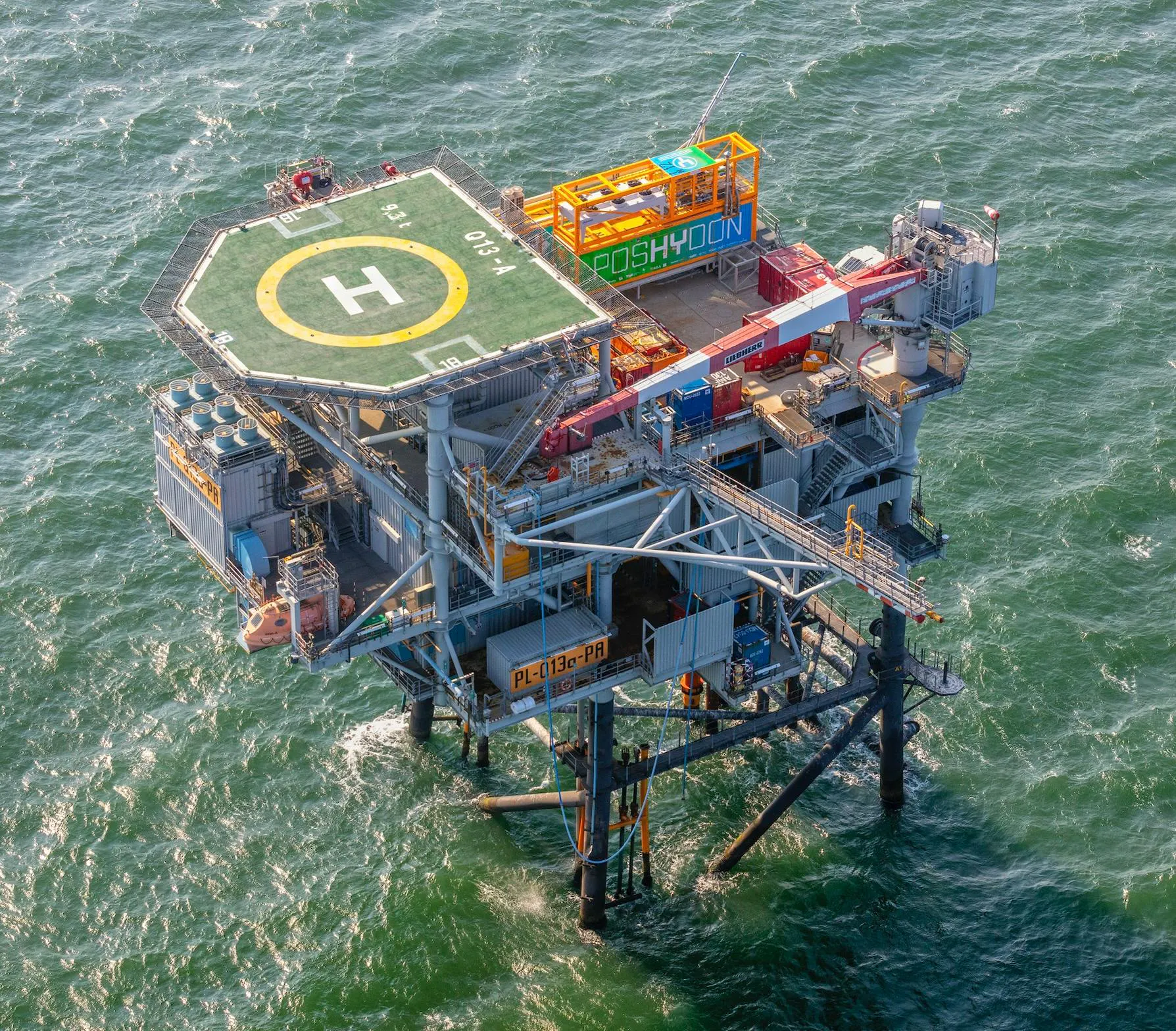
Neptune was also involved in PosHYdon, a 1-MW pilot project to develop an electrolyzer capable of producing green hydrogen on an active offshore platform 13 km offshore Scheveningen, using power via a cable from shore.
Some of the H2DO team supported this and the RWE/Neptune H2opZee feasibility study, which targeted production of hydrogen from 300-500 MW electrolyzers farther out in the North Sea, again powered by offshore wind. The project had been due to start in 2030, but it is now on hold.
H2opZee, Hijsterborg added, had been the inspiration for the planned offshore green hydrogen technology demonstrators, Demo-1 and Demo-2. Both had been initiated in 2023 by the then Minister for Energy Rob Jetten, who is now the Dutch Prime Minister.
H2DO was established in late 2024, when Demo-1 was about to open up for consortia to bid.
Hijsterborg said H2DO elected to continue the study despite the government's decision to pause Demo-1 the following summer, because the consortium had already been awarded the grant and believes offshore hydrogen will remain an important part of the Netherlands' future energy system. The subsidy for Demo-1 was £380 million (US$511.5 million), and Demo-2 was at the beginning earmarked for £1.2 billion (US$1.6 billion).
She added that the work also aligns with the Hamburg Declaration, which calls for greater North Sea energy integration among participating countries.
"We also thought that if somewhere down the line, Demo-1 would be back on the table, we as the Netherlands wouldn't have lost any time," Hijsterborg said.
Why produce hydrogen offshore?
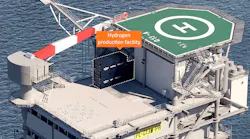
Hijsterborg added that converting green hydrogen at sea, close to the source, can potentially solve various emerging societal problems, including sustaining freshwater supply.
According to Hijsterborg, offshore hydrogen production could help address:
- Freshwater supply concerns through offshore desalination;
- Land-use challenges associated with large onshore hydrogen facilities;
- Grid congestion and competition for available electricity; and
- Energy security and strategic autonomy objectives.
"If you plan to produce to gigawatt scale, that's a lot of water," she said.
Hijsterborg added that offshore green hydrogen should be considered part of an integrated energy system rather than a standalone alternative. She said offshore production can reduce curtailment, alleviate grid congestion, lower dependence on HVDC transmission infrastructure and enable efficient transport through existing and future pipeline networks. She also noted that offshore steel pipelines may prove more resilient than submarine power cables in certain damage scenarios.
There is now a general realization that green hydrogen should and will be an important piece of the overall energy system, she maintained, with interest picking up, since the closure of the Strait of Hormuz, in domestic North Sea production and electrons converted to green molecules.
For the recent World Hydrogen Summit in Rotterdam, the green hydrogen knowledge platform HEROW organized a session with presentations on, among others, the AquaDuctus, Gascade and PosHYdon projects.
Feasibility targets
Work on the Offshore Midsized Green Hydrogen Feasibility and Concept Study began in May, five months after the H2DO partners signed a memorandum of understanding with ECHT Regie in Transitie, the Dutch agency that supports development of sustainable energy projects.
Other partners in the study are H2sea and TCI Risk Management, both focused on the engineering, and Haskoning, which is examining permitting issues. North Sea engineering and construction specialists Smulders HSM are also providing support; other interested parties may join in due course.
The main goals are to:
- Develop a FEED entry-ready concept design for a 30-50 MW offshore green hydrogen installation, with export of hydrogen via a pipeline to the shore;
- Optimize the system using proven technologies and investigate various routes for scalability; and
- Advance the project to a level of maturity (technical, commercial, regulatory and permitting) to support a direct progression into the next phase, preparing for a follow‑on demonstrator project that would ideally be operational in 2031.
Toward a North Sea demonstrator
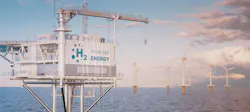
The study focuses on a proposed 30-50 MW facility in the Hollandse Kust Noord area of the North Sea. The concept would employ a proton exchange membrane (PEM) electrolyzer, which will use electricity to split the desalinated seawater into green hydrogen and oxygen gas. This will be powered by offshore wind (via the TenneT and / or Crosswinds wind farm networks) and export hydrogen to shore via pipeline. According to Hijsterborg, the project remains closely aligned with the original Demo-1 specifications.
"Overall, the component technologies will not be new, but the concept does need to be optimized for offshore and to operate at 30-50 MW," Hijsterborg explained.
Regulatory, permitting and commercial hurdles
The study will examine:
- First-of-a-kind permitting requirements;
- Co-location with existing offshore infrastructure;
- Circularity and end-of-life materials management;
- Commercial viability and marketability; and
- RFNBO certification requirements under RED III.
“After completing the study, we aim to go straight into the FEED phase and make the concept as easily scalable and as investment-ready as possible, allowing us to advance the development to the next stage,” Hijsterborg said.
Hydrogen production on North Sea platforms
In the UK, the Net Zero Technology Centre (NZTC) in Aberdeen completed a three-phase study earlier this year for the Hydrogen Offshore Production (HOP 2) project, funded by the Scottish government.
At the outset, this sought to determine the feasibility of repurposing UK North Sea platforms for producing hydrogen in commercial volumes.
Following a review of more than 320 fixed installations and multiple pipeline networks, 12 platforms and three pipelines were selected as potentially suitable for a 500-MW scale project. Although topsides repurposing/retrofits were ruled out, the substructures and pipeline infrastructure appeared to offer opportunities.
The findings led to the development of four concepts, which included hydrogen production from multi-platform clusters; repurposing existing complexes with bridge-linked platforms; and newbuild facilities.
UK study identifies platform reuse opportunities
Phase 2, which built on the findings and recommendations from Phase 1, focused on detailed definition of the technical concept. It involved engagement with engineering groups and technology vendors to design a spatially optimised hydrogen production system suited to harsh North Sea conditions.
Activities included technology selection, which identified the Bosch ELY1250 PEM stack as well suited to offshore integration, in terms of operating requirements such as controlled temperature and humidity. Veolia Westgarth then developed a customized Balance of Stack (BoS) design, which addressed gas/liquid separation, anode water treatment and electrolyzer cooling, and a Balance of Plant (BoP) systems, which included water treatment and hydrogen purification. The BoS design featured 12 x 41.5-MW arrays, each supporting 33 x 1.25-MW Bosch stacks.
Engineering the offshore hydrogen concept
For the primary electrical systems, Petrofac developed the system architecture, with 275/66/66-kV transformers, gas-insulated switchgear, shunt reactors, rectifiers and subsea cable reception. The system was devised to match hydrogen production to local offshore wind farm output (540 MW was deemed sufficient in the simulations). Recommendations for future design phases included a review of energy storage options such as batteries and surface hydrogen.
Apollo Engineering led the study into integration of the arrays, BoS/BoP and electrical systems into a topsides design optimized for North Sea conditions on a converted, existing offshore platform. Apollo consolidated the electrolyzers into larger arrays over three deck levels instead of four, also investigating hydrogen compression, flaring, HVAC systems for cooling of electrical equipment, and secondary electrical systems for platform operation. The Phase 2 team estimated the overall capex cost for such a project at £1.56 billion (US$2.09 billion).
Looking beyond first-generation projects
Phase 3, which concluded last April, examined potential scenarios going forward as technologies and markets evolve.
The four key activities and studies covered are:
- Technology development investment in bipolar membranes and bipolar plates suited to direct seawater electrolysis and offshore-scale SeaStack systems;
- A study to review the environmental impacts from normal operations and worst-case scenarios, including during commissioning/decommissioning;
- Developing a vision of offshore hydrogen production in 2045, based on digital technologies and methodologies, and taking into account projected future advances in technologies; and
- Art of the Possible: Reimagining offshore hydrogen production without the constraints of existing or known technologies, and with a paradigm shift in system design and operation.
Applying the insights from HOP2 to the onshore sector to highlight regional and national economic opportunities.
The conclusions from Phase 3 will be published later in the year.
German offshore hydrogen initiatives
In April, two consortia also made presentations at the NZTC’s headquarters on offshore hydrogen R&D projects in Germany, as part of a visiting delegation.
H2-Demo Global Tech:
H2-Demo Global Tech involves repurposing wind turbine bases for offshore hydrogen production, starting with a 10-MW demonstrator and eventually scaling up to 300 MW from a single production platform.
In time, this could be upscaled to 1 GW of installed capacity, powered by 20+ MW turbines. The presentation covered positioning of the demonstrator platform within an offshore wind farm in the German EEZ, adjacent to the 102-sq km SEN-1 area that has been designated for offshore green hydrogen production.
The presenters also examined the potential for using existing infrastructure, including wind turbine foundations, cables and SCADA systems; safety zone and sea surveillance requirements; power supply from the wind farm via the GT-1 offshore substation; and sharing of existing offshore operations and maintenance logistics such as CTV and technicians.
Other technical considerations discussed were desalination and electrolysis on a fixed turbine-foundation; testing of all components for production, storage and re-electrification; and exports via pipeline or ship transport.
AquaPrimus test platform:
The other presentation covered the AquaPrimus project, a planned nearshore demonstration site for testing offshore hydrogen technologies. According to the presenters, these are being held back by a shortage of real offshore test conditions for diverse technologies, processes, regulatory frameworks and standards.
AquaPrimus is developing a modular offshore platform for use in North Sea conditions, for R&D, certification and knowledge transfer. It will also support preparations for SEN-1 and other future designated offshore hydrogen production zones. The project will enable qualification of technologies for gigawatt-scale developments and deliver insights into certification, insurability and system design, reducing the risk of future large-scale projects.
Facilities will include a 2.5-MW electrolyzer (untreated H2), H2 processing up to 30 barg, 4.5 kg/hr for freshwater treatment, producing demineralized water at up to 6 cu m/hr; and integrated data collection and digital operations to address the needs for future interconnected energy systems.
This near-shore demonstration should enable the accelerated development and deployment of technologies that are suitable for use in an offshore marine environment. According to the presenters, the lack of test sites is holding back the build out of the offshore hydrogen sector.
About the Author
 Jeremy Beckman
Jeremy Beckman
Staff Writer / Editor, Europe
Jeremy Beckman has been Editor Europe, Offshore since 1992. Prior to joining Offshore he was a freelance journalist for eight years, working for a variety of electronics, computing and scientific journals in the UK. He regularly writes news columns on trends and events both in the NW Europe offshore region and globally. He also writes features on developments and technology in exploration and production.
Related
