IMAGE 2026: Geoteric and SINTEF explore agentic AI for subsurface workflows
Key highlights:
-
Geoteric and SINTEF are developing an agentic AI platform designed to connect seismic interpretation, geological modeling and reservoir simulation workflows.
-
The companies aim to reduce manual data transfers between software applications while maintaining transparency and human oversight.
-
The first public demonstration of the platform is planned for IMAGE 2026 in Houston.
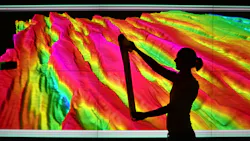
Subsurface teams have long relied on a series of specialized software applications to interpret seismic data, build geological models and simulate reservoir performance. Although individual tools have become increasingly sophisticated, moving data between them often remains a manual process that can consume time and introduce errors.
To address that challenge, UK-based Geoteric and Norwegian research organization SINTEF have recently launched a joint initiative focused on agentic AI. The companies plan to demonstrate how AI agents can work across multiple software platforms, linking Geoteric's AI-assisted seismic interpretation capabilities with SINTEF's reservoir simulation technologies.
The first demonstration is scheduled for IMAGE 2026 in Houston.
Tackling workflow fragmentation
According to Ed Anderson, Geoteric's head of geosciences, a typical subsurface workflow progresses through structural interpretation, stratigraphic analysis, property modeling and uncertainty evaluation. Each stage often takes place in a different application, requiring users to repeatedly export, reformat and import data.
"Each handoff is a point where time is lost and errors can creep in," Anderson told Offshore.
The proposed platform would use AI agents to coordinate those tasks automatically. Rather than manually moving information from one application to the next, users could define objectives while agents connect the appropriate software tools, transfer data and update workflows as new information becomes available. Human oversight would remain in place through auditing and analytics features, Anderson said.
The potential benefits could be particularly significant when subsurface models must be updated repeatedly as new data arrives. Instead of rerunning an entire workflow manually, an agentic system could automate much of the process.
From AI-assisted tools to AI-orchestrated workflows
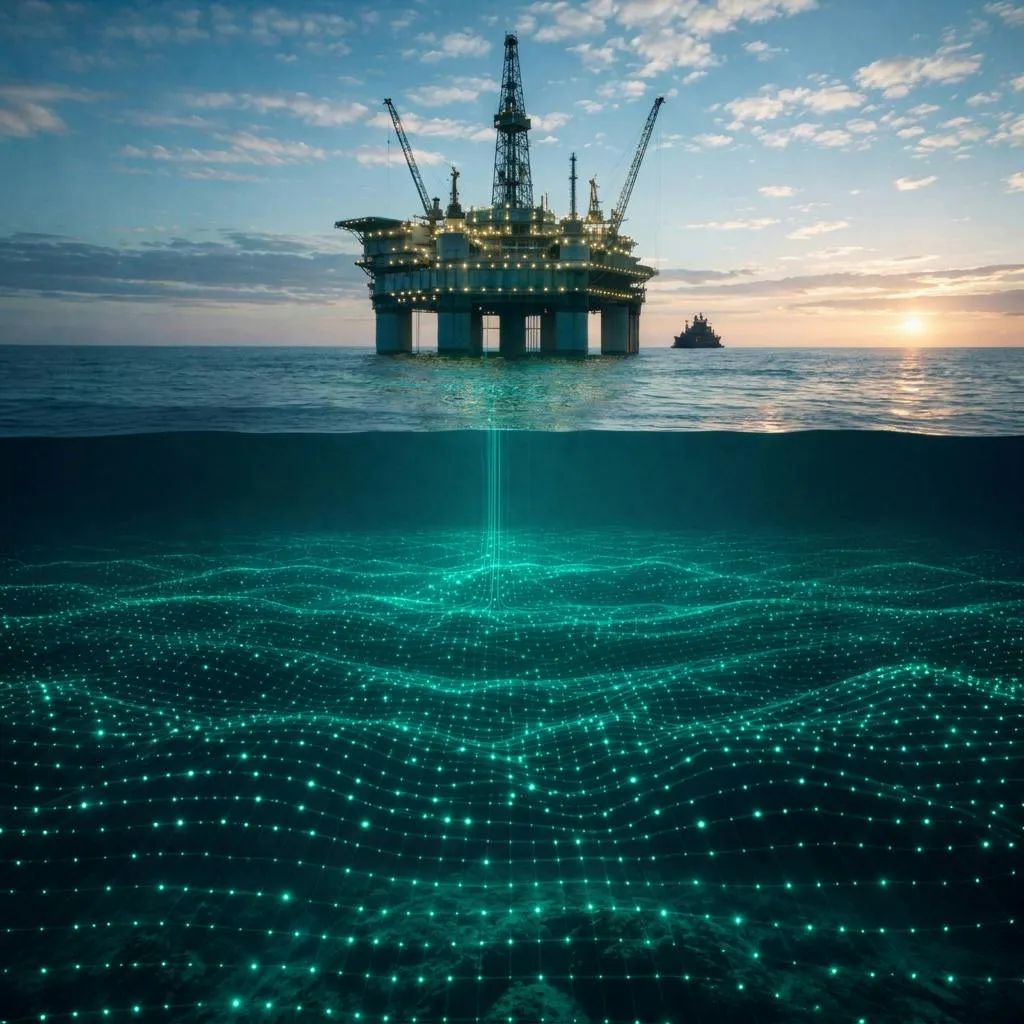
AI is already widely used for tasks such as fault interpretation, seismic facies classification and production forecasting. Anderson argues that most current AI applications operate within a single software environment.
"Most existing AI-assisted tools are designed to improve a specific task within a single application," Anderson said. "They can accelerate individual activities, but the outputs still need to be transferred manually into the next stage of the subsurface workflow."
The Geoteric-SINTEF initiative instead focuses on orchestration. AI agents would connect existing interpretation, modeling and simulation tools through APIs, manage data movement and coordinate workflow execution without replacing the underlying applications.
For example, an updated seismic interpretation could automatically trigger structural model rebuilding, property updates and reservoir simulation runs before presenting development implications for technical review. The system would also retain information on assumptions, parameters, software versions and data lineage, providing a traceable record of how results were generated.
Building trust in AI-driven decisions
According to Anderson, interoperability and trust remain two of the largest barriers to broader adoption of agentic AI. Many subsurface teams depend on software ecosystems that were never designed to work together, while engineers need confidence in how AI-generated recommendations are produced.
The companies envision platforms with transparent audit trails showing the datasets, assumptions and logic behind each recommendation. The goal is to provide users with verifiable outputs rather than a "black box" decision-making process.
Looking ahead, Dr. James Lowell, Geoteric's chief innovation officer, said he expects the industry's focus to shift from isolated AI applications toward connected, governed workflows.
"Over the next five years, success would mean agentic AI moving beyond isolated demonstrations and becoming a governed part of everyday subsurface workflows," Lowell told Offshore. "The most valuable applications are likely to be those that reduce the time spent preparing data, transferring results between applications, repeating routine analyses and manually coordinating large numbers of scenarios."
Lowell said the objective is not fully autonomous decision-making.
"Success would be measured by faster and better-informed decisions, improved reproducibility, broader exploration of uncertainty and stronger collaboration between disciplines," he concluded. "Human experts would remain accountable for technical and commercial decisions."
The Geoteric/SINTEF collaboration remains in development, with additional details expected as the project progresses. For now, it offers an early look at how agentic AI could evolve from improving individual tasks to coordinating end-to-end subsurface workflows across geoscience and reservoir engineering disciplines.
Editor's note: Geoteric plans to demonstrate the SINTEF collaboration at booth 1247 during the IMAGE 2026 event, taking place Aug. 17-20 in Houston. Company representatives will also discuss agentic AI during conference presentations and lunch-and-learn sessions.
Exclusive content:
About the Author
 Ariana Hurtado
Ariana Hurtado
Editor-in-Chief
With more than a decade of copy editing, project management and journalism experience, Ariana Hurtado is a seasoned managing editor born and raised in the energy capital of the world—Houston, Texas. She currently serves as editor-in-chief of Offshore, overseeing the editorial team, its content and the brand's growth from a digital perspective.
Utilizing her editorial expertise, she manages digital media for the Offshore team. She also helps create and oversee new special industry reports and revolutionizes existing supplements, while also contributing content to Offshore's magazine, newsletters and website as a copy editor and writer.
Prior to her current role, she served as Offshore's editor and director of special reports from April 2022 to December 2024. Before joining Offshore, she served as senior managing editor of publications with Hart Energy. Prior to her nearly nine years with Hart, she worked on the copy desk as a news editor at the Houston Chronicle.
She graduated magna cum laude with a bachelor's degree in journalism from the University of Houston.
Related
