ABS exec explains how AI is redefining offshore asset integrity and inspection workflows
Key highlights:
-
AI can help offshore operators unlock insights from inspection records, maintenance histories and other asset integrity data that have traditionally been difficult to analyze.
-
Future advances in predictive maintenance, engineering-document interpretation and data integration could significantly enhance offshore inspection and risk-management programs.
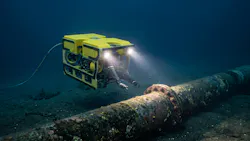
Artificial intelligence (AI) is creating new opportunities for offshore operators to extract value from vast amounts of asset, inspection and operational data.
Matt Mowrer, ABS Consulting's senior vice president of AI and digital solutions, shared with Offshore how AI is transforming offshore asset integrity, inspections and safety-critical decision-making.
Offshore: What makes AI adoption different in offshore operations compared with other industries, and where do you see the greatest opportunities for meaningful impact?

Mowrer: Offshore operations combine high-consequence decisions, complex equipment and extensive regulatory obligations. That combination makes the balance between automation and human expertise especially important. The goal is not to offload thinking to AI, but to give people better evidence and more time to apply their expertise.
The greatest opportunities sit in three connected areas:
- Knowledge management;
- Analytics; and
- Automation.
In asset integrity, these capabilities help experts find relevant information, learn from equipment history and streamline labor-intensive workflows.
Offshore: How is AI changing the way companies manage and learn from asset integrity data?
Mowrer: Asset integrity workflows are document-heavy. Technical drawings, OEM manuals, inspection reports and maintenance histories contain valuable information, but much of it is difficult to search, connect or analyze.
Making that information usable is the first step. Specialized AI extraction tools can turn that content into structured data, such as asset inventories and spare-parts lists. Large language models can also convert inspection narratives and maintenance work-order notes into consistent categories and fields that can be analyzed.
There is often a wealth of operational insight buried in those narratives. Extracting it, preserving its connection to the source and linking it with other asset records creates a stronger foundation for both analytics and decision-making.
Offshore: As experienced offshore personnel retire and workforces evolve, how can AI help preserve institutional knowledge and support better operational decision-making?
Mowrer: As experienced personnel retire, organizations need to capture not only what they know but also how they work: which information they consult, what questions they ask, how they recognize exceptions and when they escalate a concern. That knowledge can inform both searchable repositories and the instructions and workflows used by AI agents.
The aim is to make documented expert practices and relevant resources available to others. AI can help make captured knowledge accessible and actionable, but organizations still need experienced people to explain, validate and maintain it.
Offshore: As AI becomes more integrated into safety-critical workflows, how should offshore operators balance automation with human expertise and accountability?
Mowrer: Finding the right balance between AI and humans is one of the most challenging areas today across nearly all workflows. It is tempting to let AI produce an answer and accept it without sufficient scrutiny. The better approach is to design workflows that keep experts engaged. That means making supporting evidence accessible, exposing uncertainty and maintaining clear responsibility for decisions.
Knowledge management tools are valuable here too. Providing the right information with context and citations can reduce the time people spend researching and assembling evidence, while helping them verify the basis for a recommendation.
Offshore: Inspections and audits have traditionally relied on sampling a portion of available data. How could AI enable more comprehensive reviews of offshore energy assets, and what implications might that have for safety and risk management?
Mowrer: Many inspection and audit processes rely on sampling out of necessity. AI can screen much larger volumes of information, up to 100% coverage, for anomalies, inconsistencies and gaps. It can then direct expert attention to the areas that warrant closer examination.
We’ve found the most effective operating model is a triage-based workflow in which AI performs reviews and screens out a significant share of potential issues. Human experts then focus on the anomalies or areas where AI rated low-decision confidence to make consequential decisions.
Offshore: Looking ahead five to 10 years, how do you expect AI to influence offshore asset integrity, inspections and operational decision-making, and what developments should industry leaders be watching most closely?
Mowrer: Three developments stand out:
- Engineering-document interpretation: Some drawing formats and complex engineering content remain difficult for AI to extract and interpret reliably. Improvements could expand the range of asset integrity workflows AI can support.
- Connecting information across sources: Bringing together inspection findings, maintenance records, operating histories and telemetry may reveal patterns that are difficult to see when each source is reviewed separately.
- Predictive maintenance and failure forecasting: Longer, better-linked equipment histories should strengthen predictions, though progress depends most on data quality and representativeness. There is a practical data challenge today; newer equipment often has richer telemetry data but fewer observed equipment failures, while older equipment generally has more failure experience but less detailed operating data history. Building accurate predictions across different failure modes requires connecting operating conditions, maintenance interventions and actual outcomes over time.
Exclusive content:
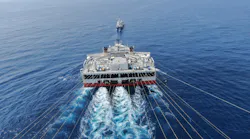
 engineer reviews inspection and asset-health data as part of an offshore integrity assessment program
 remote operations center monitoring multiple offshore assets
 Offshore AI needs authority limits before autonomy scales
About the Author
 Ariana Hurtado
Editor-in-Chief
With more than a decade of copy editing, project management and journalism experience, Ariana Hurtado is a seasoned managing editor born and raised in the energy capital of the world—Houston, Texas. She currently serves as editor-in-chief of Offshore, overseeing the editorial team, its content and the brand's growth from a digital perspective.
Utilizing her editorial expertise, she manages digital media for the Offshore team. She also helps create and oversee new special industry reports and revolutionizes existing supplements, while also contributing content to Offshore's magazine, newsletters and website as a copy editor and writer.
Prior to her current role, she served as Offshore's editor and director of special reports from April 2022 to December 2024. Before joining Offshore, she served as senior managing editor of publications with Hart Energy. Prior to her nearly nine years with Hart, she worked on the copy desk as a news editor at the Houston Chronicle.
She graduated magna cum laude with a bachelor's degree in journalism from the University of Houston.


