ADIPEC 2026: Extending offshore asset life in the AI era
Key highlights:
-
AI can organize inspection and operating data, prioritize risks, screen imagery and support predictive maintenance.
-
Poor data, coverage gaps and models that do not transfer between assets can undermine AI assessments and expected savings.
-
Engineers must evaluate evidence quality, uncertainty and failure consequences before recommending inspection, repair, monitoring or continued operation.

By Rob van der Spek and Dr. Jeyasekhar Chellathurai, DNV
Offshore operators must extend aging assets’ lives safely, yet are having to do so within increasingly constrained budgets. Autonomous systems and artificial intelligence (AI) can reduce routine work and target inspection. However, technology alone cannot establish whether an asset remains safe to operate; therefore, engineering judgement remains essential.
The approach should be risk-based human-AI teaming, rather than simply “human or AI”. While AI handles routine, data-intensive and well-bounded tasks, human experts retain judgement, context and accountability where uncertainty, safety and independent technical decisions matter.
Practical applications and engineering accountability
The many benefits of AI are becoming more certain. For example, AI-assisted analytics can organize inspection records, corrosion readings, operating data and maintenance histories across platforms, floating production installations, pipelines and subsea systems—identifying risk priorities and equipment requiring attention.
Algorithms can also prioritize inspection using damage mechanisms, operating conditions, inspection histories and failure consequences while computer vision can screen laser surveys and remotely operated vehicle images for coating breakdown, corrosion and damage. Predictive maintenance analyzes important equipment trends yet inspectors must still ensure coverage and reliable dimensional, thickness and condition measurements. That combination remains crucial.
 Offshore oil and gas operations and the digital workflow
Remote inspection and AI-assisted review is already reducing avoidable access work, mobilizations, scaffolding and repeat inspections. It also contributes toward supporting maintenance and shutdown planning. These savings and reduced disruption are not guaranteed though and must be demonstrated, not assumed.
Poor images, inconsistent records, coverage gaps and imprecise measurements weaken assessments, and models may not transfer between assets or operating environments. The validation, ongoing monitoring, clear ownership and life-cycle risk management are essential to a project’s success, and if models are developed from limited data, businesses run the risk of facing increasing costs without delivering reliability.
An AI alert is not to be taken for a fitness-for-service assessment or life-extension conclusion. It is engineers on the ground that assess data representativeness, detection capability and physical plausibility, weighing uncertainty and failure consequences before recommending inspection, repair, monitoring or continued operation. Missed defects and false alarms can have very different consequences.
Life extension requires multidisciplinary assessment of structural, process, marine and pipeline integrity. Ultimate decisions are then formed by integrating inspection evidence, design assumptions, degradation, operating envelopes, remaining-life assessments and regulatory requirements.
Independent review challenges assumptions and evidence quality, preserving traceability and sound judgement.
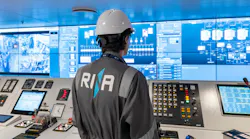
Human oversight: a regulatory requirement
Human oversight is more than just good practice; regulatory regimes explicitly address it. Articles 14 and 26 of the EU AI Act require effective oversight for high-risk AI, proportionate to risk, autonomy and context. Competent, trained people need authority and support to interpret outputs, override recommendations and stop operation safely.
Jurisdiction, classification and implementation dates determine applicability; autonomy alone does not establish high-risk status.
The UAE Charter for the Development and Use of Artificial Intelligence, published in July 2024, also contains an explicit Human Oversight principle. It emphasizes the “irreplaceable value of human judgment” and human oversight to correct errors or biases.
Accreditation bodies DAkkS and UKAS also explicitly address AI. Under current accreditation frameworks, final conformity decisions must remain with competent people, not AI. Distinct from legislation, these requirements reinforce accountable human decision-making.
For offshore operators, it’s clear that the use of AI in life extension is beneficial, but it needs to earn its place.
DNV’s experience suggests three principles:
- Use AI to focus inspection effort, not to replace inspection evidence;
- Keep engineers accountable for integrity and life-extension decisions; and
- Prove the value of each application through validation, monitoring and traceable savings.
Used this way, AI gives engineering judgement better evidence to work with. An AI alert can start the conversation about the future of an aging asset, but only an engineer can finish it.
ADIPEC 2026:
Offshore is an official media partner of ADIPEC. The event is taking place this week, Nov. 2-5, in Abu Dhabi.
For more information about the topics discussed in this article, visit DNV at Hall 9, booth 9150.
Missed the event last year?
We've got you covered: ADIPEC 2025 Special Report
About the Author
 Rob van der Spek
Rob van der Spek is DNV's global manager of AI and Innovation, Industrial Services. In this role, he focuses on accelerating the practical use of AI, digital tools and innovation across the company's inspection and assurance services. He brings extensive experience with DNV, including previous responsibility as digital innovation lead, and he now helps to identify and scale practical AI and digital solutions across the business and in client projects.
 Dr. Jeyasekhar Chellathurai
Dr. Jeyasekhar Chellathurai is DNV's asset integrity and in-service assurance expert, Industrial Services. He has more than 20 years of experience in a range of energy-related fields, including integrity management, corrosion management, risk management, quality control and assurance management, inspection management, safety management and rope access management. He holds a Doctor of Science (D.Sc.) degree in chemical engineering.
Related

 New AI tech for offshore energy sector
You May Also Like
