Exec Q&A: How can operators safely extend the life of aging offshore assets?
Key highlights:
-
Aging offshore assets face growing corrosion, fatigue and integrity risks, making risk-based inspections critical to life-extension decisions.
-
Operators are prioritizing maintenance spending based on asset condition and risk, supported by technologies such as drones, robotics and AI.
-
Workforce development, knowledge transfer and reliable asset records are essential for future life-extension, repurposing and decommissioning efforts.
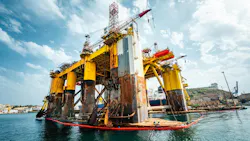
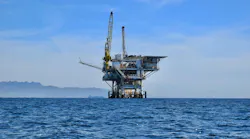
As offshore assets age and operators weigh life extension, repurposing and decommissioning options, reliable asset records and targeted inspections are critical to managing integrity risks.
Offshore chatted with Tim Gonzalez, vice president of energy integrity solutions with the Association for Materials Protection and Performance (AMPP), about the industry's biggest asset integrity challenges, how operators are prioritizing inspection and maintenance spending, and the role of workforce development and emerging technologies in supporting safe, reliable offshore operations.
Offshore: What are the biggest integrity challenges oil and gas operators face today when extending the life of offshore platforms, FPSOs and related infrastructure beyond their original design life?
Gonzalez: Some of the biggest challenges are corrosion, fatigue and gaps in what we know about an asset.
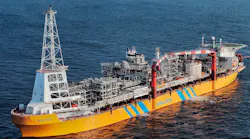
On a platform, that could be corrosion under insulation on process piping or deterioration in the splash zone, which is usually the most corrosive area on the structure. On an FPSO, it could be metal loss in a ballast tank or fatigue in the hull or mooring system. Changes in production matter; more water or lower flow can change where internal corrosion is likely to occur, and water injection can sour a reservoir over time, which brings its own corrosion problems. These issues have real consequences.
In the Center for Offshore Safety’s latest annual report, equipment failure contributed to more than half of the most serious incidents reported by its members in US waters.
Before committing to a life extension, the owner needs to know which inspection gaps matter, whether the structure still meets the loads it will see, and whether the coatings and cathodic protection can support the additional years of service.
On many older assets, the original anodes are close to the end of their design life and will need to be supplemented. Owners also need to look at equipment and control systems that may no longer be supported by the manufacturer, and at what the regulator will require to approve the extension.
When coating work is needed, AMPP standards such as NACE SP0108 for offshore coatings and SSPC-SP 10/NACE No. 2-2024 for surface preparation help the owner specify how to prepare the steel, apply the coating and verify that the work meets the project requirements.
The owner also needs to plan turnarounds early enough to separate work that can be done while the asset is operating from work that requires a shutdown, and to line up the people, materials and offshore access.
Offshore: Many oil and gas operators are trying to balance production goals with constrained maintenance budgets and limited offshore access. How are leading companies deciding where to prioritize inspection, repair and maintenance spending to reduce integrity risk?
Gonzalez: Operators put money where they believe it will reduce risk most. Two jobs can be overdue by the same number of days and have very different outcomes. The decision depends on the equipment's condition and what could happen if it fails. If the condition of a line carrying hydrocarbons is uncertain, a targeted inspection may be the best use of the money. If the damage is already understood, the priority may be to repair it, or to run a fitness-for-service assessment and adjust how the equipment operates until the repair can be made.
For a planned turnaround, operations, inspection and maintenance teams can agree on which inspections take priority and prepare for repairs they may need to make in the same window. That matters when POB [personnel-on board] limits and vessel time are tight. If an engineering assessment shows that a repair cannot safely wait for the turnaround, that finding drives the timing.
Offshore: What workforce gaps concern you most when it comes to offshore asset integrity, and how are oil and gas operators addressing challenges related to inspector availability, training and knowledge transfer?
Gonzalez: My biggest concern is that many of the most experienced inspectors and integrity engineers are retiring, and not enough people are coming up behind them who know where to inspect, how often and what to do with the results.

Operators and contractors are also competing for the same certified people, which makes staffing harder. That experience takes time to build.
Qualified people identify critical inspection points by looking at where damage is most likely to develop, what past inspections have shown and what could happen if that part of the asset fails. A thickness reading may look acceptable on its own. If previous readings at the same location show that the steel is thinning faster than expected, the team may need to inspect that location earlier or bring in a corrosion specialist or engineer.
Operators can make the most of limited specialist time by assigning experienced inspectors to higher-risk work and having them review difficult findings with newer team members.
For coating work, operators can specify certifications appropriate to each role. Certified applicators prepare the surface and apply the coating, and certified inspectors verify that the work meets the project requirements. That separation matters because many coating failures come back to how the work was done, such as rushed surface preparation or applying coating outside the right conditions.
Having a qualified inspector check each step catches those problems before the asset returns to service. Supervised fieldwork helps newer people apply what they learned in training.
When someone changes roles or retires, the handover should capture where to inspect, why those locations matter and what findings would trigger an earlier follow-up.
Offshore: How are technologies such as drones, robotics, remote inspection systems, digital twins and AI changing the way operators assess asset condition and plan maintenance activities offshore?
Gonzalez: These tools help crews get an initial look and decide where they need a closer inspection.
A drone can give the team a view of the coating in a ballast tank, and a remotely operated vehicle can help identify subsea areas that need more attention. That helps the team decide where to take measurements, what equipment to bring and whether to combine the inspection with other work. It also reduces confined-space entries and the number of people who need to go offshore, which matters for both safety and cost.
Digital twins can bring inspection results and operating history together so teams can track changes over time.
AI can help an inspector sort through hours of footage and flag areas for review. If the footage shows damaged coating and the repair decision depends on how much steel is left, the team still needs a reliable thickness measurement.
Some drones and crawlers can now take those readings, but someone with the right experience still needs to decide whether the result makes sense.
Offshore: Looking ahead five to 10 years, what changes do you expect to have the greatest impact on offshore integrity management, and what should operators be doing now to prepare?
Gonzalez: I expect many assets to reach the point where operators must decide whether to extend them, repurpose them or take them out of service.
Regulators are paying closer attention to both life extension and removal. In US waters, the Marine Minerals Administration, which took over the Bureau of Safety and Environmental Enforcement’s (BSEE) roles, enforces deadlines for removing structures that are no longer in use, and in the UK the North Sea Transition Authority expects operators to plan decommissioning well in advance.
Some operators will also look at reusing platforms or pipelines for carbon storage, which brings its own integrity questions.
All of those decisions depend on how well operators know the condition of their assets, and the quality of the records will matter as much as the technology used to collect them.
The Center for Offshore Safety’s latest annual report found that most mechanical integrity issues in recent safety audits involved gaps in maintenance and inspection follow-up or in recordkeeping, not just the condition of the equipment itself.
Operators can prepare now by closing the inspection gaps that matter most, keeping reliable records of repairs and modifications, and capturing what their experienced people know before they leave. If an asset is approaching decommissioning, operators can bring removal contractors in early to agree on what needs to be maintained after production stops and what condition records crews will need before work begins.
About the Author
 Ariana Hurtado
Editor-in-Chief
With more than a decade of copy editing, project management and journalism experience, Ariana Hurtado is a seasoned managing editor born and raised in the energy capital of the world—Houston, Texas. She currently serves as editor-in-chief of Offshore, overseeing the editorial team, its content and the brand's growth from a digital perspective.
Utilizing her editorial expertise, she manages digital media for the Offshore team. She also helps create and oversee new special industry reports and revolutionizes existing supplements, while also contributing content to Offshore's magazine, newsletters and website as a copy editor and writer.
Prior to her current role, she served as Offshore's editor and director of special reports from April 2022 to December 2024. Before joining Offshore, she served as senior managing editor of publications with Hart Energy. Prior to her nearly nine years with Hart, she worked on the copy desk as a news editor at the Houston Chronicle.
She graduated magna cum laude with a bachelor's degree in journalism from the University of Houston.
Related