ONS 2026: Subsea processing emerges as lower-capital alternative to new offshore facilities
Key takeaways:
-
OneSubsea sees continued subsea processing activity in the Gulf of Mexico, Brazil and Norway, with growing early-phase adoption in West Africa.
-
More than 150 subsea boosting pumps and compressors have been installed worldwide, providing substantial operating experience and helping reduce perceptions that the technology is still novel.
-
Future growth is expected to come from subsea compression and subsea water injection as operators seek to maximize production while avoiding costly topside modifications.
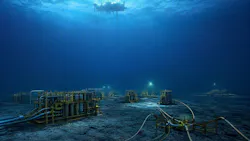
As offshore operators prioritize brownfield developments and infrastructure-led exploration, subsea processing is increasingly being positioned as a lower-capital alternative to new facilities or additional drilling.
The shift reflects a growing industry focus on extracting additional value from existing offshore infrastructure rather than pursuing more capital-intensive facility expansions.
In an exclusive interview with Offshore, OneSubsea's Andreas Fjellbirkeland, vice president of processing systems, highlighted how technology standardization and accumulated operating experience are reducing barriers to adoption, potentially expanding the addressable market for subsea processing systems.
Offshore: Which offshore regions are currently driving the most investment in subsea processing technologies, and what field characteristics make these systems economically attractive?
Fjellbirkeland: The Gulf of America has been one of the most consistent regions for the deployment of subsea processing technologies over the past decade; however, we are also seeing high levels of activity in Brazil and Norway. More recently, we are noticing subsea processing being used in the early development phases across West Africa, which is hugely encouraging.
From an economic perspective, subsea processing technologies are particularly attractive in mature deepwater basins that have existing infrastructure, as they can help operators maximize the value of their existing facilities by enabling longer tiebacks, increasing recovery and extending field life, without requiring significant new topside infrastructure.
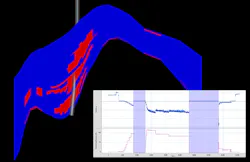
Offshore: What technical or commercial barriers continue to limit wider adoption of subsea processing, and how is the industry working to overcome them?
Fjellbirkeland: A continuing barrier is the perception in some parts of the industry that subsea processing technology is still novel and costly. Yet more than 150 boosting pumps and compressors have been installed worldwide, providing substantial operating experience and valuable lessons learned. Like any technology, subsea processing will continue to develop and improve, but it is already well established.
The industry has made significant progress in standardizing solutions, and today we have field-proven systems at a substantially lower cost than a decade ago.
What I believe can make a difference is earlier engagement between operators and technology providers to help identify cases where subsea processing can add the greatest value to the project.
Offshore: Many operators are focused on maximizing recovery from existing infrastructure. How can subsea processing help extend field life or improve recovery factors in mature assets?
Fjellbirkeland: Over several decades, subsea boosting has demonstrated that it can maximize recovery by reducing backpressure, particularly as reservoir pressure declines, thereby extending production and helping operators recover resources that might otherwise be left behind.
We are now also seeing growing interest in subsea water injection, particularly where host facilities have limited space or capacity. Unlike conventional water injection, which may require costly additional equipment on the host, subsea water injection moves that function closer to the reservoir, enabling operators to maximize their available topside capacity.
Processing can also support late-life production and infrastructure optimization. In one example, a subsea boosting system enabled an operator to decommission one host facility and reroute production to an alternative host farther afield. This allowed the operator to simplify its infrastructure while continuing production from the field.
Offshore: Can you share another example where subsea processing changed the economics or development approach of an offshore project?
Fjellbirkeland: Another good example is bp’s Thunder Horse project in the Gulf of America. The subsea boosting system installed in this field is expected to reduce pressure across existing wells and add approximately 15,000 barrels of oil equivalent per day at peak—comparable to the production from up to two new wells.
This solution provides a capital-efficient way to increase recovery and extend the production from a mature asset while continuing to make use of the existing infrastructure. It is a good example of how subsea processing can change the economics by creating an alternative to drilling additional wells.
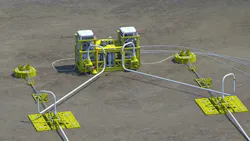
Offshore: Looking ahead, what technology developments do you expect will have the greatest impact on subsea processing over the next five to 10 years, and why?
Fjellbirkeland: I expect both subsea compression and subsea water injection to become increasingly important over the next five to 10 years.
Gas is expected to play an important and, in many regions, growing role in the global energy mix. Therefore, as large gas fields mature and reservoir pressure declines, subsea compression will become increasingly important to maintain production and improve recovery.
At the same time, subsea water injection will become more attractive as operators look to maximize the value of their existing infrastructure while avoiding costly and complex brownfield modifications.
The continued standardization of these technologies will also be important. As more standardized, modular and field-proven solutions become available, costs and project schedules will be further reduced, giving operators greater confidence when assessing processing as part of their field developments.
The technology has already demonstrated what it can achieve; the next step is to make it even easier and more economical to deploy across a wider range of fields.
SLB OneSubsea is exhibiting at booth 8150, Hall 8, at the Offshore Northern Seas (ONS) conference this week in Stavanger.
Executive Q&A with OneSubsea CEO Mads Hjelmeland:
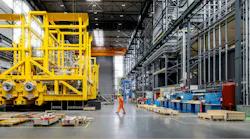
Missed ONS this year? We've got you covered!
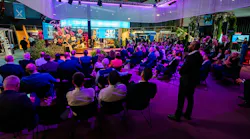 ONS 2026 audience and stage discussion
About the Author
 Ariana Hurtado
Ariana Hurtado
Editor-in-Chief
With more than a decade of copy editing, project management and journalism experience, Ariana Hurtado is a seasoned managing editor born and raised in the energy capital of the world—Houston, Texas. She currently serves as editor-in-chief of Offshore, overseeing the editorial team, its content and the brand's growth from a digital perspective.
Utilizing her editorial expertise, she manages digital media for the Offshore team. She also helps create and oversee new special industry reports and revolutionizes existing supplements, while also contributing content to Offshore's magazine, newsletters and website as a copy editor and writer.
Prior to her current role, she served as Offshore's editor and director of special reports from April 2022 to December 2024. Before joining Offshore, she served as senior managing editor of publications with Hart Energy. Prior to her nearly nine years with Hart, she worked on the copy desk as a news editor at the Houston Chronicle.
She graduated magna cum laude with a bachelor's degree in journalism from the University of Houston.