Subsea strategies shift toward tiebacks, standardization and all‑electric systems
Key highlights:
- Operators are increasingly favoring shorter-cycle, campaign-based tiebacks over large greenfield projects to optimize existing infrastructure.
- Standardized, configurable subsea solutions and innovative contracting models are key to achieving significant cost reductions and project speed improvements.
- All-electric and hybrid subsea architectures are gaining momentum.
- Subsea processing technologies are mature and delivering measurable benefits, with wider adoption driven by project setup and industry collaboration.
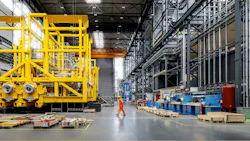
As offshore operators navigate cost pressures, maturing assets and evolving technology pathways, subsea development strategies are increasingly focused on efficiency, flexibility and reuse.
In this exclusive Q&A with Offshore, OneSubsea CEO Mads Hjelmeland outlines how project sanctioning is shifting toward campaign-based tiebacks, where standardization and new contracting models are driving cost reductions, and why all-electric architectures, targeted digitalization and subsea processing are gaining traction. He also highlights the growing importance of late-life asset integration and equipment reuse in unlocking value from existing infrastructure.
Offshore: Operators appear more selective, favoring shorter‑cycle developments and tiebacks over large, greenfield projects. How do you see subsea project sanctioning strategies evolving over the next five to 10 years, particularly in deepwater provinces with established infrastructure?
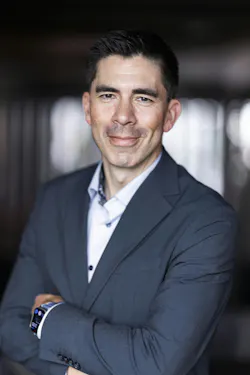
Hjelmeland: By the end of the decade, a lot of the recoverable resources are expected to come from mature fields. That makes tiebacks the obvious choice in many cases, especially where infrastructure is already in place.
That said, this is still an industry with long project lifecycles, so we won’t see one model replace another.
For example, in frontier basins, larger integrated developments will still go ahead, but they will be designed with more flexibility from the start, with the option to tie in as the fields mature.
In more established basins, the shift is already happening. We are seeing more campaign-based developments, where multiple tiebacks are grouped together, sometimes even across operators, to make better use of vessels and make smaller fields viable.
One area that deserves more attention is the reuse of equipment. Subsea equipment is designed to operate for 30 years. However, in some cases, it’s only used for five or six years. Refurbishing and redeploying that equipment presents a significant opportunity to make smaller reserves commercially viable. We are seeing this gaining traction in regions like the North Sea, and I expect it to become more common.
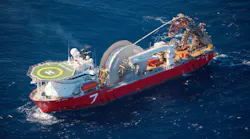 OTC 2026: Panel delivers insights on subsea tiebacks
Offshore: How are late‑life fields and life‑extension projects changing the way subsea equipment is specified and integrated with legacy infrastructure?
Hjelmeland: In many cases, the most valuable asset is not what we install next—it’s what’s already there.
As fields mature, the focus shifts. It becomes less about designing new systems and more about getting the most out of what’s already in place. That changes the starting point entirely; instead of a clean-sheet design, you are working from a good understanding of the asset—its history, its conditions and how far it can realistically be extended.
That in turn requires better data than many legacy systems were originally designed to provide, which is why we are seeing more emphasis on improving digital records and building a clearer picture of asset performance over time.
Integration with existing infrastructure is often where projects struggle economically. And in my experience, the earlier the challenge is addressed (with contractors involved before key decisions are made), the better the outcome.
Offshore: The industry has made progress on cost efficiency since the last downturn, but inflation and supply chain constraints are reemerging concerns. Where do you believe the next meaningful gains in subsea project economics will realistically come from?
Hjelmeland: Standardized and configurable solutions remain one of the biggest opportunities. We still custom engineer more than we probably need to. Small differences in specifications often mean that we end up redesigning what is essentially the same solution. If we standardize the core design, making it configurable rather than bespoke, we can start to see real scale benefits across the supply chain.
The contracting model is the other major lever. Frameworks based on early engagement, aligned incentives and transparency tend to deliver much better results than the more traditional EPC models—and not by small margins.
We are currently working on a development where we are targeting a three-year cycle from discovery to first oil. In similar setups, we have also seen costs come down by more than 20%. It’s not just about working faster; it’s about setting up projects differently from the start.
Offshore: Digitalization is increasingly embedded in subsea systems. What data measurably improves reliability and decision‑making, and what risks adding complexity without clear benefit?
Hjelmeland: One of the most important lessons for us has been that more data does not automatically lead to better decisions.
Where digital clearly delivers value is in areas like condition monitoring. Our Subsea Live platform, which has been in operation since 2007, processes real-time data from a high number of subsea systems globally, helping improve reliability and reduce unplanned downtime.
The same is true for collaborative planning tools, like Subsea Planner, which help teams understand trade-offs early on during field development planning, when there is still time to act. That’s where you tend to see a real impact on cost and overall project outcomes.
Where it becomes less effective is when tools are introduced without a clear purpose. If you can’t point to a specific decision that dataset improves, it quickly becomes complexity rather than capability.
What we’ve found works best is a more incremental approach. Start with data that solves real operational problems, build confidence in how it is used and then expand into more advanced applications, like digital twins and AI-assisted optimization.
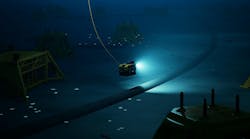 DeepOcean pipeline inspection
Offshore: All‑electric and hybrid subsea architectures continue to attract interest, but fieldwide implementation remains limited. What barriers still need to be addressed before these systems become mainstream?
Hjelmeland: Moving away from hydraulic systems from the seabed reduces complexity and emissions, improves reliability and allows for a much more connected subsea architecture. And that’s clearly the direction we are heading in.
We have already made good progress. A great example is Fram Sør in the North Sea, the first large-scale, all-electric production system—a breakthrough project in our industry.
Power delivery over long step-outs in deep water remains a challenge. However, we have seen in a number of projects that this can be done. And just as importantly, operators need to see all-electric control systems proven over time, before they become the default choice. That said, the level of interest we are seeing suggests that the momentum is there.
Offshore: Subsea processing (e.g., boosting, compression and seabed separation) has long been discussed as a step-change for deepwater recovery rates, but deployment has remained selective. How mature is the technology today, where is it delivering measurable results, and what would accelerate wider adoption?
Hjelmeland: Subsea processing is an established and proven technology that delivers tangible value: higher recovery, extended field life and the ability to make long-distance tiebacks economically viable.
Subsea compression projects like Ormen Lange Phase 3, which came online last year, show what can be achieved when the technology is applied through a well-structured partnership and a disciplined execution model.
The next step is seabed separation and water treatment, which many see as the remaining step-change opportunity. It’s important to remember that we already have systems in the North Sea and West Africa that have been in operation for more than a decade, proving that moving more of the processing to the seabed can unlock significant additional value.
From a technical perspective, the building blocks are already available. What tends to drive wider adoption is less about the technology itself and more about how projects are set up. Early engagement, standardized and configurable solutions, and commercial models with aligned incentives all make a difference.
When core processing modules are designed to cater for changing conditions over the life of the field—as we have done on a number of fields in the Gulf of America, like Jack & St. Malo—it has the ability to strengthen the business case. We are starting to see that more consistently across regions, and it will help unlock the next wave of subsea developments. That’s an exciting shift for the industry.
About the Author
 Ariana Hurtado
Ariana Hurtado
Editor-in-Chief
With more than a decade of copy editing, project management and journalism experience, Ariana Hurtado is a seasoned managing editor born and raised in the energy capital of the world—Houston, Texas. She currently serves as editor-in-chief of Offshore, overseeing the editorial team, its content and the brand's growth from a digital perspective.
Utilizing her editorial expertise, she manages digital media for the Offshore team. She also helps create and oversee new special industry reports and revolutionizes existing supplements, while also contributing content to Offshore's magazine, newsletters and website as a copy editor and writer.
Prior to her current role, she served as Offshore's editor and director of special reports from April 2022 to December 2024. Before joining Offshore, she served as senior managing editor of publications with Hart Energy. Prior to her nearly nine years with Hart, she worked on the copy desk as a news editor at the Houston Chronicle.
She graduated magna cum laude with a bachelor's degree in journalism from the University of Houston.