Study highlights roadmap for Mediterranean offshore wind growth
Why this news matters:
-
The study suggests that regulatory certainty, grid access and infrastructure may be as important as technology in determining whether Mediterranean offshore wind projects move forward.
-
Its findings provide a framework for governments and industry to accelerate offshore wind development while supporting Europe's energy security goals.
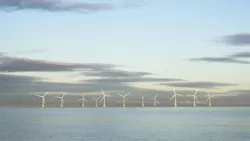
As countries around the Mediterranean advance floating offshore wind ambitions, a new study by WindEurope and Politecnico di Torino concludes that regulatory certainty, grid access and port infrastructure will be just as important as technology in turning projects into commercial developments.
Why does the Mediterranean matter?
The Mediterranean is emerging as a key market for floating offshore wind because many areas have water depths that limit the use of traditional fixed-bottom foundations.
According to the study, clear and predictable regulatory frameworks, expanded infrastructure and stronger grid connections are critical to converting the region’s offshore wind potential into viable projects.
The research examines the opportunities and challenges for floating offshore wind development in the Mediterranean and identifies several priorities for policymakers and industry.
The study identifies five priorities:
- Stable permitting, auction and grid-access rules;
- Expanded port and logistics infrastructure;
- Stronger offshore-to-onshore grid connections;
- Supply-chain and workforce development; and
- Environmental monitoring and stakeholder engagement.
To support offshore wind deployment at industrial scale, the study also highlights the need for expanded industrial capacity, logistics networks and a skilled workforce.
Efficient transmission links between offshore projects and onshore power grids were identified as another key factor influencing project costs, schedules and overall feasibility.
In addition, the authors emphasize the importance of environmental safeguards, ongoing monitoring programs and early engagement with local communities.
The overall objective, according to the study, is to better align public policy, industry decisions and technical priorities to support growth of offshore wind in a region considered strategically important for Europe’s energy security and competitiveness.
"Clear rules matter as much as technology," the WindEurope news release stated.
The authors said aligning policy, infrastructure planning and industrial capacity will be necessary to convert the Mediterranean's offshore wind potential into commercially viable projects.
Read the full study:
In summary
What is slowing projects down?
The study identifies regulatory uncertainty around permitting, auctions and grid access, along with limited grid connection capacity and port infrastructure constraints, as key challenges to scaling floating offshore wind development in the Mediterranean.
Exclusive offshore wind content:
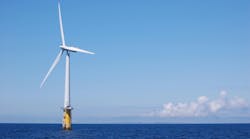 Floating wind turbine off the coast of Karmøy, Norway
 Lifting maneuver
 offshore wind vessel
About the Author
 Ariana Hurtado
Ariana Hurtado
Editor-in-Chief
With more than a decade of copy editing, project management and journalism experience, Ariana Hurtado is a seasoned managing editor born and raised in the energy capital of the world—Houston, Texas. She currently serves as editor-in-chief of Offshore, overseeing the editorial team, its content and the brand's growth from a digital perspective.
Utilizing her editorial expertise, she manages digital media for the Offshore team. She also helps create and oversee new special industry reports and revolutionizes existing supplements, while also contributing content to Offshore's magazine, newsletters and website as a copy editor and writer.
Prior to her current role, she served as Offshore's editor and director of special reports from April 2022 to December 2024. Before joining Offshore, she served as senior managing editor of publications with Hart Energy. Prior to her nearly nine years with Hart, she worked on the copy desk as a news editor at the Houston Chronicle.
She graduated magna cum laude with a bachelor's degree in journalism from the University of Houston.
Related
