PlemCat secures EIA approval for commercial-scale floating wind pilot offshore Spain
Key takeaway:
EIA approval for the NextFloat project marks an important milestone for floating offshore wind in Europe, enabling real-world testing of X1 Wind's commercial-scale platform and bringing its low-footprint floating technology closer to large-scale deployment.
Why this news matters:
- Advances floating wind commercialization: The NextFloat project will test X1 Wind's first commercial-scale platform in real offshore conditions, generating operational data needed for certification and future large-scale deployments.
- Highlights environmental innovation: The tension-leg platform design uses vertical synthetic mooring lines that reduce seabed disturbance, underwater noise and overall footprint compared with conventional floating wind mooring systems.
- Supports larger future turbines: The pilot project is a stepping stone toward the company's X150 platform, designed to accommodate next-generation offshore wind turbines exceeding 20 MW.
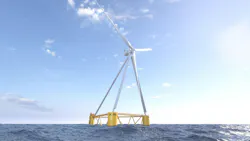
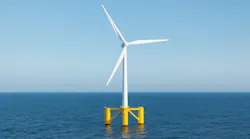
The PlemCat floating offshore wind test site has obtained environmental impact assessment (EIA) approval for the NextFloat Project to deploy X1 Wind’s X100 8.5-MW platform.
It confirms that the test site in the Mediterranean Sea offshore Spain and its projects have undergone thorough planning, certifiying their compatibility with environmental protection requirements, the preservation of the marine environment, and local biodiversity.
The NextFloat Project, led by Technip Energies and X1 Wind, will test the first commercial-scale platform. The technology is designed to combine the stability and low environmental impact of a tension-leg platform (TLP) with the cost benefits of a typical semisubmersible structure.
One of the environmental benefits of the TLP mooring system, with its vertical mooring lines, is a greatly reduced seabed footprint compared to conventional catenary lines.
Additionally, the use of vertically tensioned synthetic mooring lines in place of chains is designed to avoid the risk of dragging the seabed, with minimized underwater noise.
 floating offshore wind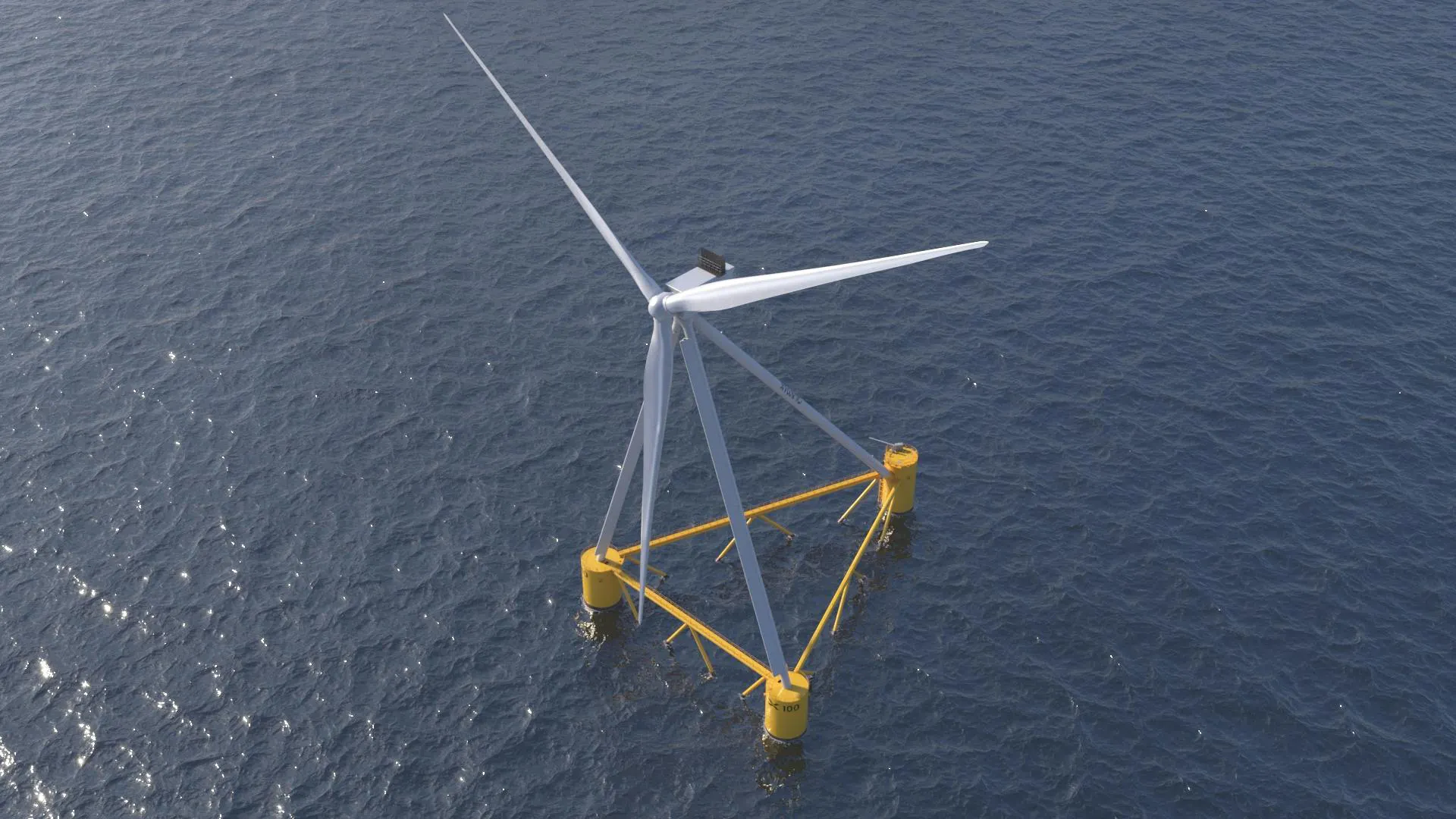
The tripod-shaped X100 platform, suited to turbines of 160 m diameter, has a primary steel weight of 1,500 t, said to be up to 50% less in terms of weight compared with other, traditional steel floaters installed for other pre-commercial projects of a similar scale in Europe.
The pilot platform will have a 160-m downwind turbine with an 8.5-MW nameplate capacity, and it represents the next step toward commercialization of the X150 platform, supporting turbines of 20+ MW.
It will operate in offshore conditions for several years, providing data to support final prototype certification ahead of a commercial-scale deployment.
Funding is supplied by the EU-funded projects NextFloat and NextFloat+, the PAREF project subsidized by the French State, and the Spanish government program RenMarinas.
In March, DNV issued a Statement of Compliance for Basic Design for the X1, confirming compliance with international safety, engineering and technical requirements.
Exclusive content:
 Subsea Micropiles installed first drilled-and-grouted micropile anchor
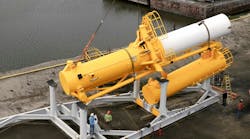 Lifting maneuver
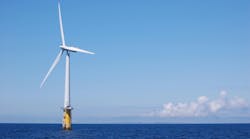 Floating wind turbine off the coast of Karmøy, Norway
About the Author
 Jeremy Beckman
Jeremy Beckman
Staff Writer / Editor, Europe
Jeremy Beckman has been Editor Europe, Offshore since 1992. Prior to joining Offshore he was a freelance journalist for eight years, working for a variety of electronics, computing and scientific journals in the UK. He regularly writes news columns on trends and events both in the NW Europe offshore region and globally. He also writes features on developments and technology in exploration and production.