Offshore grid expansion faces supply chain and permitting pressures, TenneT says
Key highlights:
-
Offshore wind deployment depends not only on turbine installations, but also on timely expansion of transmission infrastructure and grid connections.
-
TenneT is advancing large-scale HVDC offshore grid systems while navigating supply chain, permitting and project execution challenges.
-
Greater coordination between developers, transmission operators and governments will be critical to delivering future North Sea offshore wind ambitions.

TenneT Germany is expanding its offshore transmission capacity to support the country's offshore wind ambitions while navigating supply chain constraints, permitting challenges and geopolitical risks.
Offshore spoke with Dr. Stefan Mirschel, TenneT Germany's program director offshore, about the strategic planning, regulatory coordination and technology developments required to support that growth. He discusses the growing role of high-voltage direct current (HVDC) transmission, the importance of aligning grid expansion with wind farm development and the policy measures needed to avoid costly project delays.
Offshore: Is investment in offshore transmission infrastructure keeping pace with deployment ambitions, and where are the biggest gaps?

Mirschel: TenneT Germany already operates 15 offshore grid connections with a transmission capacity of around 10 GW. We are continuing this expansion at industrial scale. Based on the current German Network Development Plan, seven further projects are scheduled by 2033, followed by four projects by 2039 and another in 2042. The seven 2-GW projects currently being delivered will provide a combined transmission capacity of 14 GW. Suppliers have been contracted, and the projects are in planning, permitting or construction.
The key challenge is to keep grid infrastructure, offshore wind farms, supply chains and the onshore network aligned. Grid investments have to be committed years before the associated wind farms reach final investment decisions. If generation projects are not realized, grid connections may temporarily remain underutilized. For this reason, we need greater transparency on project progress and effective regulatory milestones for offshore wind farms.
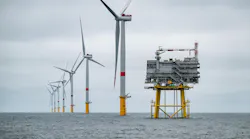
Offshore: What are the most significant challenges to delivering offshore grid connections on schedule?
Mirschel: The challenges are closely interconnected. Global demand for cables, converter platforms, specialized vessels, components and skilled workers is growing rapidly, while manufacturing capacity is limited and lead times are long. At the same time, the new 2-GW technology must be scaled industrially. Geopolitical tensions create additional risks for manufacturing and transport routes. Permitting and competing uses of offshore space also affect schedules.
Cable routes must be coordinated with environmental requirements, shipping, other infrastructure and military-use areas. In addition to managing these implementation risks, we must ensure that the available offshore areas and infrastructure deliver the greatest possible energy yield. TenneT Germany supports offshore optimization measures, including higher utilization of grid connections, more flexible spatial planning and counting cross-border connected offshore capacity towards national targets. Reducing wake effects and improving energy yields can help generate more electricity from the available areas while making more efficient use of grid infrastructure.

Offshore: What are the risks if grid expansion and offshore wind development fall out of sync?
Mirschel: A lack of synchronisation can create costs and risks for all parties. If a grid connection is not available by its binding completion date, the associated wind farm may be unable to feed its full output into the grid as scheduled. However, the wind farms are compensated for a large portion of the resulting damage. If, conversely, a grid connection is completed but the associated wind farm is delayed or not realized, consumers may temporarily bear the cost of an underutilized asset. Delays on the generation side can also affect production schedules and investments throughout the offshore supply chain.
TenneT Germany has therefore called for regulatory measures that identify implementation risks at an early stage and enable timely and effective action. Greater transparency on project maturity and binding milestones can help keep wind farm development and grid construction aligned. The objective is to create clarity early enough for transmission system operators, developers and suppliers to adjust their planning and jointly limit the impact on timelines and costs.
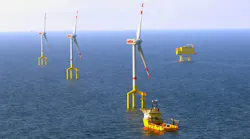 HVDC use on DolWin1 offshore wind farm near Germany
Offshore: How is the role of HVDC evolving, and what additional investments will be needed?
Mirschel: HVDC is becoming the backbone of large-scale offshore integration. As wind farms move farther offshore and increase in output, high-voltage direct current transmission enables large volumes of electricity to be transported efficiently over long distances. Our new 2-GW projects set a new standard by more than doubling the rated power of individual connections compared with the previous generation of 900-MW systems. This supports standardization and can reduce the number of platforms and cable routes required per gigawatt.
But transporting electricity efficiently to the coast is only one part of the task. Additional high-capacity DC lines onshore make an equally important contribution by carrying offshore electricity from northern Germany to industrial and consumption centers farther south. Investments in the AC network, substations and system-control technologies are also required. Offshore and onshore infrastructure must therefore continue to be planned and implemented as an integrated system.

Offshore: What policy, regulatory or market changes would have the greatest impact beyond 2030?
Mirschel: The greatest impact would come from closer and more binding coordination between offshore wind auctions, final investment decisions, grid expansion and industrial capacity. Awards should be linked to meaningful milestones so that implementation risks become apparent at an early stage and allocated capacity can be reassigned if projects fail to progress. Two-sided Contracts for Difference are a positive step, as they can improve revenue stability and the likelihood of project realization. Auction design should also limit speculative bids and reflect cost changes over long development periods.
Permitting procedures must become faster and more predictable. In parallel, offshore optimization should enable better use of offshore areas and grid connections. Closer cooperation between the North Sea countries and offshore transmission system operators can complement national expansion efforts. Hybrid interconnectors can connect wind farms and electricity markets simultaneously, but require clear rules for planning and for allocating costs and benefits between the countries involved.
One example is GriffinLink, which TenneT Germany is developing together with the British energy infrastructure company National Grid Ventures. The planned 2-GW hybrid interconnector is intended to connect German and British offshore wind farms while also enabling electricity trading between the two markets.
About the Author
 Ariana Hurtado
Ariana Hurtado
Editor-in-Chief
With more than a decade of copy editing, project management and journalism experience, Ariana Hurtado is a seasoned managing editor born and raised in the energy capital of the world—Houston, Texas. She currently serves as editor-in-chief of Offshore, overseeing the editorial team, its content and the brand's growth from a digital perspective.
Utilizing her editorial expertise, she manages digital media for the Offshore team. She also helps create and oversee new special industry reports and revolutionizes existing supplements, while also contributing content to Offshore's magazine, newsletters and website as a copy editor and writer.
Prior to her current role, she served as Offshore's editor and director of special reports from April 2022 to December 2024. Before joining Offshore, she served as senior managing editor of publications with Hart Energy. Prior to her nearly nine years with Hart, she worked on the copy desk as a news editor at the Houston Chronicle.
She graduated magna cum laude with a bachelor's degree in journalism from the University of Houston.