ADIPEC 2026: How Goliat overcame complex scale management challenges in the Barents Sea
Key highlights:
-
Goliat's scale-management program evolved over a decade to address complex barium sulphate and carbonate scaling challenges in the Barents Sea.
-
Continuous optimization of scale-inhibitor strategies significantly improved treatment longevity and production performance.
-
Collaboration between operator and chemical specialists helped sustain flow assurance and reduce scaling risks across subsea and topside systems.
By Kim Vikshåland, SLB
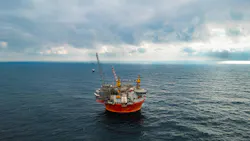
Located in the Barents Sea about 85 km northwest of Hammerfest, the Goliat Field, with water depths ranging from 320 m to 420 m, is the first oil-producing field in the northernmost area of the Norwegian Continental Shelf.
Prior to and following field startup in 2016, ChampionX had worked closely with Vår Energi to develop and supply chemical technologies that have supported the long-standing success of the field, adapting to address the needs of the wells as they evolved over time.
Since first oil, barium sulphate formation, resulting from the injection of sea water for reservoir pressure maintenance, and calcium carbonate formation, caused by temperature and pressure changes throughout the production process, have been the predominant scale management challenges for the field.
Scale management at Goliat is further complicated by the requirement for production chemicals to perform and remain stable in a challenging arctic environment, and with low reservoir temperatures of 32 C to 50 C.
The field produces from two main reservoirs, Realgrunnen and Kobbe, with 16 subsea wells tied back to a zero-discharge floating production, storage and offloading (FPSO) unit for processing.
Oil is stored before export by tanker, while the produced gas and water are reinjected for pressure support in dedicated wells. Additional pressure support is provided by the injection of seawater, without sulphate removal, into injection wells. Some wells received seawater injection initially when produced water rates were not high enough to provide sufficient pressure support, but now receive only produced water. Some wells remain only seawater supported.
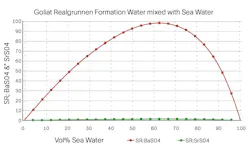
The risk of barium sulphate scaling comes from injecting sea water into already barium-rich formation water. ChampionX carried out simulation studies, which confirmed the potential for severe downhole barium sulphate deposition, leading to agreement that chemical scale inhibitor squeeze treatments would be necessary to mitigate this risk.
A calcium carbonate scaling risk was identified from the need to apply heat to the well fluids to aid separation, due to the relatively low fluid arrival temperatures at Goliat.
Identifying a scale management strategy
Having defined the predominant scaling mechanisms and areas of production at risk, ChampionX's next step was developing a scale management strategy to mitigate against scale deposition, refining it prior to and during production.
The three key components of the ChampionX strategy were:
- Scale inhibitor squeeze treatments to mitigate downhole barium sulphate deposition;
- Continuous scale inhibitor injection to reduce deposition of calcium carbonate scale in topside heaters; and
- Regular acid washes to maintain the efficiency of the topside heaters.
In addition to these measures, which each depend upon the application of chemical products to the system, the injection of produced water and seawater for reservoir pressure maintenance was also used to partially mitigate the downhole barium sulphate threat.
Scale squeeze treatment at Goliat
Qualifying a scale inhibitor for squeeze application was an extended process, which included input from both ChampionX and Vår Energi. Coreflood experiments evaluated the potential for chemical-induced formation damage.
Precisely determining the residual scale inhibitor concentration in the produced fluids, in combination with ion analysis and well productivity index, was also essential to determine the lifetime efficiency of scale squeeze treatments.
At Goliat, this presented a significant challenge due to mixed brine composition in the flowline and the requirements to analyze multiple families of scale squeeze inhibitors in the same sample, without interference from the continuously injected wellhead/topside scale inhibitors and any other production chemicals.
Optimizing squeeze treatments at Goliat
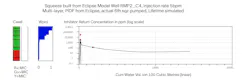
The approach to scale inhibitor squeeze deployment and monitoring at Goliat was developed through collaboration between ChampionX and Vår Energi, employing a combination of conventional analysis of scale inhibitor residuals and modeling based on experimental results to predict the lifetimes of squeeze treatments.
Here, a single squeeze, Inhibitor A, was deployed in all wells at risk of barium sulphate deposition following seawater breakthrough.
This approach proved successful following seawater ingress (the point at which the scale risk began) into well C4. In this case, analysis of the residual scale inhibitor concentration within the produced water allowed for the design and optimization of subsequent squeeze treatment.
Since the first treatment on well C4, it has been squeezed a further 10 times with additional optimization of treatment volumes being applied based on the field data received.
With the new design, the main treatment was increased by 112% and the overflush by 197%.
However, with this new treatment program, well C4 is protected for a produced water volume of 145,700 cu. m. This is a 536% increase, equal to 100 additional days of squeeze treatment life, based on current production rates. The ongoing optimization has enabled the squeeze volumes to reduce per water volume treated.
When further wells required protection via scale squeeze treatments, Inhibitor A was also successfully applied.
Carbonate scaling in topside process
In addition to the challenges associated with downhole barium sulphate scaling, conditions within the topside heaters resulted in high potential for calcium carbonate scaling at Goliat.
During the pre-production phase, a polymeric scale inhibitor was qualified for use at Goliat. Following the commencement of oil production in March 2016, continuous application of this inhibitor to the topside process was initiated.
By April 2018, water breakthrough had begun, and the Goliat operations team had begun to identify carbonate scaling issues in the topside heaters. Initially, the injection rate of the polymeric scale inhibitor was increased to compensate and scale dissolver treatments were applied to the heaters.
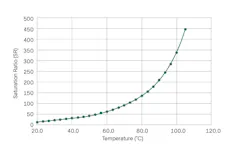
It became clear that co-production of high-calcium Kobbe Formation water, together with high-bicarbonate Realgrunnen Formation water, led to an extremely high saturation ratio (SR»250) for calcium carbonate in the topside heaters.
This led to a re-evaluation of the topside scale management strategy and an alternative topside continuous injection scale inhibitor was selected.
Continuous improvement: Novel topside scale inhibitor
In response to the presence of calcite in the inlet heaters, a new phosphonate scale inhibitor was applied, initially trialed in March 2019 and implemented permanently from March 2020.
Concurrently with the implementation of the new phosphonate chemistry, a project was initiated to develop a novel scale inhibitor for the Goliat topside system, based on a synergistic formulation of scale inhibitors.
Prior experience with severe scale regimes had illustrated the benefits of using complementary combinations of scale inhibitors, where the treatment rate required to achieve control with the formulated product is significantly lower than the treatment rate required for either of the individual components.
Screening of several inhibitors was performed to determine whether synergistic effects could be identified to cope with the high carbonate scaling potential present in the Goliat inlet heaters. Following exhaustive trialing and testing, a new synergistic formulation, Inhibitor B, was put forward for field evaluation.
Based on the results, Inhibitor B for Goliat topside scale control has become a permanent application, and continued field optimization has been undertaken, resulting in a reduction in chemical usage.
Scale dissolver treatments
The potential for calcium carbonate formation at Goliat is exacerbated by the process conditions within the topside heaters.
The primary method of mitigating this risk would usually be the continuous application of a scale inhibitor upstream of the heaters.
However, operational experience at Goliat has demonstrated that the very high scaling potential in this system leads to a gradual accumulation of calcium carbonate scale in the heaters that requires periodic removal by application of scale dissolver.
A common approach to the problem of removing mineral deposits from topside heaters is to take the heater offline and apply a batch treatment with acid (mineral or organic) to dissolve any scale present.
However, the approach employed at Goliat involves "online" application of organic acid while fluids are still flowing through the heater. To facilitate this, the well configuration between the two subsea flowlines is adjusted such that a low water rate is produced via the heater to be cleaned. This allows a higher concentration of acid to be achieved in the heater while it remains online.
Summary
Through a collaborative and adaptive approach, ChampionX and Vår Energi have successfully navigated the complex scale management challenges that have evolved over their 10-year partnership on the Goliat Field.
By identifying the distinct risks posed by barium sulphate and calcium carbonate scaling, and implementing tailored chemical treatment strategies across downhole, subsea and topside systems, the teams have significantly extended treatment lifetimes and improved operational efficiency.
The deployment of a new synergistic scale inhibitor formulation and online acid treatments have enhanced performance, reducing chemical usage and downtime. These efforts underscore the importance of continuous optimization and partnership in maintaining production integrity in harsh offshore environments.
Editor's note:
For more details, check out "A Retrospective Review of Scale Management Strategies at the Goliat Field," by Clare Johnston, George Cole, Kim Vikshåland, Myles Jordan (ChampionX), Kristoffer Sæby, and Erik Brøndbo (Vår Energi), which was first presented at Tekna Production Chemistry in 2024.
At the time of publishing, SLB, a global energy technology company, has closed its acquisition of ChampionX, a global leader in production chemistry solutions, artificial lift systems and advanced technologies. The contents of this article represent a customer project performed by ChampionX prior to closing.
ADIPEC 2026:
Offshore is an official media partner of ADIPEC.
The event will take place Nov. 2-5 in Abu Dhabi. For more information about this article's topic, visit SLB at the show in Hall AI at booth AI S5.
Missed the event last year?
We've got you covered: ADIPEC 2025 Special Report
About the Author
 Kim Vikshåland
Kim Vikshåland is a senior account manager at SLB. He joined ChampionX in 2008, which became part of SLB in 2025, and he has spent 18 years with the business. After graduating with a degree in chemical engineering, he went on to gain an MSc in offshore engineering from the University of Stavanger.
Related

You May Also Like
