Seismic players advance monitoring and frontier imaging programs
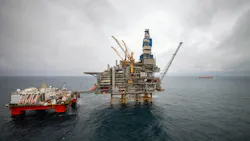
Recent seismic campaigns in the North Sea and offshore Brazil reflect continued investment in both reservoir monitoring and frontier basin evaluation. Operators and service providers are deploying advanced acquisition technologies to improve subsurface understanding, support field optimization and guide future exploration decisions.
Shearwater Geo prepares for one-month 4D survey over North Sea Mariner field
Adura Operations has contracted Shearwater Geoservices to conduct a 4D towed‑streamer seismic survey over the Mariner Field in the UK northern North Sea.
For the one-month program, which is due to start next month, Shearwater will deploy its Isometrix multi‑component streamer technology to deliver repeatable time‑lapse seismic data to support ongoing reservoir monitoring and field management.
The survey has also been designed with the potential for an undershoot to enhance imaging and ensure continuous coverage around field infrastructure, Shearwater added.
Shearwater CEO Irene Waage Basili said, “Monitoring reservoirs in existing fields is essential to extending field life, optimizing production and supporting energy security.”
TGS, SLB delivering insights on Pelotas potential offshore Brazil
TGS and SLB are progressing their Pelotas Sul Phase 1 multi-client 3D seismic survey offshore southern Brazil.
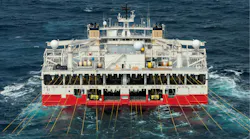
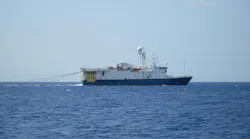
The Ramform Tethys vessel began acquisition of 13,500 sq km of 3D data last December over the Pelotas Basin, and it should complete the program next month.
The area, TGS explained, presents a range of play concepts, including turbidite systems, deepwater channels, and stratigraphic and structural traps.
Pelotas Sul Phase 1 covers a mixture of committed and open acreage, and it can therefore support operators’ current near‑term evaluation efforts and responses to future licensing rounds.
“Pelotas Sul Phase 1 will provide valuable subsurface insight and help broaden the understanding of a basin that is gaining considerable client attention," TGS CEO Kristian Johansen said. “We have earlier announced Pelotas Norte in the northern part of the Pelotas Basin.”
Exclusive content:
About the Author

Jeremy Beckman
Editor, Europe
Jeremy Beckman has been Editor Europe, Offshore since 1992. Prior to joining Offshore he was a freelance journalist for eight years, working for a variety of electronics, computing and scientific journals in the UK. He regularly writes news columns on trends and events both in the NW Europe offshore region and globally. He also writes features on developments and technology in exploration and production.